The ECOWAS Court of Justice has ruled in favor of Oluwatimilehin Adebayo, ordering the Nigerian government to pay ₦5 million in compensation for the violation of his rights through police torture.
The ruling also calls for a comprehensive investigation into the alleged abuse and the prosecution of the police officers involved.
Adebayo had approached the ECOWAS Court with a suit marked Oluwatimilehin Adebayo v. Federal Republic of Nigeria (ECW/CCJ/APP/47/23), accusing police officers in Ogun State of subjecting him to severe torture.
In his petition, Adebayo described how police operatives used the handle of an axe to beat him and tied his limbs to a pole with chains. He further alleged that the abuse caused severe physical injuries, including trauma to his scrotum, and resulted in significant psychological distress.
READ ALSO : ECOWAS court aks FG to pay ₦10 million for unlawful detention
The Nigerian government responded by challenging the court’s jurisdiction over the case, arguing that the petition had been filed beyond the three-year statute of limitations outlined by the court’s rules.
Nigeria also contended that the case had already been decided or was pending in a local court, and as such, it was sub judice. However, the ECOWAS Court dismissed these objections, affirming its jurisdiction to hear human rights violations cases under its mandate.
Justice Dupe Atoki, who was part of the three-member panel, ruled that the statute of limitations did not apply to human rights violations, and as such, the case was admissible. She emphasized that the allegations of torture constituted a clear violation of Article 5 of the African Charter on Human and Peoples’ Rights, to which Nigeria is a signatory.
Justice Atoki stated that the torture was intentional, aimed at coercing Adebayo into signing a pre-written confession, which further compounded the violation.
In addition to awarding compensation, the court ordered the Nigerian government to conduct an “impartial, effective, and prompt” investigation into the alleged police brutality and ensure the prosecution of the responsible officers. The court noted that such actions were necessary to ensure accountability and prevent future violations.
However, the court did not uphold Adebayo’s claim that his right to remedy was violated, as there was insufficient evidence to show that he had formally reported the abuse to the relevant authorities. Despite this, the panel reaffirmed its condemnation of the human rights violation and underscored the importance of protecting citizens from such abuses.
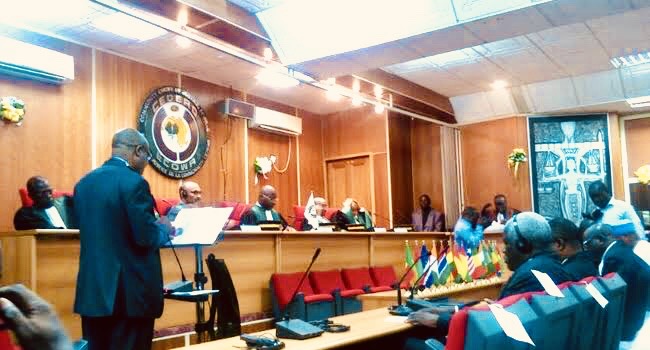
The ruling was made by a panel of three judges, with Justice Sengu Koroma presiding. Justice Dupe Atoki served as the judge rapporteur, and Justice Gberi-Bè Ouattara was also a member of the panel.
This decision underscores the ECOWAS Court’s continuing role in ensuring the protection of fundamental human rights in West Africa, particularly in cases involving state authorities’ abuse of power.
The judgment has garnered significant attention, highlighting the growing need for police reforms in Nigeria and across the region. It sends a clear message to the Nigerian government that it must hold its law enforcement agencies accountable for their actions and address the systemic issues of abuse and torture within the police force.
The case also reinforces the ECOWAS Court’s commitment to upholding human rights standards across member states.
Credible News.ng