The rebels who ousted Bashar al-Assad and are now in power in Syria appointed a transitional head of government on Tuesday to run the country until March 1, a statement said.
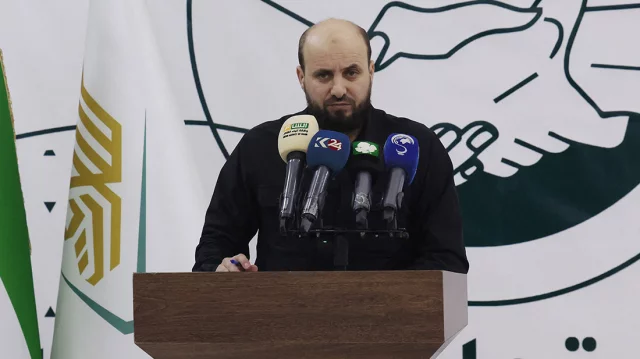
“The general command has tasked us with running the transitional government until March 1,” said a statement attributed to Mohammad al-Bashir on state television’s Telegram account, referring to him as “the new Syrian prime minister”.
Assad fled Syria as an Islamist-led rebe alliance swept into the capital Damascus on Sunday, ending five decades of brutal rule by his clan.
Abu Mohammed al-Jolani, the Islamist leader who headed the offensive that forced Assad out, had announced talks on a transfer of power and vowed to pursue former senior officials responsible for torture and war crimes.
READ ALSO: Al-Assad gets asylum in Russia as rebels sweep through Syria
His group, Hayat Tahrir al-Sham, is rooted in Syria’s Al-Qaeda branch and is proscribed by many Western governments as a terrorist organisation, though it has sought to moderate its rhetoric.
In a brief address on state television, Mohammed al-Bashir, a figure little known across most of Syria who previously ran an administration in a small pocket of the northwest controlled by rebels, said he would lead the interim authority until March 1.
“Today we held a cabinet meeting that included a team from the Salvation government that was working in Idlib and its vicinity, and the government of the ousted regime,” he said. “The meeting was under the headline of transferring the files and institutions to caretake the government.”
Behind him were two flags: the green, black and white flag flown by opponents of Assad throughout the civil war, and a white flag with the Islamic oath of faith in black writing, typically flown in Syria by Sunni Islamist fighters.
In the Syrian capital, banks reopened for the first time since Assad’s overthrow. Shops were also reopening, traffic returned to the roads, construction workers were back fixing a roundabout in the Damascus city centre and street cleaners were out sweeping the streets.
There was a notable decrease in the number of armed men on the streets. Two sources close to the rebels said their command had ordered fighters to withdraw from cities, and for police and internal security forces affiliated with the main rebel group Hayat Tahrir al-Shams (HTS) to deploy there.
The steps towards normalisation came despite intense airstrikes from Israel targeting bases of the Syrian army, whose forces had melted away in the face of the lightning rebel advance that ousted Assad.
The overthrow of Assad, who maintained a complex web of prisons and detention centres to keep Syrians from straying from the Baath party line, sparked celebrations around the country and in the diaspora around the world.
The civil war that led up to it killed 500,000 people and forced half the country to flee their homes, millions of them finding refuge abroad.
BBC.com