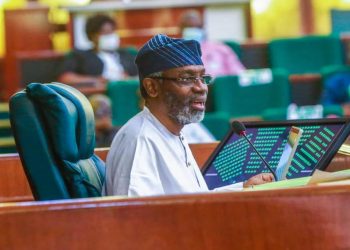
Nigeria’s Chief of Defence Staff, CDS, Christopher Musa, has stated that the military is open to investigations regarding the alleged war crimes committed by counterterrorism soldiers operating in conflict zones, particularly in the North-east.
The military leader made this statement in a recent interview with Al Jazeera when asked to respond to a lawsuit filed by Amnesty International at the International Criminal Court, ICC, in The Hague. The lawsuit accuses the Nigerian military of war crimes, including assaults on civilians, extrajudicial killings, torture, rape, and forced disappearances in the conflict-ridden North-east.
According to the rights group, over 10,000 civilians have died in military custody since the Boko Haram insurgency began in the region. This is not the first time the organization has raised such claims. In 2020, Amnesty International reported that many of these civilians died at Giwa Barracks, a military detention center in Borno State.
“We are ready”
“We are prepared to go, to the ICC,” the CDS, Mr. Musa, said when an Al Jazeera journalist asked for his reaction to the Amnesty lawsuit. “We have nothing to fear… I believe they have their reasons for taking this action.”
“We are not afraid of anything because we are not engaged in such activities,” he added.
Mr. Musa denied the allegations of war crimes, suggesting they were attempts to “demoralize my troops.”
“They want to tarnish our image,” Mr. Musa said. “I simply can’t understand why anyone would claim we are killing people when that is not what is happening.”
He further explained that several humanitarian organizations, including the United Nations and Amnesty, are operating in Giwa Barracks, where over 10,000 civilians are said to have died in detention.
READ ALSO: CDS probes deaths of Okuama community leaders in Army custody
Mr. Musa questioned whether Amnesty International was implying that the other humanitarian groups working at the facility were complicit in the crimes it attributes to the military. He noted that if the military had been committing wrongdoings at the detention center, the other organizations present would have raised their concerns.
These comments came two weeks after President Bola Tinubu cleared the armed forces of any wrongdoing, stating there was no justification for an investigation, especially on issues related to financial mismanagement.
Is the Nigerian Armed Forces Corrupt?
When questioned about procurement scandals and corruption within the military, Mr. Musa strongly denied the accusations, stating, “We are not corrupt. We are a few good men trying to do our jobs, but there are some determined individuals trying to prevent us from succeeding. We do not manufacture the equipment we use.”
“We do not produce the necessary equipment ourselves. It requires cooperation. So, if corruption exists, it involves both parties—those who give and those who accept. This means that those possessing these weapons are equally culpable,” he explained, adding that the country follows a procurement process “which is strictly adhered to.”
The CDS lamented the challenges the Nigerian government faces in acquiring military equipment.
“Even when we have the funds, we sometimes struggle to obtain the required equipment, and the question is why?” Mr. Musa asked, emphasizing that insurgency persists because “we’ve been denied access to equipment, even when we have the money…”
Mr. Musa also discussed the prolonged insurgency.
He referred to it as “asymmetric warfare,” contrasting it with conventional conflicts like those the Nigerian military fought in Liberia and Sierra Leone.
“You’re dealing with individuals who feel a strong sense of purpose, believing in the righteousness of their cause (their ideology). You can’t easily identify them—they look just like ordinary people… Because we must respect human rights and adhere to the laws of war, the challenge of identifying the enemy is much more complicated than in conventional warfare.”
The military leader also addressed civilian casualties from airstrikes in Borno, Kaduna, and Niger states.
He expressed regret over the accidental airstrikes, calling them “professional mistakes.”
“Some factors are beyond our control. We can’t dictate the weather or the atmosphere,” he explained. “Even when everything is aligned, mistakes still happen. When they do, we take full responsibility and correct the issue.”
Regarding justice, accountability, and compensation, the Chief of Defence Staff noted that the military has a “standing court martial for those who have committed offenses.”
He mentioned that measures and compensations are in place to “make amends for the affected communities” like Tudun Biri in Kaduna State.
“We have suspended the commanders involved. We have taken responsibility for their actions,” he stated in reference to the Tudun Biri bombing in December 2023.
Mr. Musa also rejected claims that France has established a military base in Nigeria.
“We do not support foreign military bases. We have the capacity to protect our country, secure its divisions, and assist the continent,” he said. “What we need is joint training, which we do, and the necessary equipment to help us advance this war.”
Such a base, according to him, would “create more problems.”
The Ongoing ICC Investigation
Before Amnesty filed its case at the ICC, the court had been investigating the military for similar allegations.
The ICC initiated a preliminary investigation into the Nigerian security forces’ alleged war crimes on November 18, 2010. The preliminary investigation concluded ten years later, leading to a national inquiry into murder, rape, torture, and other human rights violations committed by counterinsurgency troops deployed in the North-east.
However, a former ICC prosecutor, Fatou Bensouda, stated that Nigerian military authorities had informed her that “they had reviewed and dismissed the allegations against their own troops.”
Since the investigation began in 2020, the ICC has continued to engage with the Nigerian government. However, the court has made it clear that it would take over the prosecution “if Nigerian authorities fail to genuinely address the existing impunity gaps.”
In response to the ICC’s “lengthy investigation,” Nigeria’s Attorney General and Minister of Justice, Lateef Fagbemi, expressed concerns at the 23rd Session of the Assembly of States Parties to the Rome Statute of the ICC in The Hague.
Mr. Fagbemi argued that probing the military would undermine the morale of the troops “who are sacrificing their lives to defend the country against terrorists.”
Despite documented evidence showing that both soldiers and terrorists committed war crimes, Mr. Fagbemi urged the ICC to cease its investigation into the military.
“While we acknowledge the court’s role in intervening when states are unable or unwilling to prosecute, it is important to respect the principle of complementarity,” he said, stressing that “the ICC is a court of last resort, stepping in only when national systems are unable or unwilling to handle grave crimes.”
“I must assert that Nigeria does not fall into such a situation,” he continued. “Our country has consistently shown the will and capacity to investigate and prosecute serious crimes, including those committed by Boko Haram and other terrorist groups. We take pride in the Nigerian military, which has systems in place to ensure its operations comply with international humanitarian law and human rights standards.”
While the Nigerian government maintains that its military operates professionally, there have been numerous reports of civilian killings.
For example, The New Humanitarian documented how the military invaded Bula Ali village in Borno State in 2021, killing at least eight civilians, including minors, whom they suspected of having links with Boko Haram insurgents. The village had previously faced similar invasions by the military. When confronted with the findings, the military declined to comment.
A HumAngle investigation also revealed that many of the approximately 25,000 civilians who went missing in Borno State are believed to be victims of extrajudicial killings and covert mass burials by the military and its local ally, the Civilian Joint Task Force, CJTF.
Outside the Boko Haram conflict, the Nigerian military has also targeted civilians in the North-west and North-central regions, including in the Tudun Biri bombing.
ICC’s reports
“The Office has examined information on a wide range of alleged crimes in Nigeria since 2010. While the preliminary examination has primarily focused on crimes by Boko Haram from July 2009 and Nigerian Security Forces since June 2011, it has also looked into alleged crimes outside this context,” the ICC stated.
However, the ICC raised concerns about the legitimacy of national proceedings for these crimes, reiterating that it may be forced to take over the investigation.
One such case that caught the ICC’s attention was the mass killing of Shiites in Kaduna State.
In December 2015, soldiers in former Chief of Army Staff Tukur Buratai’s convoy, angered by Shiite members blocking the road and preventing the convoy’s passage, attacked the Shiites over three days. A year later, a state government inquiry found the Nigerian Army responsible for killing over 300 Shiite members and burying their bodies in a mass grave.
“The Nigerian Army used excessive force,” stated the now-deleted 193-page report from Kaduna State.
The panel recommended that “immediate steps be taken to identify the members of the Nigerian Army who participated in the killings… with a view to prosecuting them.”
Nine years later, there is no evidence that any action has been taken against the officers responsible for the killings. No soldier has been tried or convicted for the incident.
Reported by Premium Times