The Federal Government may scrap the junior secondary school and senior secondary school while introducing 12 years of uninterrupted basic education.
This reform aims to provide a more structured and inclusive learning experience, allowing students to complete their education before transitioning to higher learning or vocational training.
It is unclear why this new format is different from the 6-3-3 framework for preparing students for higher education.
The government is replacing the existing 6-3-3-4 system with a 12-4 structure, ensuring that students remain in a single continuous learning phase for 12 years before proceeding to higher education. As part of this reform, the government is seeking approval to set 16 years as the minimum entry age for tertiary institutions.
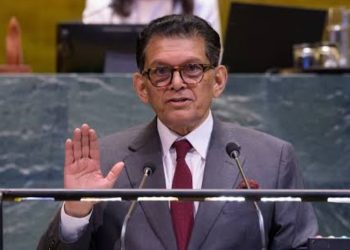
With this policy, secondary education will now be part of basic education, allowing students to study up to the age of 16 without facing financial or systemic barriers that often lead to dropouts. The Minister of Education, Dr Tunji Alausa, stated that this aligns with global best practices, as many developed countries operate similar 12-year basic education models.
“Extending basic education to 12 years will ensure a standardised curriculum that is uniformly implemented across the nation. It will also facilitate early exposure to vocational and entrepreneurial skills, preparing students for both higher education and employment,” he said.
The government believes that merging primary and secondary education into a continuous system will enhance learning outcomes and equip students with better foundational knowledge before they specialise at the tertiary level. This change is expected to improve Nigeria’s global educational competitiveness by aligning with international standards.
By ensuring that all students complete 12 years of uninterrupted education, the reform will also address existing gaps in literacy, skills development, and workforce readiness.
Social and economic impact of the reform
The extension of basic education to 12 years is expected to have a significant social and economic impact. Educated youths are more likely to contribute meaningfully to national development, and the policy is designed to reduce child labour and prevent social vices linked to premature school dropouts.
“When students receive an extended period of compulsory education, they are better equipped to join the workforce with relevant skills. This reform will also reduce child labour and other social issues arising from school dropouts,” Alausa stated.
Implementation strategies for a smooth transition
To ensure the successful transition to this new system, the government has outlined several key strategies, including:
Policy Reforms – Updating the education framework to integrate secondary education into basic education.
Infrastructure Expansion – Upgrading and constructing school facilities to accommodate the new structure.
Teacher Training and Recruitment – Hiring and training more teachers to meet the increased demand.
Funding and Partnerships – Securing financial resources and collaborating with stakeholders to support the education sector.
Curriculum Enhancement – Strengthening the curriculum with technical, vocational, and digital literacy education to equip students with 21st-century skills.
A bold step for Nigeria’s education future
The minister emphasised that bold and strategic decisions are necessary to transform the education sector into a more effective tool for national development. He urged stakeholders to support the reform, stating that it is a crucial step toward creating an inclusive, equitable, and globally competitive education system.
“Subsuming secondary education into basic education is a necessary step towards securing the future of our children and, ultimately, the prosperity of our nation,” he said.
With this new structure, Nigeria is taking a significant step toward reshaping its education system, providing students with a solid foundation for lifelong learning and success.
Crediblenewsng.com