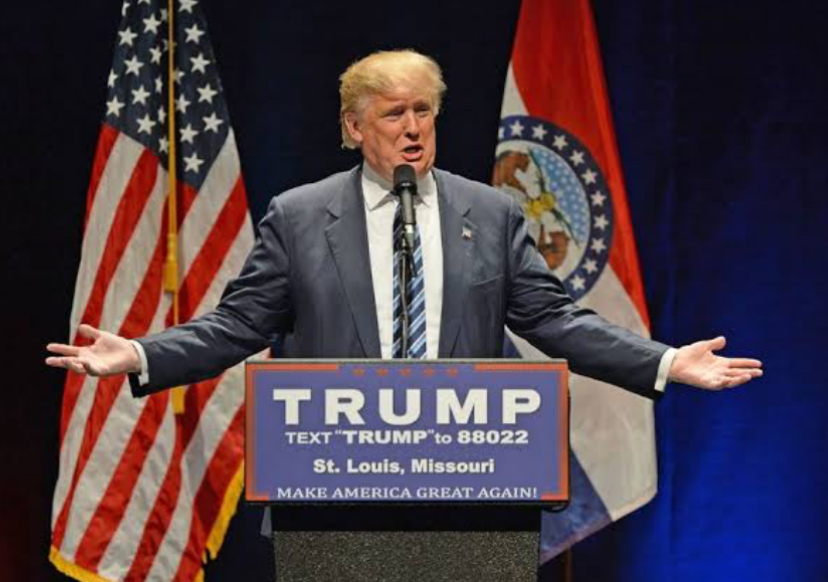
President Donald Trump announced that the tariffs he plans to introduce in the coming days will apply to ‘all countries.’
This approach contrasts with focusing solely on those with the largest trade imbalances with the United States.
Trump has vowed to unveil a series of reciprocal tariffs on April 2, which he has dubbed “Liberation Day,” to address what he describes as unfair trade practices.
Speaking to reporters aboard Air Force One, he confirmed that the tariffs would impact all countries without exception.
“You’d start with all countries, so let’s see what happens,” Trump stated, casting aside any hopes that the tariffs would be narrowed to specific nations or trade imbalances. When asked about potential targets, he added, “I haven’t heard a rumour about 15 countries, 10 or 15. Essentially, all of the countries we’re talking about. We’ve been talking about all countries, not a cutoff.”
This broader scope contradicts earlier expectations that the tariffs would primarily target the 15 countries with the most significant trade imbalances with the U.S., a group previously dubbed the “Dirty 15” by Treasury Secretary Scott Bessent.
READ ALSO: Trump, Carney discuss trade war amid tensions
Despite expanding the scope of the tariffs, Trump insisted that they would be “more generous” than those imposed on the U.S. by other nations.
He emphasized that the levies would be “kinder” than the treatment the U.S. had received over the years, describing the tariffs as a response to “the way they ripped us off like no country has ever been ripped off in history.”
Trump has already implemented tariffs on steel and aluminium imports and additional duties on Chinese goods.
Tariffs on imported automobiles are set to take effect on April 3, with estimates suggesting that this tax could generate up to $100 billion annually.
Peter Navarro, Trump’s top trade advisor, projected that other tariffs could bring in approximately $600 billion each year, equating to about $6 trillion over the next decade.
While Trump maintains that the tariffs are necessary to boost U.S. industry and raise government revenue, the sweeping measures have prompted concerns about a potential global trade war.
Countries have threatened retaliation, and economists warn that such moves could trigger inflation and slow down economic growth.
PUNCH