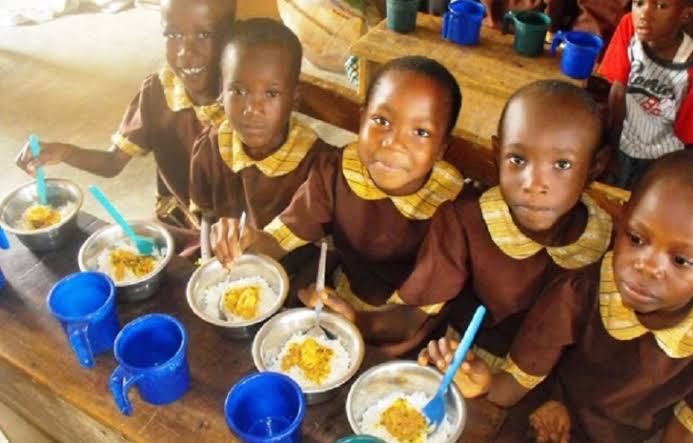
The Federal Government has indicated plans to relaunch the School Feeding Programme on May 29, targeting 10 million pupils.
During a meeting with development partners, NGOs, and government officials in Abuja, Dr. Yusuf Sununu, the Minister of State for Humanitarian Affairs and Poverty Reduction, announced that the programme would coincide with President Bola Tinubu’s second year in office.
The initiative is designed to address child hunger and improve education outcomes nationwide.
Sununu highlighted the programme’s approach, which will provide daily nutritious meals sourced locally to support children’s health and foster the growth of local farming communities.
He emphasized the importance of transparency, accountability, and collaboration to ensure the initiative’s sustainability.
“The programme aims to benefit 10 million children, potentially increasing school enrolment by 20% and improving academic performance by 15% by 2025,” Sununu stated.
The relaunch comes amidst projections indicating that over 30 million Nigerians could face hunger, underscoring the critical need for effective implementation.
Sununu stressed that the programme targets all public-school pupils from Primary One to Three, ensuring that every child has access to daily meals to nurture their potential.
The initiative also aims to reduce malnutrition, improve school retention rates, and contribute to national development.
Sununu urged for community involvement, parental participation, and the training of cooks.
He further noted the potential benefits for women and small holder farmers.
Development partners such as the AMA Foundation and private entities like Tetra Pak have committed support for the programme.
READ ALSO: Women, youth inclusion critical to food security
The government has also pledged to introduce reforms, enhance monitoring, and ensure a collaborative approach to ensure lasting impact.
Dr. Aderemi Adebowale, National Programme Manager of RH-NHGSFP, described the programme as an investment in the nation’s future.
She said the programme’s scope extends beyond feeding children to empowering women, youth, and farmers through inclusive practices.
“A total of N100 billion has been allocated in the 2025 budget to scale up the programme and extend its reach,” Adebowale noted.
Between 2018 and 2022, the initiative successfully improved nutrition and enrolment, though it faced challenges with supply chains and farmer involvement.
Adebowale revealed that new measures, including QR-coded supply chains and real-time tracking, will enhance transparency and quality control.
The programme also plans to fully integrate women, youth, cooks, and farmers, providing them with targeted training and income-generating opportunities.
“The focus is on local sourcing, with an emphasis on women-led cooperatives to reduce rural poverty by 40%,” Adebowale stated.
She also highlighted collaboration with the National Identity Management Commission to ensure that beneficiaries are properly registered and tracked.
The meeting concluded with a call for all stakeholders to collaborate closely, aligning the initiative with key Sustainable Development Goals.
Dr. Badamasi Lawal, CEO of NSIPA, emphasized the importance of a unified approach to tackle child hunger and inequality.
NAN