The United Nations Office for the Coordination of Humanitarian Affairs, OCHA, announced on Monday that it has cancelled vital aid plans for millions of people due to a deepening funding crisis. The agency described the cuts as “brutal” and unprecedented.
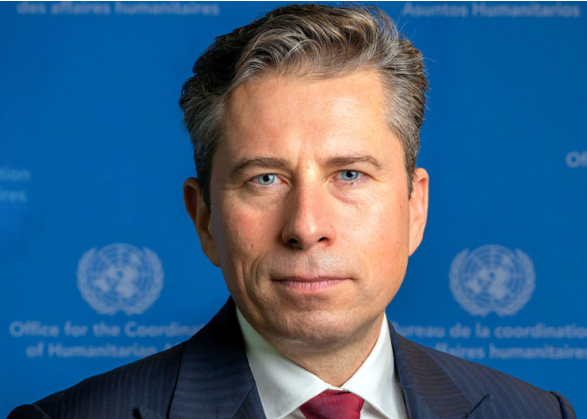
Tom Fletcher, Under-Secretary-General for Humanitarian Affairs and Emergency Relief Coordinator, delivered the chilling assessment in a statement released in Geneva.
“We have been forced into a triage of human survival,” Fletcher said.
“The math is cruel, and the consequences are heartbreaking. Too many people will not get the support they need, but we will save as many lives as we can with the resources we are given.”
The humanitarian funding crisis has intensified dramatically over the past year. In December 2023, OCHA had aimed to raise 44 billion dollars to support global humanitarian operations in 2024.
That figure has since been slashed to 29 billion dollars—and even that revised goal remains uncertain.
By mid-June, only 5.6 billion dollars had been secured, leaving a massive shortfall and prompting a reduction in the target number of aid recipients.
While the original plan was to assist 180 million people, that number has now been downgraded to 114 million—and only if the current, lower funding target is fully met.
READ ALSO: UN worries about nuclear safety after Israeli attack on Iran
The cuts come amid a wider geopolitical trend of declining international aid. The United States, once the largest contributor to global humanitarian efforts, has significantly reduced foreign aid allocations and withdrawn from several UN-related programs.
Other major donor nations have followed suit, scaling down their support due to domestic budget pressures and shifting political priorities.
Although OCHA did not specify which countries had reduced their commitments, the cumulative effect has been catastrophic for emergency response efforts across the globe—from famine and conflict zones in Africa to refugee crises in Asia and Latin America.
“Brutal funding cuts leave us with brutal choices,” Fletcher said.
He went on to urge donor countries to reassess their priorities and consider the cost of global indifference.
“All we ask is 1 per cent of what you chose to spend last year on war. But this isn’t just an appeal for money—it’s a call for global responsibility, for human solidarity, for a commitment to end the suffering.”
OCHA emphasized that, despite the reductions, the most vulnerable populations across crisis-affected countries would still be prioritized.
However, the agency acknowledged that some communities may be left without assistance altogether—a dire situation given the increasing frequency of natural disasters, conflicts, and displacement.
This announcement is likely to fuel debate over the global humanitarian financing model and may spark calls for more sustainable and predictable sources of funding.
It also highlights the growing disconnect between the world’s mounting humanitarian needs and the international community’s willingness—or ability—to respond.
For now, aid workers and recipients alike brace for a period of scarcity. In a world with rising needs, OCHA’s grim message is clear: without renewed commitment, millions will be left behind.
NAN