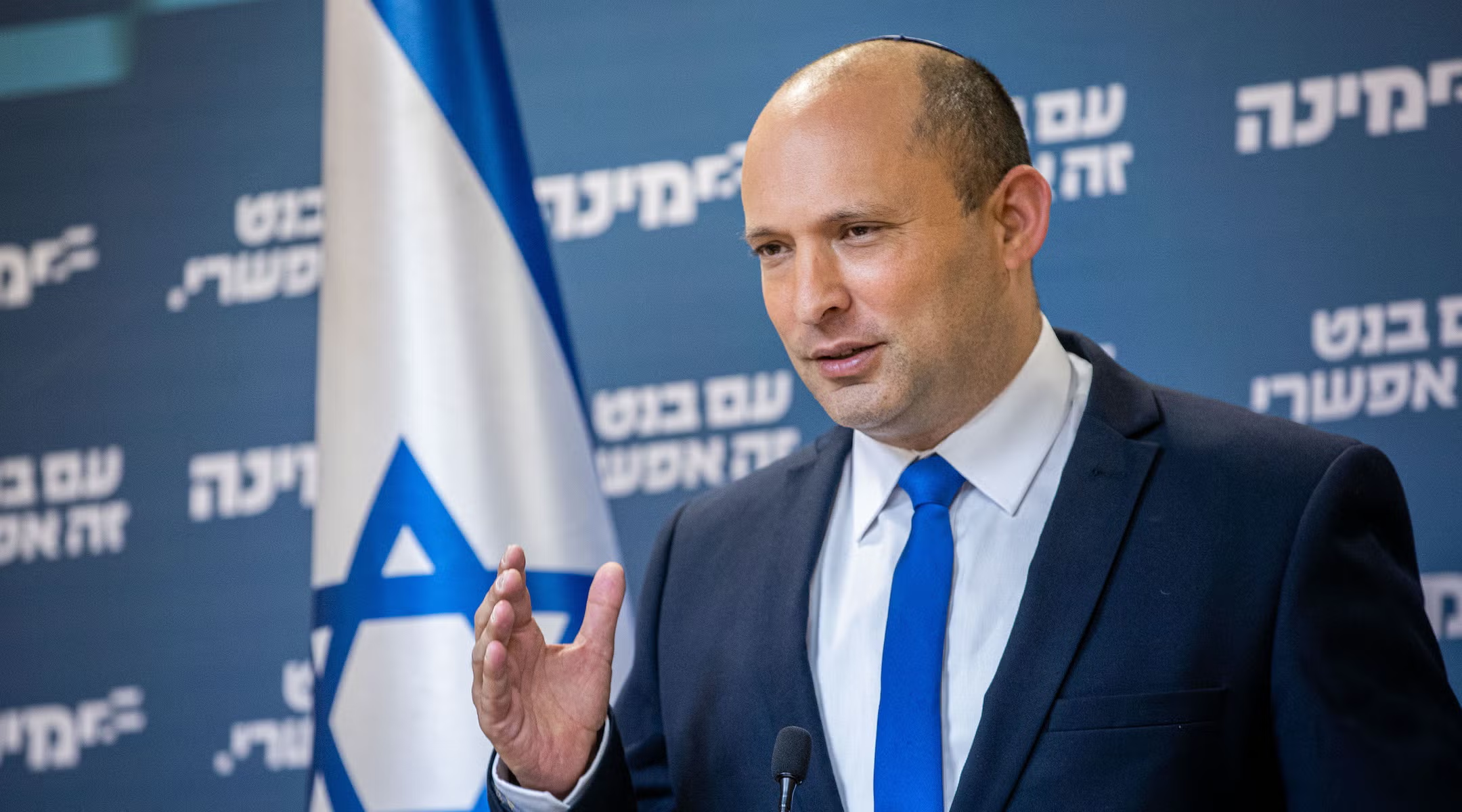
Former Israeli Prime Minister Naftali Bennett has called for the resignation of current Prime Minister Benjamin Netanyahu, declaring that his prolonged tenure has deeply divided Israeli society and damaged political stability.
Bennett made this assertion in an interview aired Saturday on Israel’s Channel 12, where he avoided confirming any intention to challenge Netanyahu in a future election.
Bennett, who briefly served as Israel’s prime minister in 2021, said Netanyahu’s cumulative 20 years in power had created unhealthy conditions for the country. “That’s too much,” Bennett stated bluntly. “It’s not healthy. He bears heavy responsibility for the divisions in Israeli society.”
The comments come amid growing public dissatisfaction with Netanyahu’s leadership, especially over his handling of the war in Gaza, which erupted in October 2023 following a Hamas-led attack. While Netanyahu continues to enjoy strong support from right-wing factions and religious conservatives, criticism from former allies like Bennett suggests a growing rift even within conservative circles.
Bennett, a right-wing politician, had joined forces with opposition leader Yair Lapid in 2021 to form a fragile coalition that briefly ousted Netanyahu from office. However, that coalition collapsed within a year, paving the way for Netanyahu’s return to power, bolstered by far-right and ultra-Orthodox parties.
In his latest interview, Bennett stopped short of confirming a political comeback but acknowledged speculation fueled by recent opinion polls showing he may have enough support to mount a successful campaign. “I’ve taken time off from politics,” he said, “but I continue to care deeply about the country’s direction.”
READ ALSO: Israeli court shifts Netanyahu’s corruption trial
Bennett also sought to highlight his legacy, taking credit for laying the foundation for Israel’s recent military strikes on Iranian nuclear and military sites. “The decision to launch attacks against the Islamic Republic was very good and very necessary,” he said, suggesting the operation would not have been feasible without groundwork laid during his short time in office.
Regarding the ongoing conflict in Gaza, Bennett offered a mixed assessment: “The military has performed exceptionally,” he said, “but the political management of the country has been a catastrophe—a disaster.” He criticised Netanyahu’s government for indecision and failing to provide clear strategic direction.
Calling for the immediate release of hostages still held in Gaza, Bennett said a new “comprehensive agreement” should be pursued to resolve the crisis. “Leave the task of eliminating Hamas to a future government,” he added, signaling a desire for a more pragmatic, long-term approach to regional security.
Although no election is officially scheduled until late 2026, early elections are common in Israel’s volatile political landscape. If Bennett does decide to re-enter the political fray, it could reignite the fierce rivalry that has defined Israeli politics for the past decade.
For now, Bennett’s remarks underscore a rising internal discontent and suggest that challenges to Netanyahu’s rule may not only come from the opposition, but also from the prime minister’s former allies and protégés.