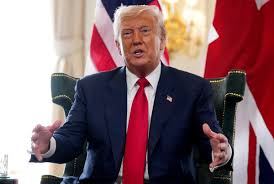
President Donald Trump has called for the immediate removal of homeless individuals from the U.S. capital, pledging to relocate them “far from the Capital” as part of a broader effort to restore safety and beautify Washington, D.C.
On Sunday, President Trump intensified his rhetoric on addressing homelessness and crime in Washington, D.C., announcing plans for a rapid response to what he describes as escalating disorder. Trump declared on his social media platform, Truth Social:
> “The Homeless have to move out, IMMEDIATELY. We will give you places to stay, but FAR from the Capital.”
He emphasized that criminals would not be relocated but instead jailed, stating:
> “The Criminals, you don’t have to move out. We’re going to put you in jail where you belong.”
Trump’s comments follow days of heightened commentary about crime in the capital, though official statistics show violent crime in D.C. declined to a 30-year low in 2024. Despite this, Trump insists the city remains unsafe and unattractive, blaming local governance for leniency and poor management. He compared his approach to his administration’s action to reduce border crossings, promising that “This will happen very quickly” and “There will be no ‘MR. NICE GUY.’”
A White House press conference on Monday is expected to further detail Trump’s strategy, including efforts to end what he describes as crime, murder, and physical degradation of the city. He framed the initiative as a comprehensive “Beautification” campaign, aiming to restore Washington, D.C. to its former status as “the most beautiful Capital in the World.”
READ ALSO: Trump-Putin Alaska talks may be risky for Ukraine
Homelessness advocates and city officials have expressed concern and skepticism. Washington Mayor Muriel Bowser stated that the city has not seen a recent surge in crime and highlighted ongoing improvements in homeless services. The Community Partnership, an organization focused on homelessness in D.C., notes that on any given night about 3,782 individuals experience homelessness mostly sheltered with around 800 unsheltered on the streets.
The legal basis for forcibly relocating homeless individuals remains unclear. Trump’s jurisdiction as president covers federal properties but not the entirety of D.C., and the White House has not explained what authority would be used for eviction efforts. Last month, Trump signed an executive order seeking to make it easier to remove homeless people from encampments and emphasize treatment programs, but critics argue that forced removals risk harming vulnerable populations.
Meanwhile, federal agents have been deployed around the city in a show of force to support local law enforcement following Trump’s directive. Some homeless residents expressed worry and frustration, fearing displacement without adequate support. Advocacy groups call for increased resources for housing, mental health, and addiction services as a more compassionate and effective response to homelessness.
Trump’s push reflects his broader law-and-order platform and desire to reshape Washington, D.C., but it also raises complex legal and ethical questions about the treatment of homeless populations and urban governance. The coming days will reveal more details from the president’s administration and how these aggressive plans will be implemented on the ground in the nation’s capital.
NAN