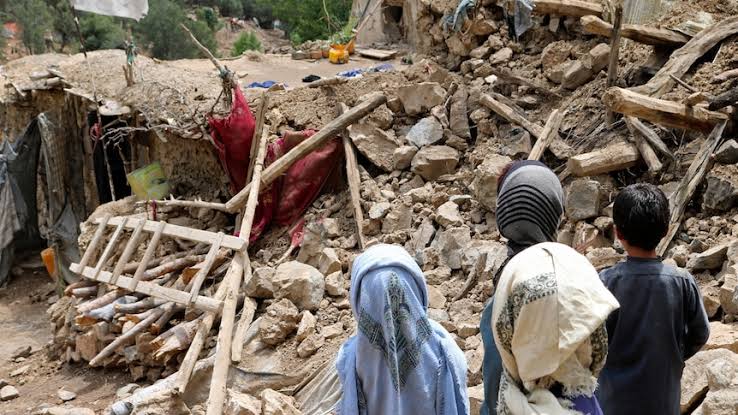
Afghanistan is seeking international support after a powerful earthquake struck eastern province killing more than 800 people and leaving thousands injured, authorities and aid agencies confirmed on Monday.
The 6.0-magnitude tremor hit Nangarhar province late Sunday, with its epicenter located near the city of Jalalabad.
The quake, which struck at night, forced families from their homes and triggered widespread panic across the region.
Officials said several villages were flattened, while mud-brick homes and poorly built structures crumbled under the impact.
Landslides caused by the quake blocked highways connecting Jalalabad to rural districts, delaying the delivery of medical aid and rescue teams.
Taliban government spokesperson Zabihullah Mujahid said emergency operations had been activated, with security forces and volunteers clearing debris to search for survivors.
“We urge international organizations and neighboring countries to provide urgent assistance,” he said.
Hospitals in Jalalabad have been overwhelmed, with patients treated in corridors and open courtyards due to limited capacity.
The Afghan Red Crescent Society confirmed that tents, blankets, and food supplies were being distributed, while the World Health Organization said it had dispatched mobile medical units to the worst-hit areas.
Witnesses described scenes of devastation. “We lost everything. My house is gone and my neighbors are under the rubble,” one resident of Khogyani district told local media.
Afghanistan’s mountainous terrain and fragile infrastructure make it highly vulnerable to earthquakes.
In June 2022, a 5.9-magnitude tremor in Paktika and Khost provinces killed over 1,000 people, while in October 2023, a series of quakes in Herat province left more than 2,000 dead.
ALSO READ: 7.7 magnitude earthquake strikes Myanmar
International observers noted that Sunday’s disaster was the deadliest quake in the region in nearly two years.
The United Nations Office for the Coordination of Humanitarian Affairs warned that relief operations face major obstacles due to limited air transport and sanctions on Afghanistan’s financial system, which restrict rapid aid transfers.
The disaster comes as the Taliban government struggles with a severe economic crisis, widespread poverty, and food insecurity affecting millions.
Humanitarian groups fear that the quake will further worsen living conditions ahead of the winter months.
Rescuers said the death toll is expected to rise as teams gain access to remote mountain communities cut off by the tremor.
BBC