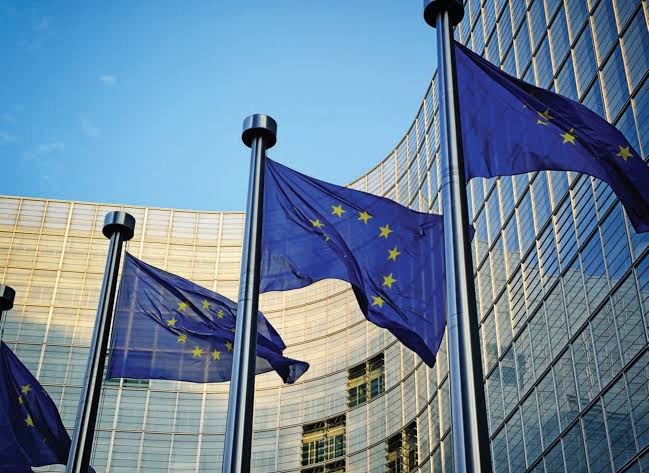
EThe European Union has taken a step against the ongoing Israel military campaign in Gaza, with Commission President Ursula von der Leyen announcing on Wednesday that all payments to Israel will be frozen.
The move signals a sharp escalation in European pressure on Israel and reflects mounting outrage over the humanitarian catastrophe unfolding in the territory.
Speaking to lawmakers at the European Parliament in Strasbourg, von der Leyen said the EU “will put our bilateral support to Israel on hold,” making clear that Brussels would not continue its financial cooperation while civilians in Gaza face dire conditions.
She stressed, however, that EU support for Israeli civil society and institutions such as the Holocaust memorial Yad Vashem would remain untouched.
Von der Leyen went further by proposing sanctions on “extremist ministers and violent settlers,” individuals she said were fuelling tensions and worsening the conflict.
Her words carried a pointed rebuke: “Man-made famine can never be a weapon of war. For the sake of the children, for the sake of humanity, this must stop.”
The announcement marks one of the strongest criticisms of Israel yet from the EU, which has long been divided over its stance toward the conflict.
While some member states have pushed for tougher measures, others remain wary of damaging political and security ties with Israel. Von der Leyen’s proposal, however, suggests that the bloc may be moving toward a harder collective position.
In addition to halting payments, von der Leyen floated the idea of partially suspending the EU-Israel Association Agreement, a landmark deal signed in 2000 that governs political and economic cooperation.
Such a suspension would represent a symbolic and practical downgrade in relations, signaling that Brussels no longer views “business as usual” as acceptable under current circumstances.
The immediate trigger for the EU’s action is Israel’s months-long military campaign in Gaza, launched after Hamas’s October 7, 2023, attack that killed around 1,200 people and saw more than 250 hostages taken into Gaza.
ALSO READ: Israeli jets strike Syria in overnight raids
While Israel has argued that its campaign is necessary to eliminate Hamas, international criticism has grown as civilian casualties mount and infrastructure collapses.
According to figures from the Hamas-run health authority, more than 64,500 Palestinians have been killed since the offensive began.
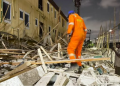
Entire neighborhoods have been reduced to rubble, hospitals are overwhelmed, and international aid agencies have repeatedly warned of famine-like conditions.
Von der Leyen’s remarks directly addressed these humanitarian concerns, urging Europe to lead by example in rejecting the use of starvation and deprivation as weapons.
The move is likely to spark a mixed reaction both within Europe and internationally. Pro-Palestinian groups are expected to welcome the EU’s decision as a long-overdue step toward accountability, while critics may argue that the suspension of payments risks undermining European influence over Israeli decision-making.
For Israel, which has relied heavily on European political and economic cooperation, the suspension represents both a diplomatic blow and a sign of growing isolation.
As the conflict drags on, the EU’s decision could add momentum to calls for a ceasefire and international mediation.
Von der Leyen concluded her remarks with a moral appeal: “Europe must stand on the side of humanity. Gaza’s children deserve life, dignity, and hope. This is our responsibility as much as it is theirs.”
NAN