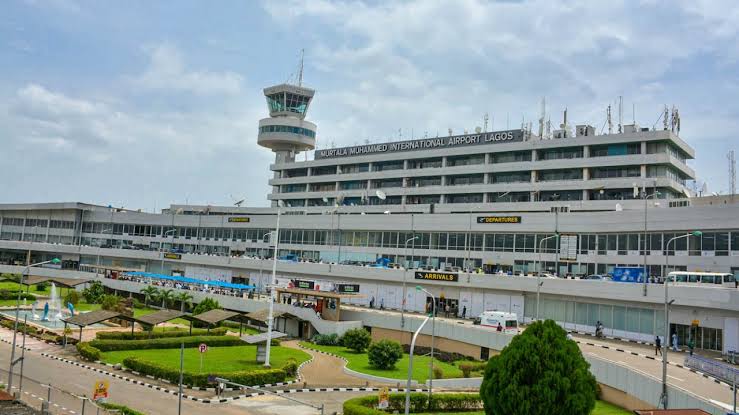
Airports are central to aviation safety, yet their role in accidents is often overshadowed by the focus on airlines and pilots while many operate without insurance cover.
Rarely does attention turn to the airports themselves—the runways, infrastructure, and systems that shape aviation safety.
That silence has now been broken, as industry leaders clash over whether Nigerian airports are adequately insured against liabilities.
At the 5th CHINET AviaCargo Conference in Lagos, Captain Edward Boyo, Managing Director of Landover Company, threw the spotlight on what he described as a glaring omission: airports, he argued, remain dangerously uninsured.
In his view, poor runway hygiene, weak de-rubberization practices, and inadequate wildlife control often contribute to accidents, yet airports shoulder no liability.
“Mr. Regulator, you have to ensure that all airports in Nigeria take up insurance. A lot of jet aircraft are destroyed by airport inefficiencies and infrastructure.
“Many accidents that happen at airports are the direct responsibility of the airport,” Boyo said, challenging regulators to enforce coverage that matches global standards. He should know as a pilot of considerable experience and Chief captain at Overland Airways.
Boyo’s comments drew attention to a regulatory shift years ago, when airport liability was excluded from Part 18 aviation insurance regulations.
While airlines, passengers, and baggage must carry insurance, airports—largely government-owned—escaped mandatory coverage.
His argument struck a chord with many observers who believe the imbalance leaves airlines unfairly exposed.
But the push for reform has met a resistance from Captain Hamisu Yadudu, former Managing Director of the Federal Airports Authority of Nigeria, FAAN.
READ ALSO: FAAN, Customs collaborate to combat money laundering
In an interview with NigerianFLIGHTDECK, Yadudu stressed that FAAN’s airports are fully insured and up to date with premium payments, a track record he described as consistent.
“All FAAN airports, I can confirm to you, are fully insured. Up to the time I left, payments were made. After further checks, I received confirmation that FAAN is still paying.
“So, there is no issue with FAAN airports; it is the state airports that are questionable,” he said.
Yadudu added that FAAN once petitioned the Nigeria Civil Aviation Authority, NCAA, to restrict civilian flights into military airports, warning that those facilities lacked commercial insurance and did not meet international safety standards.
“Because of insurance, FAAN asked NCAA to stop aircraft from landing in military airports. Some accused us of jealousy or competitiveness, but our point was clear—standards and safety first,” he said.
His intervention reframed the debate, shifting attention from FAAN’s federal network to state-owned and military airports, where insurance records remain unclear.
Industry analysts note that while Boyo highlighted a systemic gap, Yadudu’s defence suggests the real risk lies in inconsistent enforcement across non-FAAN facilities.
The issue has gained sharper urgency following the passage of the Nigerian Insurance Industry Reform Act signed into law by President Bola Tinubu.
The new law empowers the National Insurance Commission to enforce compulsory insurance across sectors, including aviation.
With this authority, regulators are expected to compel all airports—federal, state, and military—to maintain liability cover.
For stakeholders, the stakes are clear. Comprehensive airport insurance not only cushions financial risks but also pressures operators to maintain higher safety standards.
Boyo’s alarm and Yadudu’s defence, though seemingly at odds, highlight one consensus: without uniform enforcement, gaps in airport insurance could compromise safety, accountability, and Nigeria’s standing in global aviation.
Crediblenewsng.com