The United Kingdom has urged Israel not to take retaliatory steps following its decision to formally recognise a Palestinian state, warning that annexing parts of the West Bank would only inflame tensions and undermine prospects for peace.
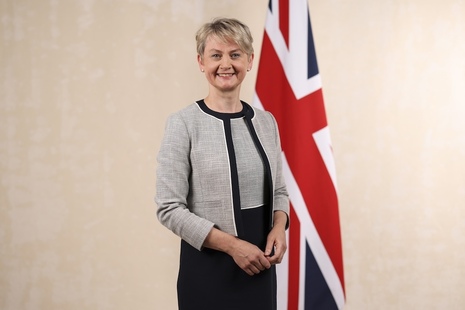
Foreign Secretary Yvette Cooper made the call during an interview with the BBC on Monday, hours before attending a high-level United Nations meeting in New York.
The conference, co-chaired by France and Saudi Arabia, is expected to see several European states, including Belgium, follow the UK’s lead in extending recognition to Palestine.
The policy shift, announced on Sunday by Prime Minister Sir Keir Starmer, marked a major departure from decades of British diplomacy. The UK was joined by Canada, Australia, and Portugal in recognising Palestinian statehood.
According to Starmer, the move aims to “revive the hope of peace and a two-state solution” at a time when violence and humanitarian suffering have reached unprecedented levels.
Israel’s government, however, reacted angrily. Prime Minister Benjamin Netanyahu dismissed the recognition as “a huge reward to terrorism,” insisting Palestinian statehood “will not happen.”
Israeli spokesperson David Mencer went further, accusing Labour of “betrayal” and warning that the Jewish community would not forgive the government’s stance.
Despite Israel’s objections, Cooper emphasised that the recognition was not about rewarding extremists but about safeguarding long-term stability.
“We have been clear that this decision is about security for Israel as well as security for Palestinians,” she explained. “It’s about protecting peace, justice, and crucially, security for the Middle East.”
She added that she had directly warned her Israeli counterpart against using the decision as a pretext for annexation in the occupied West Bank.
The recognition also sparked debate among allies. The United States criticised the move as a “diplomatic gift to Hamas,” referencing the militant group’s October 2023 attack on Israel that killed 1,200 people and saw 251 taken hostage.
Starmer rejected this framing, reiterating that Hamas has “no future, no role in government, no role in security” under the terms of recognition. The UK has already proscribed Hamas as a terrorist group and has pledged new sanctions against its leadership.
Hamas, while welcoming the recognition as an “important step,” urged that it be followed by “practical measures” to end the war and Israeli occupation.
Meanwhile, Palestinian Authority President Mahmoud Abbas hailed the move as paving the way for peaceful coexistence, describing it as a milestone toward “living side by side with the state of Israel in peace and good neighbourliness.”
The recognition comes against the backdrop of growing international concern over Israel’s conduct in Gaza and the West Bank. Nearly two years into the conflict, UN investigators have accused Israel of committing genocide in Gaza, where some 65,000 people have been killed.
UN-backed experts have also declared a famine in Gaza City, deepening the humanitarian crisis. Israel has rejected these findings, blaming aid agencies and Hamas for civilian suffering.
The UK’s move aligns it with around 75 percent of UN member states that already recognise Palestine. However, recognition remains largely symbolic since Palestine has no agreed borders, capital, or standing army.
The envisioned two-state solution would see a Palestinian state established in the West Bank and Gaza Strip, with East Jerusalem as its capital—broadly based on pre-1967 war boundaries.
UK officials have pointed to the ongoing expansion of Israeli settlements in the West Bank—considered illegal under international law—as a driving factor behind the decision.
ALSO READ:UK, Canada, Australia recognise Palestine State
Settlements have more than doubled under Netanyahu’s leadership, further eroding the viability of a two-state solution.
Far-right members of his government, such as National Security Minister Itamar Ben Gvir, have openly called for annexation of the West Bank and dismantling of the Palestinian Authority.
Despite the risks, the UK insists its recognition is a necessary step to keep alive the prospect of a negotiated peace. Cooper said extremists on both sides were determined to bury the two-state solution, but Britain had a “moral obligation” to resist despair.
“The easy thing would be to walk away,” she said. “We just think that is wrong when we’ve seen such devastation and suffering.”
As international attention shifts to New York this week, the UK will push to build consensus at the UN General Assembly on a framework for peace.
While recognition alone does not end the conflict, ministers argue it sends a clear message: the window for a two-state solution is closing, and urgent action is required to prevent it from shutting entirely.
BBC