Nosmot Gbadamosi
The African Growth and Opportunity Act, AGOA, expired on Tuesday. For 25 years, the trade pact offered many African countries duty-free access to the U.S. market. Its termination could impact more than a million jobs across the continent.
The United States established AGOA in 2000 to help foster economic development in Africa. But in the decades since U.S. President Bill Clinton signed it, the continent’s overall trade with the United States has diminished, in part due to rising commerce with China. AGOA also effectively became moot after U.S. President Donald Trump announced a minimum 10 percent tariff on all countries this year.
At least 32 African countries were participants in AGOA. Among them, Kenya, Lesotho, Madagascar, Nigeria, and South Africa were the largest exporters to the United States. AGOA’s lapse will impact them differently.
Nigeria, a petrostate, is likely to be cushioned from negative impacts due to its diversified trade ties. (The country’s biggest trade partners are China and India.) Since the start of Trump’s second term, Nigeria has actively worked to shift its economy away from the United States, including by partnering with other African countries and the United Kingdom.
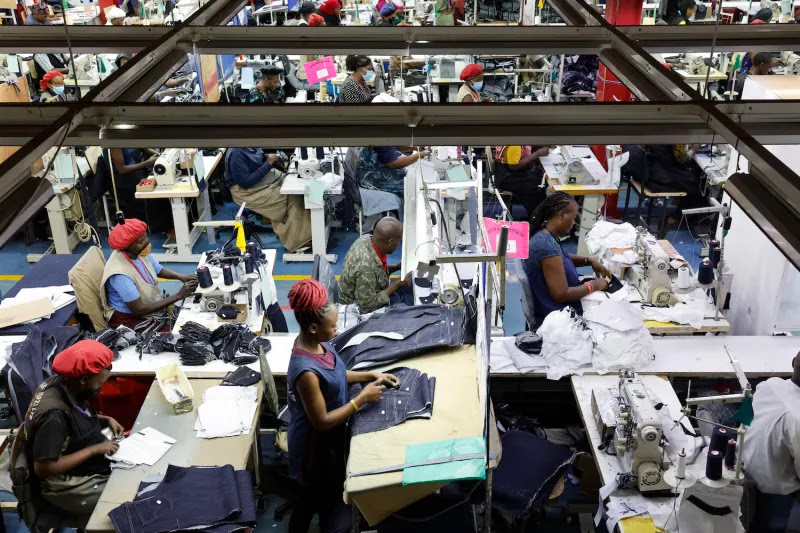
Smaller nations that are less entwined with China are likely to be the worst affected by AGOA’s expiration. A significant proportion of goods from Madagascar (including vanilla and textiles) and Lesotho (including denim materials) are sent to the United States. Around 60,000 textile jobs are now at risk in Madagascar, according to an industry representative.
Also Read: EU imposes feeble trade restrictions on Israel
In April, Trump announced 50 percent tariffs on Lesotho, which he cut to 15 percent in July. But that reduction came too late: Many buyers in the U.S. denim industry had already begun pulling orders from the country, prompting the government to declare a state of disaster. Authorities warned that the end of duty-free access to the U.S. market could cause up to 40,000 job losses. Lesotho has a population of just 2.3 million.
To make matters worse, Lesotho’s biggest export market is South Africa, which is subject to sanctions threats from the Trump administration. Trump cut aid to South Africa this year over false accusations that the country is committing genocide against white people. South Africa, the continent’s most industrialized nation, was AGOA’s largest beneficiary. As its economy undergoes strains due to U.S. pressure, Lesotho will suffer, too.
South Africa faces tens of thousands of job losses in its fruit and motor industries. Its car exports to the United States declined by 85 percent in May compared with the same period last year, after Trump imposed 30 percent tariffs on the country and 25 percent on vehicle imports globally.
Kenya, meanwhile, could see up to 65,000 job losses in its textiles and fruit sectors, Business Daily reported. Kenyan President William Ruto sought to strike a bilateral trade deal with the United States on the sidelines of the United Nations General Assembly last month.
AGOA could be renewed by the end of the year, given Washington’s focus on countering Beijing. In June, China offered duty-free access to all African nations apart from Eswatini, which recognizes Taiwan. The U.S. Chamber of Commerce sent a letter to Congress last month arguing that renewing AGOA would help “deconcentrate and diversify supply chains away from China.”
Last week, African officials held last-minute trade talks with the United States in the hope of saving AGOA. The Trump administration backs a one-year extension of the deal, a White House official told CNN but added that it had other priorities amid a U.S. government shutdown.
South African Trade Minister Parks Tau appeared to back up that reporting. The “consensus suggests that AGOA may be renewed for a short period,” his office said in a statement on Tuesday.
Africa Brief