For decades, Osun politics—has been a theatre of godfathers and loyal protégés, where power rarely shifted hands without a whisper from political elders.
These godfathers have pulled the strings behind the curtain– but now, the tides are turning.
From the days of Chief Bisi Akande to the more recent tenure of Rauf Aregbesola, the state’s power structure has been shaped by alliances and fallouts between those who fund elections and those who govern afterward.
Governors rise, but godfathers linger—deciding appointments, shaping contracts, and sometimes anointing successors before ballots are cast.
That cycle may now be approaching its twilight.
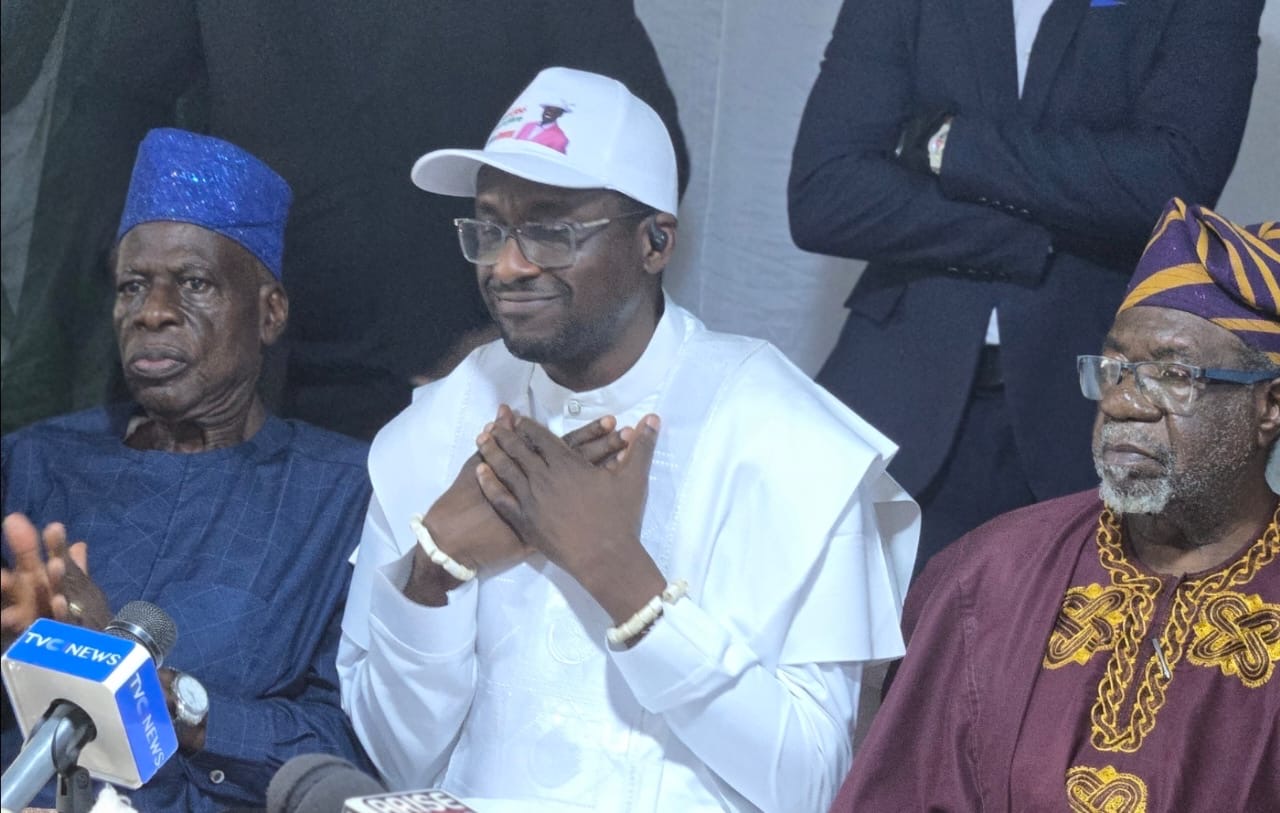
A new generation of leaders is beginning to challenge the old order, and at the centre of this unfolding drama stands Hareter Babatunde Oralusi, a businessman, social entrepreneur, and development expert now gunning for the Osun governorship in 2026 under the All Progressives Congress, APC.
The end of the godfathers’ era?
The term “godfather politics” evokes a system where power brokers — often hidden in the shadows — control nominations, influence elections, and pull strings behind the scenes. In many states, discontent is brewing over this covert hold, and Oralusi’s bold framing speaks to a deeper frustration.
His entrance into the race marks a potential turning point: a businessman with transnational influence challenging the old guard in Osun’s political economy. Rather than accept a predetermined field, he is staking everything on agency, integrity, and grassroots legitimacy.
Anatomy of a local government crisis
Central to Oralusi’s pitch is resolving what political watchers call the Osun local government autonomy crisis — a governance disaster with real human costs.
Since February 2025, the 30 local government areas in Osun have effectively been shut down, with many secretariat locked and staff stranded without direction.
Why? Because of clashing judicial rulings, partisan conflicts, and refusal to cede control over finances and administration.
The Supreme Court’s July 2024 ruling granted financial autonomy to Nigeria’s 774 LGAs — meaning allocations should go directly to local governments, not passed through states.
But in Osun, that directive has been resisted, triggering a stalemate where councils exist in name, but cannot function.
In one dramatic twist, court-reinstated APC local government officials have sued the federal government and Governor Adeleke’s administration, seeking tenure extension to preserve their hold over the councils.
This legal tug-of-war has left many Osun communities bereft of basic services, staff salaries withheld, and administrative functions ground to a halt.
Oralusi seized on this crisis as his campaign fulcrum: “We cannot continue to allow the local government crisis to paralyse development at the grassroots level,” he declared, pledging to resolve it within his first 100 days in office.
The vision: 100 / 365 days of renewal
At a press conference in Ile Ife Thursday, Oralusi unveiled a bold agenda built around two pillars: the “100 Days Promise” and the “365 Days Promise.”
100 days promise: Resolve the local government autonomy standoff, strengthen internal revenue systems, generate 100,000 jobs across the state, institute automatic health insurance for all residents.
365 days promise: Reduce dependence on federal allocations through economic diversification, accelerate digital transformation and technology adoption, Invest heavily in human capital and skills training, launch agricultural modernization at scale.
He also pledged that 25 percent of the state budget would go to education, and promised sweeping reforms in the health sector — particularly at the primary level — where staffing and infrastructure are chronically compromised.
His target: to resuscitate public health and bridge inequalities across rural and urban Osun.
Agriculture, he said, would be re-engineered not as a subsistence fallback but as a commercial engine. Youths would be central: offered access to land, training, value-chain linkages, and processing infrastructure.
With that, Oralusi argued, the youth won’t just be beneficiaries — they will be producers, entrepreneurs, and stakeholders.
READ ALSO: Oralusi joins Osun guber race, promises new dawn
From global stage to local ground
Oralusi is not your typical local politician. Born in 1971 in Ibadan and now 54, he has built bridges across continents. His ventures span Europe, America, and Africa.
He has launched institutions, impacted communities, and invested in social innovation.
His educational credentials — including studies at the London School of Social Enterprise — bolster his technocratic reputation.
At his campaign launch, he emphasized that his global experience is a tool to upgrade Osun, not detach from it.
He framed his bid as a return to his roots, leveraging external networks for local benefit. His narrative: the outsider who knows how to run systems, but who also understands Indigenous struggles.
Clash with the prospects of incumbency
Oralusi’s entry alters the calculus for both APC and the ruling PDP. Governor Ademola Adeleke, who swept into office in 2022 by defeating the incumbent APC governor, presides over a state increasingly agitated by governance failures.
The inability to resolve the LG stalemate, uneven budget implementation, and limited trickle-down benefits have all fueled criticism.
For the APC, asserting a fresh face presents both opportunity and risk: can they unify around a reformist technocrat against entrenched party rivals? Can Oralusi’s image transcend party fiefdoms and speak to alienated communities? His appeal to youth, transparency, and service must contend with deep-rooted patronage networks and local party machines.
Moreover, as many aspirants line up, the APC primary will be fiercely contested. But Oralusi’s positioning gives him a narrative edge: he isn’t merely another product of political bargaining — he claims to represent a break.
Challenges ahead: Reality checks, strategical hurdles
Even the strongest vision faces structural obstacles. First, the legal and institutional chaos in Osun’s councils is not just political — it is constitutional and judicial.
Resolving tenure conflicts, executing direct funding, and legally reconfiguring the LG-State financial relationship will demand negotiation, litigation, and political will.
Second, political backlash is inevitable. Dislodging godfathers means confronting actors whose influence spans money, media, and enforcement. He will need deep grassroots organizing, credible coalitions, and a strong narrative to shield against sabotage.
Third, budgetary constraints and economic pressures loom. His promises of massive job creation, budget reorientation, and health coverage will require real fiscal innovation — not just rhetorics.
Fourth, managing expectations in the first 100 days will be critical. Delivering quick wins — restoring council operations, paying salaries, launching job programs — will determine whether his campaign momentum holds.
Youth, hope, a new social contract
Oralusi’s biggest bet may be on youth disillusionment. Census data and civil society monitoring show that thousands of Osun youths see political elites as self-serving and transactional.
His campaign taps into that discontent with calls for inclusion, upward mobility, and merit-based governance.
In his speech, he made a promise many have waited to hear: “The time is now, and no one will be left behind.”
That slogan may just be his bridge to voters who feel sidelined, neglected, or forced to choose between clientelism and abandonment.
Whether he wins or not, his message touches on a truth Nigerians are slowly embracing: democracy cannot thrive on the dictates of unelected power brokers.
The godfathers who once held states hostage are aging, their networks fraying, their influence waning in an era where citizens now wield their own megaphones through social media and civic activism.
If Oralusi succeeds in recasting politics as service rather than entitlement, he might prove that godfathers can be dethroned.
But the test starts immediately — with reconciling legal chaos, building trust at the grassroots, and delivering tangible results that will make the promise credible.
Crediblenewsng.com