Cameroon’s government has announced plans to prosecute opposition leader Issa Tchiroma Bakary, accusing him of instigating violent demonstrations that erupted after President Paul Biya’s re-election to an eighth consecutive term earlier this month.
Interior Minister Paul Atanga Nji said on Tuesday that Bakary would face legal action for allegedly organising what authorities described as “illegal protests” that resulted in multiple deaths and property destruction in several cities.
He added that some of Bakary’s associates “responsible for an insurrectionary plan” would also be tried.
The announcement follows days of unrest after the country’s 12 October presidential election, which extended Biya’s four-decade rule.
According to official results released by Cameroon’s Constitutional Council, Biya secured 53.7% of the vote against 35.2% for Bakary.
However, the opposition leader insists he was the rightful winner, claiming widespread irregularities and voter intimidation.
At least four people have been confirmed dead in clashes between security forces and protesters, with dozens injured or detained.
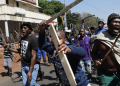
Demonstrations have been particularly intense in Douala and Garoua, where protesters erected roadblocks, burned tyres, and demanded Biya’s resignation.
Bakary, who once served as Biya’s information minister before breaking ranks with the ruling Cameroon People’s Democratic Movement, has emerged as the strongest challenger to Biya’s decades-long dominance.
In an earlier interview with the BBC, Bakary said he would “never accept a stolen vote,” insisting that the government had manipulated results to retain power.
ALSO READ: Paul Biya wins eighth term, Cameroon protests
On the day results were announced, Bakary claimed that armed men opened fire near his residence in Garoua, killing at least two civilians.
The interior minister later confirmed that an investigation had been launched into the violent incidents before and after the election, though he did not specify how many protesters were killed.
“During these attacks, some of the criminals lost their lives,” Nji said, also noting that several police and military personnel had sustained serious injuries during the clashes. Despite the violence, he maintained that the situation was “under control” and urged citizens to remain calm.
International reactions have been swift. The United Nations, African Union, and European Union have all urged restraint and called on Cameroon’s authorities to respect human rights while ensuring accountability for any unlawful killings.
Analysts warn that the crisis could deepen Cameroon’s political instability and further polarize its society, already strained by years of conflict in the English-speaking regions.
President Paul Biya, now 92 years old, has ruled Cameroon since 1982, making him the world’s oldest sitting head of state.
His continued hold on power, despite mounting discontent and opposition unity, has intensified fears of democratic decline in the Central African nation.