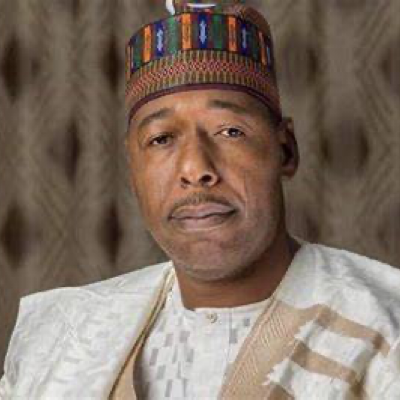
Borno State Governor, Prof. Babagana Umara Zulum, has disclosed that his administration is in the final stages of establishing a state-owned electricity framework—an ambitious move made possible by the recent amendment of Nigeria’s Electricity Act.
The amendment, which places electricity on the concurrent legislative list, allows states to generate, transmit, and distribute power independently of the federal structure.
Speaking during a meeting with the Managing Director of the Rural Electrification Agency (REA), Engr. Abba Aliyu, Governor Zulum highlighted that a draft memorandum detailing the proposed electricity outfit had already been submitted for his final review.
He described the new legal landscape as a critical opportunity for Borno to deepen its energy independence and improve service delivery.
Zulum noted that Borno has already made substantial progress in renewable energy deployment, especially solar power, which has become central to the state’s resilience strategy amid years of insurgency-related damage to power infrastructure.
He emphasized that several health facilities and many of the state’s Mega Schools now rely entirely on solar energy.
ALSO READ: How Borno farmers risk lives to feed families
The governor also highlighted the state’s solar-powered water treatment plants and the five-megawatt solar capacity installed at the Maiduguri Industrial Park, a project aimed at boosting economic activity and reducing reliance on the national grid.
According to him, Borno’s investments place it among the leading states championing off-grid and mini-grid energy solutions in Northern Nigeria.
“In Borno, we cannot afford to depend solely on the national grid. Our experience over the years has shown the importance of energy diversification and local generation.
That is why we have invested heavily in solar power and why establishing our own electricity outfit is so important,” Zulum stated.
Earlier in the meeting, REA’s Managing Director, Engr. Abba Aliyu, reaffirmed the agency’s commitment to supporting Borno’s efforts to expand rural electrification.
He noted that the visit was meant to align ongoing federal rural power initiatives with the state’s new energy direction, especially in hard-to-reach communities recovering from conflict.
The session was attended by top government officials, including the Secretary to the State Government, Bukar Tijani; Head of Service, Dr. Muhammad Ghuluze; members of the Borno State Executive Council; and other senior aides.
As the state moves toward establishing its own electricity agency, observers say the development could position Borno as a model for energy reform—especially for states exploring alternative power sources and improved autonomy under Nigeria’s restructured electricity law.