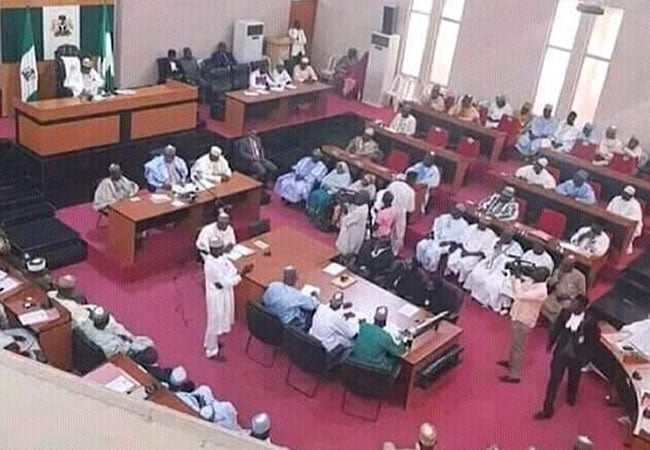
Legislative activities at the Bauchi State House of Assembly have been brought to a complete standstill following the nationwide strike embarked upon by the Parliamentary Staff Association of Nigeria, PASAN.
The industrial action, which entered full enforcement on Friday, reflects renewed pressure on the Federal Government to implement long-standing financial autonomy provisions for state legislatures.
According to PASAN’s Bauchi State Chairman, Adamu Yusuf, workers in the state joined the nationwide protest in full compliance with directives issued by the association’s national leadership.
He explained that the strike became necessary after several years of unfulfilled commitments and delayed action on implementing the Financial Autonomy Act.
Yusuf noted that achieving financial independence for state assemblies is essential for strengthening legislative authority and deepening democratic governance across the country.
He explained that PASAN has held multiple strikes in previous years, all geared toward compelling the government to activate constitutional and statutory reforms that guarantee legislative autonomy.
However, the Federal Government has yet to fully enforce the law, leaving workers with no choice but to escalate their demands.
The union leader stressed that the strike represents a unified national stance, as all state chapters resolved to intensify pressure on the government.
ALSO READ: UCH doctors justify strike, list demands from FG
Yusuf added that the workers only resorted to shutting down legislative activities after exhausting dialogue, consultations and negotiations with relevant government agencies.
In the midst of the shutdown, Yusuf commended Bauchi State Governor Bala Mohammed for supporting efforts to ensure financial autonomy for the state legislature.
He described the governor’s position as aligned with broader national demands for stronger legislative institutions and improved checks and balances at the subnational level.
PASAN, which represents workers across Nigeria’s legislative bodies—including state Houses of Assembly and the National Assembly—has consistently advocated for improved working conditions, better welfare packages and structural reforms in the legislative system.
Its key demands include full implementation of the Consolidated Legislative Salary Structure, settlement of outstanding allowances and the establishment of legislative service commissions to professionalise the workforce.
In recent years, the union has organised several strikes that temporarily shut down state assemblies across Nigeria.
These actions have typically centred on enforcing constitutional provisions that mandate administrative and financial autonomy for the legislature—provisions many states have been slow to implement.
Punch