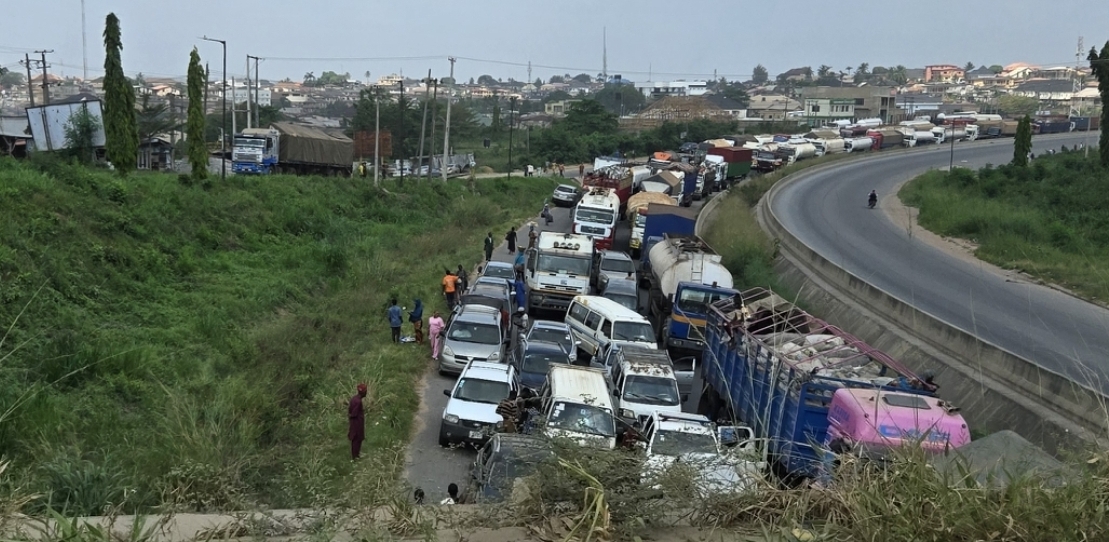
There is a chaotic traffic stand-still along Ibadan- Lagos Expressway as residents of Circular Road communities vehemently protest Governor Seyi Makinde’s controversial house demolition program.
The protests, which entered their fourth consecutive day Monday, created a long traffic standstill from kilometer 10 out-biubd the old Ibadan tool gate towards Guru Maharaji enclave.
Following the persistent protests, Governor Makinde had earlier bowed to public pressure and reduced the Circular Road corridor acquisition from 500 metres back to the original 150 metres in areas that are already developed.
Previous protests have severely disrupted traffic flow, with residents blocking major arteries including Iwo Road intersection on the Lagos-Ibadan Expressway, I adan-Ife Road and roads leading to the State Secretariat, Agodi.
Also Read: Ibadan: Residents urge Makinde to focus more on internal roads
Thousands of protesters from the six affected local government areas namely Akinyele, Oluyole, Egbeda, Lagelu, Ona-Ara, and Ido – have carried placards demanding the governor honor his 2024 promise not to demolish houses for the project conceived about 20 years ago.
Original Conception
The Ibadan Circular Road project was originally conceived by former Governor Rashidi Ladoja (now the 44th Olubadan of Ibadanland) between 2003-2007. The initial plan called for a 150-metre right-of-way (75 metres on each side) for the 110-kilometer ring road around Ibadan.
The project suffered setbacks due to Ladoja’s controversial impeachment in 2006, which denied him a second term to complete the initiative.
According to affected residents, Governor Makinde dramatically expanded the corridor requirements upon assuming office. Engineer Oladejo Folorunsho whose three-bedroom house was demolished, told SaharaReporters: “When this project started, we all agreed on 75 metre to the right, 75 metre to the left… But when Governor Seyi Makinde came into power, he changed it from 75 metre to 500 metre leading to the demolition of many houses “.
Compensation Controversy
The protests have been fueled by what residents describe as grossly inadequate compensation. Folorunsho said he was paid only ₦456,000 as compensation for his fully-built three-bedroom house.
The controversy comes amid questions about the state government’s financial priorities. According to SaharaReporters, Oyo State borrowed ₦219 billion between January and September 2025, while generating only ₦63 billion in internally generated revenue during the same period.
Notably, the state approved ₦63.4 billion for Government House renovations in June 2025, with officials claiming the governor and deputy had been living in their personal homes for six years due to the “embarrassing state” of official residences.
After days of mounting pressure, Governor Makinde has made several concessions specifically restoring corridor width back to 150 metres in developed areas, addressing protesters directly, though he dismissed some demonstrators as “sponsored individuals”, promised compensation payments would commence for affected property owners
Prince Adeniyi Fasoye, coordinator of the Ibadan Circular Road Communities, emphasized the protests were “not political” and demanded the government maintain the original 150-metre boundary established by Ladoja.
While the government’s concessions represent a partial victory for protesters, tensions remain high. The massive scale of the project – affecting over 100 communities across seven local governments- suggests the controversy is far from over.
The residents’ successful mobilization demonstrates the power of organized civil action in holding government accountable, particularly on issues affecting fundamental property rights and adequate compensation for public projects.
The traffic disruptions are likely to continue until a comprehensive agreement is reached between the state government and affected communities on fair compensation and adherence to the reduced corridor boundaries.
Crediblenewsng.com