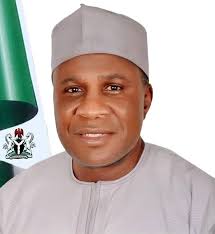
The Minister of Regional Development, Abubakar Momoh, has defended President Bola Tinubu’s sweeping economic reforms, describing them as difficult but unavoidable steps required to stabilise and reposition Nigeria for long-term shared prosperity.
He made the remarks while delivering the 55th Founder’s Day Lecture of the University of Benin on Monday in Benin City.
Speaking on the theme “Reforms for a Shared Prosperity,” Momoh acknowledged that many citizens are currently grappling with the immediate effects of the economic adjustments.
However, he insisted that the government’s decisions were rooted in the need to confront long-standing distortions that had weakened the economy for decades.
The minister argued that President Tinubu inherited entrenched systemic problems that previous administrations lacked the political courage to address.
He cited the removal of the petrol subsidy as an example, emphasising that it was necessary to stop fuel smuggling, corruption in the supply chain, and unsustainable financial leakages that drained national resources.
According to Momoh, the subsidy regime had created an environment where Nigeria effectively subsidised neighbouring countries, as cheap fuel often made its way across borders. Ending the practice, he said, was a painful but crucial step toward fiscal stability.
He further highlighted the unification of Nigeria’s exchange rate, describing the former multiple-rate system as one that rewarded arbitrage and undermined genuine economic activity.
ALSO READ: NGF endorses Tax Reforms, Tinubu has his way
Many legitimate businesses, he said, could not access foreign exchange while a small group exploited loopholes for profit.
Beyond monetary and petroleum-sector reforms, Momoh pointed to the government’s implementation of the Petroleum Industry Act, the growing role of Host Community Trusts, and ongoing investments in local refining capacity.
He referenced the Dangote Refinery’s plan to scale production to 1.4 million barrels per day and the rise of indigenous modular refineries as signs of renewed investor confidence.
The minister also highlighted initiatives aimed at reducing energy and transportation costs, including the Presidential Compressed Natural Gas Initiative.
In the power sector, he announced that the Federal Executive Council had approved a ₦4 trillion bond to clear verified debts owed to power-generation companies — part of a larger effort to restore liquidity and reliability.
Revenue collection in the electricity sector, he noted, improved by 70 percent in 2024 due to regulatory adjustments.
He also disclosed that the government approved ₦68.7 billion for solar farms across eight universities and teaching hospitals, including UNIBEN.
While acknowledging the hardships Nigerians are experiencing, Momoh maintained that the reforms are laying a durable foundation for inclusive and sustainable prosperity.
He also reflected on his personal journey from UNIBEN student to minister, thanking the institution for shaping his life.
UNIBEN Vice-Chancellor Prof. Edoba Omoregie praised Momoh’s contributions and noted that the university continues to benefit from federal interventions aligned with national development goals.