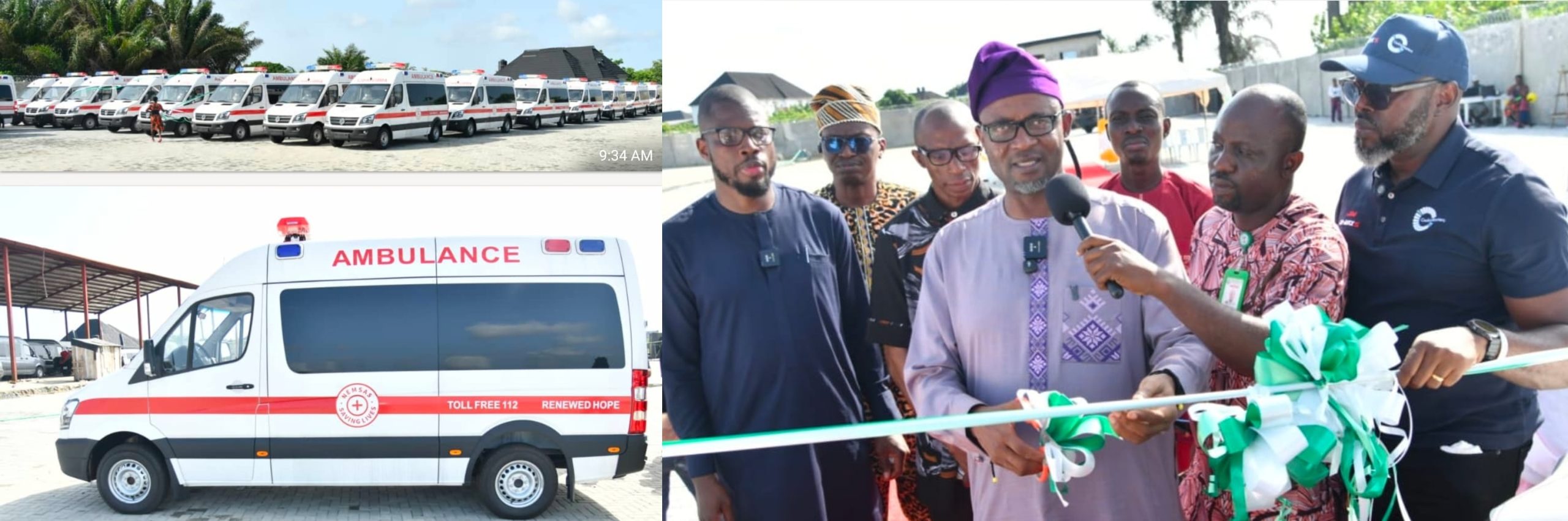
In a major step toward making healthcare more accessible and affordable, the Federal Government has commissioned 79 locally assembled advanced ambulances for distribution to tertiary hospitals across Nigeria.
The commissioning ceremony held in Lagos as part of activities marking the third anniversary of President Bola Ahmed Tinubu’s administration, underscored the government’s commitment to translating its healthcare promises under the Renewed Hope Agenda into practical improvements in emergency medical services nationwide.
The Chief Medical Director of Lagos University Teaching Hospital, LUTH, Professor Wasiu Lanre Adeyemo, who performed the commissioning on behalf of President Tinubu, described the initiative as clear evidence of the administration’s resolve to strengthen Nigeria’s health system through deliberate investment and reform.
According to Adeyemo, the ambulances, provided through the National Emergency Medical Services and Ambulance System, NEMSAS, under the Federal Ministry of Health and Social Welfare, will enhance the capacity of tertiary hospitals to respond swiftly and effectively to medical emergencies. He emphasized that this would help reduce avoidable deaths, improve survival outcomes, and ensure that more Nigerians can access quality care when they need it most.
Adeyemo noted that while investments in hospitals and medical infrastructure are vital, emergency transportation remains a critical link in ensuring timely access to treatment.
“Healthcare facilities must be accessible when emergencies occur. These ambulances will improve the movement of patients from homes, schools, markets, highways, and other locations to hospitals where they can receive timely medical attention.
“This will significantly reduce avoidable deaths and complications arising from delayed access to care,” he said.
Also Read: FG mandates drug tests in secondary schools
He added that the project aligns with the reform agenda of the Coordinating Minister of Health and Social Welfare, Professor Muhammad Ali Pate, who has consistently pushed for stronger health infrastructure, improved emergency systems, and measurable progress toward Universal Health Coverage.
The ambulances are Advanced Life Support units equipped with modern medical devices and communication systems, enabling hospitals to prepare for patients before arrival. Adeyemo explained that this will strengthen referral systems, improve patient transport, and support faster access to lifesaving care.
Beyond expanding emergency response, the project also highlights Nigeria’s growing local production capacity.
Adeyemo stressed that the ambulances and their emergency medical equipment were assembled entirely in Nigeria, demonstrating advances in local manufacturing, healthcare technology, and automobile engineering.
“These ambulances are a testament to Nigeria’s ability to produce world-class emergency response vehicles locally.
“Beyond improving emergency healthcare delivery, this initiative will stimulate local manufacturing, create employment opportunities, and strengthen confidence in indigenous capacity,” he said.
He further noted that the vehicles are built with dual-fuel technology, running on both Premium Motor Spirit and Compressed Natural Gas, in line with the Federal Government’s broader policy on sustainability and energy diversification.
Adeyemo described the deployment of the ambulances as a significant milestone in the government’s effort to build a more coordinated, responsive, and people-centred healthcare system.
He urged state governments, local councils, private healthcare providers, and other institutions to leverage the proven local production capacity demonstrated by the project for future emergency medical transportation needs.
With the distribution of the 79 ambulances to tertiary hospitals nationwide, the Federal Government says it is taking another practical step toward fulfilling its promise to make quality healthcare more reachable, responsive, and affordable for all Nigerians.