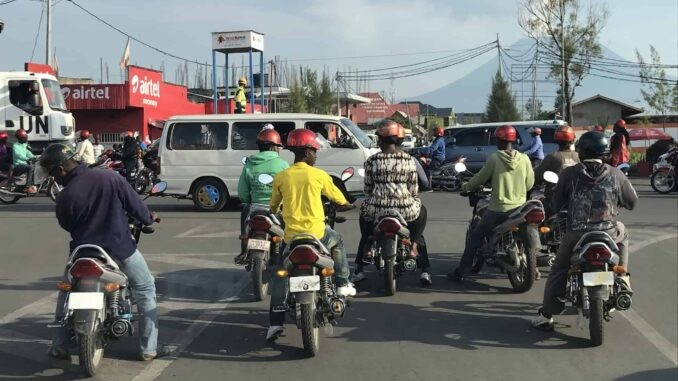
Mali has introduced sweeping restrictions on motorcycle movement outside major urban centers as part of intensified efforts to curb jihadist operations across the country, where insecurity has continued to worsen in recent months.
The government stated that the measure is necessary to disrupt the mobility of armed groups who rely heavily on motorcycles for rapid movement across rural areas, where state presence is limited and road networks are often poorly secured.
The announcement was made in a government order broadcast on national television on Wednesday evening, outlining both movement restrictions and broader controls on motorcycle trade and distribution.
Under the new directive, the circulation of motorcycles with engine capacities of 125cc and above has been suspended outside major cities and designated urban centers.
Exceptions were made for Bamako, the capital, as well as regional capitals and selected urban localities where civilian transport needs remain high and security conditions are relatively more stable.
Authorities explained that the restriction is aimed at limiting the use of high-powered motorcycles in rural and semi-rural areas, where jihadist groups have been known to operate checkpoints, ambush security convoys, and carry out attacks on transport routes.
The directive also extends to accessories linked to the affected motorcycles, effectively tightening control over the supply chain in an attempt to reduce availability across the country.
Officials argue that restricting access to such motorcycles will help weaken the operational capabilities of armed groups that depend on them for reconnaissance, rapid assaults, and escape routes in difficult terrain.
Mali has been grappling with a deepening security crisis driven by insurgent activity linked to Al-Qaeda-affiliated groups and Tuareg separatist movements.
The situation deteriorated further following coordinated attacks on military positions by jihadist fighters and separatist allies in late April, which exposed vulnerabilities in the country’s security architecture.
Also Read: Mali defence minister Sadio dies as rebels launch attack
Since April 30, reports indicate that armed groups have blocked several key highways leading into Bamako, disrupting the movement of goods and civilians.
Dozens of buses and freight trucks have also been destroyed in attacks along major transport corridors. The insurgency has resulted in significant territorial gains for armed groups in northern Mali.
One of the most notable developments has been the reported capture of Kidal, a strategically important town that has long been a focal point in Mali’s conflict with separatist and extremist groups.
The fall of such locations has been described as a major setback for the military junta that took power in 2020, raising concerns about the government’s ability to restore full territorial control.
Officials say the new motorcycle restrictions form part of a wider strategy to restore order, reduce the operational reach of insurgents, and strengthen security across vulnerable regions.
While the measures are expected to affect civilian transportation and commerce in rural areas, authorities insist they are necessary to confront the evolving tactics of armed groups and stabilize the country’s worsening security landscape.
EYEWITNESS NEWS