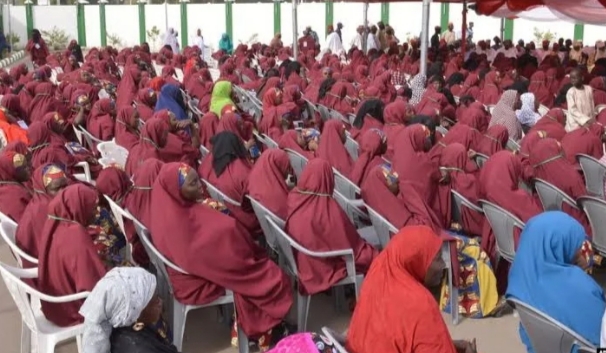
The Kano State Hisbah Board has announced the commencement of screening for the 2026 mass marriage support programme, in a move that once again draws attention to a deepening social reality in the state — the growing number of widows, divorcees and other vulnerable women who remain unmarried because of poverty, stigma and the rising cost of marriage.
In a joint statement issued by the committee overseeing the exercise and led by the Commander-General of Hisbah, Sheikh Aminu Ibrahim Daurawa, applicants who had earlier collected enrolment forms were urged to submit them without delay.
The committee said submission of the forms is compulsory for the next stage of the programme, which includes screening and medical examinations before eligible beneficiaries can proceed.
The development reflects how mass marriage schemes in Kano have evolved beyond ceremonial interventions into social welfare responses aimed at addressing the plight of many women who are unable to secure marriage because of economic hardship and social barriers. Previous reports on the programme show that beneficiaries are often drawn from widows, divorcees, spinsters and other less-privileged residents.
To ease the process, the Hisbah Board said the first stage of form submission has been decentralised across Kano’s 44 local government areas. Applicants are expected to return their completed forms to Hisbah offices in their respective councils, where officials will collate the entries and prepare candidates for the central verification phase.
Also Read: Hisbah dismantles wife-swapping ring in Bauchi
A separate arrangement was announced for corporate bodies and individual sponsors supporting specific applicants. According to the statement, such sponsors are to submit their forms directly to the Kano State Agency for the Control of AIDS in Naibawa, Kano. Screening at the Naibawa centre is scheduled to begin at 8:00 a.m. on Monday, June 8, 2026.
The board said the programme is intended to support vulnerable residents, reduce the burden of poverty and promote social stability through lawful marriages. Thousands of intending brides and grooms are expected to take part, with the exercise set to include medical tests and strict eligibility checks aimed at ensuring transparency and compliance with established standards. Similar screenings in the state’s mass marriage programme have previously included tests for HIV/AIDS, hepatitis, genotype and drug use.
For many observers, however, the significance of the programme goes beyond administration. It underscores an enduring social phenomenon in Kano: a large pool of women — especially widows, divorcees and young women from poor homes — who are willing to marry but are held back by cultural expectations, financial constraints and the stigma attached to previous marriages. In that context, the state-backed marriage initiative is increasingly seen not just as a welfare scheme, but as a response to a wider social imbalance affecting family formation and community stability.
The Hisbah Board said all applicants and stakeholders must strictly comply with the laid-down procedures so that only qualified and genuinely vulnerable persons benefit from the government-backed intervention.
Background to the Story
Kano’s mass marriage programme is not new. According to The initiative dates back to the administration of former governor Rabiu Musa Kwankwaso and was introduced as part of efforts to support vulnerable women and address social challenges in the state. The current round is expected to involve 3,000 prospective couples, made up of 1,500 men and 1,500 women.
The scheme has gone through several phases under different administrations. It recalls that in 2012, Kano sponsored a special mass wedding for 100 couples, most of them widows and divorcees who struggled to find suitors because of stigma and inability to meet traditional marriage costs.
Another planned edition in 2016 was stopped, but later administrations revived the programme, including 1,520 couples in 2017, 1,500 couples in 2019, and 1,800 couples in a more recent round.
The background also shows why the programme has remained politically and socially significant. Supporters argue it helps reduce the cost burden of marriage, promotes moral order and gives vulnerable women a pathway into stable family life. Critics, however, have questioned whether state funds used for mass weddings should instead go into jobs, skills acquisition and other long-term economic support. There were also concerns about abuse of the scheme, including cases where some beneficiaries allegedly tried to exploit the programme for material gain.
At the centre of the debate is a recurring reality in Kano society: many intended marriages collapse before they begin because families cannot afford expected items such as furniture, kitchen utensils and other household materials.
That burden falls especially hard on poor households and has made widows, divorcees and single women from vulnerable backgrounds more likely to remain unmarried for long periods. The state’s mass marriage initiative has therefore continued to be framed as both a moral intervention and a social protection measure.
Crediblenewsng.com