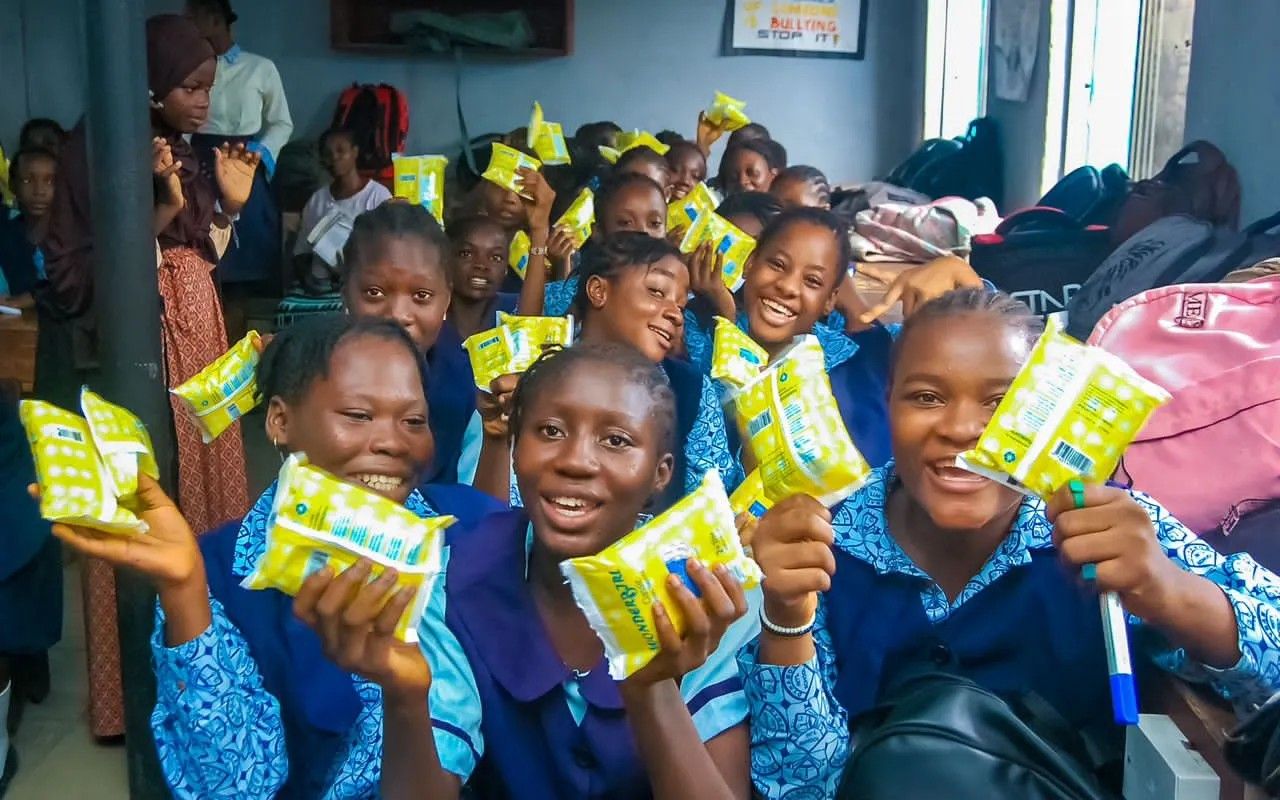
Children in Katsina State have appealed to the state government to provide schools with clean toilets, adequate water supply and affordable sanitary pads to improve menstrual hygiene and girls’ education.
The appeal was made on Saturday during the commemoration of the 2026 World Menstrual Hygiene Day in Katsina, organized by Save the Children with the theme, “Together for a Period-Friendly World.”
Speaking on behalf of adolescent girls, Save the Children Girl Champion, Hafsat Abubakar-Maina said many girls continued to face difficulties managing menstruation due to poor sanitation facilities and limited awareness.
She described menstruation as a natural biological process that should never be associated with fear, shame or stigma.
According to her, many girls begin menstruation without adequate knowledge, while harmful cultural beliefs and misinformation continue to expose them to discrimination and embarrassment.
Abubakar-Maina said the situation was worsened by the lack of functional toilets, clean water, soap and private changing spaces in many schools across the state.
She said that some girls stayed away from school during their menstrual periods because they could not afford sanitary pads or feared being ridiculed if their uniforms became stained.
According to her, this has a negative impact on girls’ education, self-confidence and future opportunities.
She further commended Save the Children and the Cuppy Foundation for equipping adolescents with knowledge on puberty, menstrual hygiene, personal health and life skills through Adolescent Sexual and Reproductive Health sessions.
Abubakar-Maina said the programme had also helped boys better understand menstruation, fostering respect for girls and reducing stigma in schools and communities.
She also appreciated the organizations for creating safe spaces where young people could openly discuss sensitive health issues and receive accurate information on their health and wellbeing.
Abubakar-Maina further commended the wife of the Katsina State Governor, Hajiya Zulaihat Radda, for supporting initiatives aimed at promoting girls’ education and wellbeing.
Also Read: Katsina targets 500 women for cancer screening
Appealing to the government to make sanitary pads affordable or free for girls from low-income families, she urged development partners to sustain menstrual hygiene education across the state.
The children also called on parents, teachers, traditional and religious leaders to break the silence surrounding menstruation, challenge harmful myths and provide girls with the support they need.
“A girl’s period should never stop her from learning, playing or chasing her dreams,” Abubakar-Maina said.
In her remarks, the wife of the governor, Hajiya Zulaihat Radda, reaffirmed the Katsina State Government’s commitment to improving the health, education and welfare of women and girls.
She described menstrual health as a public health, education, human rights and development issue that required the collective efforts of government, communities and development partners.
Radda said the government would continue to strengthen adolescent health interventions, expand access to reproductive health information and services, and improve menstrual hygiene management across the state.
She emphasized that no girl should miss school because of menstruation or suffer discrimination over a natural biological process.
The governor’s wife urged parents, teachers, healthcare providers, traditional and religious leaders to promote accurate information about menstruation and help eliminate stigma in communities.
She also acknowledged the support of the Katsina State Ministry of Health, the State Primary Health Care Agency, Save the Children and other development partners for advancing menstrual health awareness and adolescent health programmes in the state.
Radda called on all stakeholders to renew their commitment to ensuring that every girl has access to menstrual hygiene products, clean water and adequate sanitation facilities.
She also emphasized the need for comprehensive health education and an environment where menstruation should be discussed openly, respectfully and with dignity.
NAN