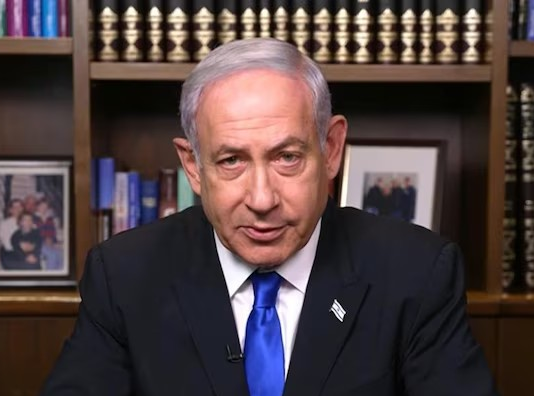
Benjamin Netanyahu’s claim that Christian villages in southern Lebanon sought annexation by Israel has been firmly rejected by Lebanese Christian leaders, who denounced it as a dangerous falsehood aimed at stoking sectarian tensions and portraying Lebanon’s Christians as collaborators in occupation.
The denial was especially significant because it came from figures and parties deeply opposed to Hezbollah, including the Kataeb Party, which told The New Arab that the besieged border Christian communities wanted neither Israeli rule nor Hezbollah’s military presence, but safety, dignity and the protection of the Lebanese state.
“Occupation and siege are not a choice, and neither is displacement,” a senior official in the Kataeb said, asking not to be named. “The people of these villages have no connection to either Israel or Hezbollah,” he added
The comments came after Netanyahu claimed in an interview with Fox News on Sunday that several Christian villages in southern Lebanon had allegedly “asked to be annexed” by Israel in order to be protected from Hezbollah fighters.
Hanna al-Amil, the mayor of Rmeich, one of the Christian border villages mentioned by Netanyahu, later rejected the claims in comments to Lebanon’s state news agency NNA, describing them as “completely false” and stressing that no southern Lebanese town had made such a request.
He said the idea was “out of the question”, noting that 15 Christian towns in southern Lebanon had already publicly rejected Netanyahu’s claims.
Another denial had already been issued by officials from southern Christian villages on Friday, prior to Netanyahu’s Fox News remarks, when village officials reaffirmed their determination to remain on their land, stressing their “loyalty to their national identity” and their “attachment to their Lebanese flag”.
Rmeich, Debl and Ain Ebel are three Christian villages in the southern Bint Jbeil district whose residents largely chose to remain despite widespread destruction across surrounding Shia-majority areas and Israel’s continuing occupation of southern Lebanon.
While Israeli forces have besieged this enclave of Christian villages during their invasion of southern Lebanon, there is no Israeli military presence inside the towns themselves. However, with roads cut off and movement heavily restricted, residents have struggled to access food, medicine and other essentials, effectively leaving them under siege.
Caught in the middle of the Israel-Hezbollah war, residents have repeatedly called on the Lebanese government to strengthen its protection of the villages.
The senior source in the Kataeb Party told The New Arab that many local officials in the Christian villages Netanyahu mentioned were party representatives and had unanimously rejected his claims.
The Kataeb Party, one of Lebanon’s oldest Christian political parties, has long been among Hezbollah’s fiercest political opponents, advocating the group’s disarmament and insisting that the Lebanese state should hold a monopoly over arms. The Kataeb collaborated with Israel during the 1975-1990 Lebanese civil war, but since the end of the war and with many changes in its leadership, it says it has cut all former ties to Israel.
Today, despite its staunch anti-Hezbollah stance, the party rejects Israeli occupation of Lebanese territory and has repeatedly condemned Israeli military operations in Lebanon, making its rejection of Netanyahu’s claims particularly significant.
Also Read: Lebanese President vows justice on Beirut blast anniversary
The source in Kataeb said his party had worked throughout the war alongside the Lebanese presidency and the Lebanese army to deliver humanitarian aid and help residents remain in their homes.
The aim, the source added, was also to prevent Israel from using the evacuation of villages as a pretext to expand its military occupation or intervene under the guise of providing assistance.
“People want to remain in their homes under two conditions: first, that they had the basic necessities to live with dignity, and second, that they would not be accused of treason simply because they stayed,” the source said.
Some people in southern Lebanon, particularly among Hezbollah supporters, have at times accused residents or officials in Christian villages who remained during the war of collaborating with Israel.
Residents have repeatedly denied those accusations, insisting they refused to side with either Israel or Hezbollah and simply chose not to abandon their homes.
The Kataeb source added that the Lebanese presidency had assured residents they would not face legal repercussions for remaining in their villages during the conflict, describing accusations of collaboration as unfounded.
Rejecting Netanyahu’s remarks outright, the source warned that the Israeli prime minister’s claims risked fueling sectarian tensions inside Lebanon.
“There is concern that the Israeli narrative is intended to sow discord by suggesting that Lebanon’s Christians want to join Israel,” the source said.
The source also stressed that several southern villages whose residents chose to remain are religiously mixed, home to Christian, Sunni, Druze and Shia communities. Chebaa, Kfarshuba and Rachaya al-Foukhar were cited as examples.
Israeli forces have destroyed numerous Christian religious sites during their offensive in southern Lebanon since early March, including churches and a monastery, while also desecrating religious symbols. One priest was killed by Israeli fire several months ago in the village of Qlayaa.
The Israeli military has also warned these villages, through phone calls to mayors and local officials, not to allow “strangers” into their communities, referring to Hezbollah fighters, or risk being targeted.
Israel’s offensive in Lebanon since March has killed more than 4,300 people, with hundreds of thousands still displaced. Entire towns and villages have been flattened across southern Lebanon, where Israeli forces continue to occupy between 600 and 700 square kilometres of Lebanese territory, around six percent of the country’s total land area.
Israel has refused to withdraw from southern Lebanon until Hezbollah is “fully disarmed”, while Hezbollah has maintained that it will not surrender its weapons as long as Israeli forces continue to occupy Lebanese territory.
THE NEW ARRAB