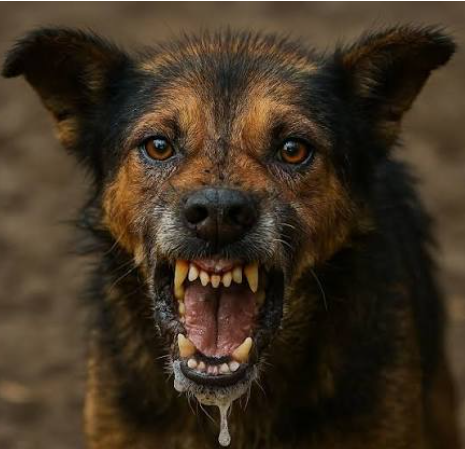
Two persons bitten by rabies-infected dogs have died in the Federal Capital Territory, Abuja, as authorities confirmed eight cases in the territory with a warning that residents must vaccinate their dogs and cats to curb the virus’ spread
The Director of Veterinary Services at the FCT Agriculture and Rural Development Secretariat, Dr Karnak Dandam, disclosed this in Abuja, saying the confirmed cases were recorded in Gwagwalada and Kwali Area Councils.
According to Dandam, five cases were recorded in Gwagwalada while three were reported in Kwali, with one death recorded in each area council following bites from rabid dogs.
He said samples from suspected cases were sent to the National Veterinary Research Institute, Vom, Plateau State, for confirmation, adding that the results tested positive.
The first samples we took to Vom this year was in March, and the result came out the same month. The second samples were taken in early June, and the result came out on June 15,” he said.
Dandam described rabies as a deadly viral disease that attacks the central nervous system and is transmitted through the bite of infected animals, particularly dogs and cats.
He warned that the disease is almost always fatal once symptoms appear in humans, urging residents to seek immediate medical attention after any suspected animal bite.
“The immediate remedy after a bite is to wash the affected area with soap and plenty of water as first aid and immediately present the victim to medical personnel for treatment,” he advised.
He listed symptoms of rabies in humans to include fever, headache, fatigue, pain or tingling around the bite area, followed by anxiety, confusion, hallucinations and abnormal behaviour.
In animals, he said signs of infection include excessive salivation, difficulty swallowing, aggression, fear of water, hanging jaws and sudden changes in behaviour.
Also Read: Bauchi, Gombe, Jigawa States improving healthcare standards
The veterinary official urged residents to vaccinate their dogs and cats, report cases of animal bites and ensure their pets are properly confined to prevent them from roaming and coming into contact with infected animals.
He revealed that the FCT Administration conducted vaccination campaigns for dogs and cats in December 2025 and January 2026 but could not cover all animals due to a shortage of vaccine doses.
“The secretariat is also sensitising residents across the six area councils to taking their dogs and cats to designated public and private veterinary clinics for rabies vaccination and certification.
“Everybody has to restrict his or her dog and cats, so that they will not be roaming the streets and become exposed to infected rabid dogs,” he said.
Dandam said that the FCT Administration has taken steps to procure the needed doses of the vaccines and would soon begin a mass vaccination exercise in all villages and towns in the six area councils of the FCT.
“Anywhere there is a dog and a cat, we will visit, vaccinate and give the owners a certificate of vaccination and licence. That’s our plan,” he said.
He also advised pet owners to watch out for sudden behavioural changes in their animals, noting that a friendly dog becoming aggressive, isolating itself or attacking without provocation could be signs of rabies.
“When the rabies gradually develops, the dog will suddenly become apprehensive and start attacking any object that it comes across, even the owner will not be spared.
He added that infected dogs may develop severe symptoms, including roaming with their jaws open, paralysis and eventual death within 10 days after clinical signs appear.
NAN