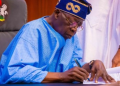
Speaker of the House of Representatives, Abbas Tajudeen, has inaugurated an ad hoc committee to probe the establishment of the Presidential Foreign Investment Promotion Council, PFIPC, without a valid legal foundation.
The probe, inaugurated in Abuja on Monday, follows growing public concerns over the council’s legal status, mandate, funding structure and inclusion in the Federal Budget Framework despite questions surrounding the circumstances of its creation.
Abba said the committee was set up to establish the facts and provide clarity on issues that have generated widespread media attention and public debate.
He said discussions surrounding the PFIPC had dominated public discourse for weeks, with questions raised over its institutional mandate, relationship with existing government agencies and operational framework.
“These questions deserve clear, factual and authoritative answers. The House of Representatives has therefore not constituted this committee to validate speculation or amplify controversy; neither is this a political exercise. Our objective is simply to establish the facts,” he said.
The Speaker said democracy thrives when facts prevail over rumours, evidence over conjecture and accountability over opacity, adding that the legislature has a duty to seek answers where legitimate public concerns exist.
He outlined the committee’s terms of reference, which include determining the legal basis for the establishment and operation of the PFIPC, examining the processes through which it was created and assessing whether they complied with constitutional provisions and existing laws.
The committee is also expected to investigate the council’s mandate, powers, governance structure, funding sources, activities and relationship with statutory agencies responsible for investment promotion, economic planning and public finance.
Also Read: Court rules FCCPC can investigate airline pricing
Tajudeen said the panel would further examine how the council was captured in the Federal Budget Framework, identify the approvals and authorizations involved, and determine whether due process was followed.
He added that the committee would assess possible duplication of functions with existing institutions and evaluate the implications for public administration, fiscal responsibility and institutional efficiency.
The Speaker said the committee would receive memoranda and testimonies from relevant ministries, departments and agencies, constitutional bodies, experts, civil society organizations and members of the public to aid its investigation.
He tasked the committee with making recommendations on possible legislative, administrative or institutional reforms needed to improve transparency, prevent duplication of functions, protect public resources and strengthen accountability in the creation and funding of public institutions.
According to Tajudeen, the inquiry was not about individuals but about institutions and the integrity of public administration.
“It is sacrosanct that every public institution derives its authority from law and exercises its responsibilities within the limits prescribed by law,” he said.
The Speaker urged public officials and witnesses appearing before the committee to cooperate fully, stressing that Nigerians deserved transparency and explanations that could withstand scrutiny.
Chairman of the committee, Rep. Yusuf Gagdi, said the investigation reflected the House’s commitment to ensuring that public institutions operate within the law and remain accountable to citizens.
Gagdi added that the responsibility before the committee was significant and sensitive, requiring diligence, fairness and a commitment to uncovering the facts.
NAN