The Federal Government has issued its strongest rebuke yet to South Africa over the latest surge in xenophobic violence targeting Nigerians and other African nationals.
Abuja has also demanded urgent and “concrete” measures from Pretoria to halt the attacks directed at fellow Africa
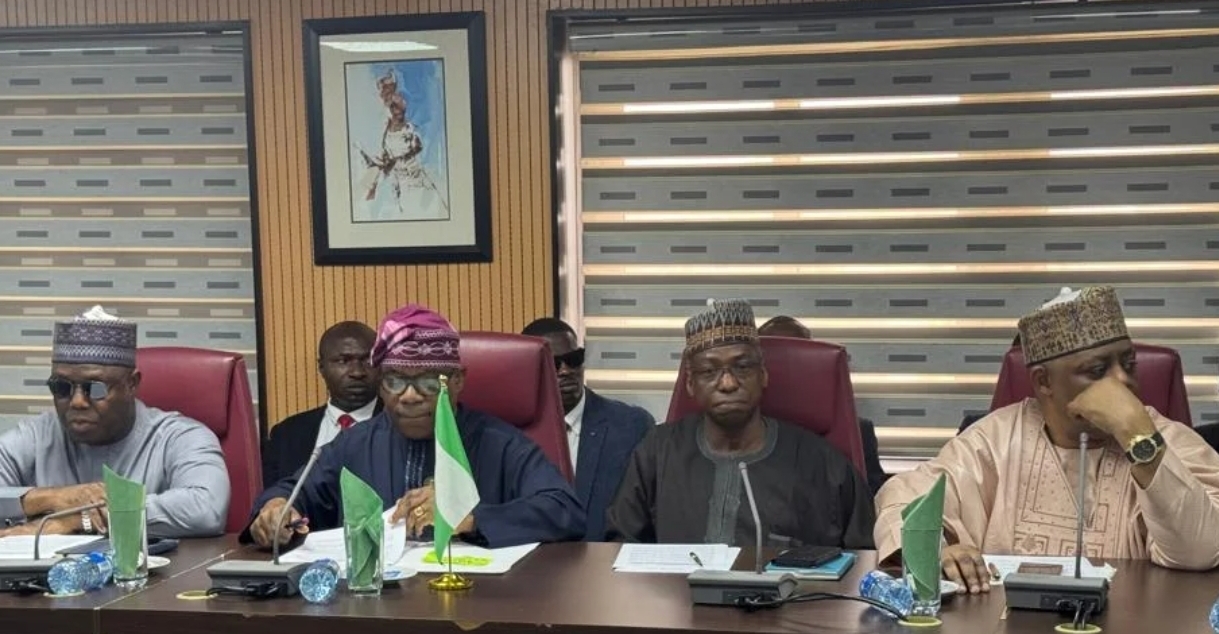
Speaking on Monday at a high-level bilateral meeting in Abuja, Nigeria’s Minister of State for Foreign Affairs, Ambassador Sola Enikanolaiye, told South Africa’s Minister of International Relations and Cooperation, Ronald Lamola — who is in Nigeria as a special envoy of President Cyril Ramaphosa — that patience in Abuja is wearing thin after decades of recurring attacks.
“We’ve seen a pattern emerge as early as 1995, in 1998, in 2006, in 2015, in 2016, 2019, 2021, 2024, and 2026,” Enikanolaiye said. “It is on record that from 2022 alone, 98 Nigerians have died in mob actions, in hate-related actions that we have called Afrophobia, because we found that the primary victims of this ugly situation are Africans, and Nigerians in particular.”
He added: “We appreciate the warm sentiments you have expressed. We also reciprocate our desire to maintain excellent relations and take urgent, concrete measures — not just to build confidence but to address these ongoing Afrophobic attacks, of which we thought enough has got to stop, which is why we thought we should discuss firmly.”
A Pattern Stretching Back Three Decades
The current crisis is only the latest chapter in a long and painful history. Since the end of apartheid in 1994, South Africa — the continent’s most industrialised economy — has been a magnet for migrants from across Africa, and a periodic flashpoint for anti-foreigner violence.
Also Read: “Not xenophobia”—Ntashabele reacts to Nigerian’s killing
The current wave — the deadliest in nearly two decades according to figures cited by African governments — has now triggered the largest mass repatriation from South Africa in the post-apartheid era.
1,500 Nigerians Evacuated, 160,000 Africans Flee
Since the latest attacks intensified, about 1,500 Nigerians have been evacuated back to Abuja and Lagos, the minister confirmed. Across the continent, more than 160,000 people have fled South Africa, according to an AFP tally based on figures released by African governments repatriating their citizens.
South African police have officially confirmed that at least four foreign nationals have been killed in attacks linked to the recent anti-migrant protests, though several African governments have reported significantly higher tolls among their own nationals.
Enikanolaiye described the repatriation exercise as deeply traumatic. “I recall I received the first batch. I shed tears on the plane when I saw children, women, and the elderly returning home almost with nothing,” he said. “Some of their properties have been looted; some of them have been destroyed. I don’t think that is the way we want to conduct relations in Africa. I don’t think that is the way to go.”
Rule of Law, Not Mob Justice
The minister acknowledged South Africa’s concerns about crimes allegedly committed by some immigrants — including drug trafficking and wire fraud — but insisted the response must remain within the law.
“If there are criminals, as you alluded to them, we reiterate that the solution is not to kill them. We’re a country governed by the rule of law. If someone is, quote-unquote, a criminal for drug trafficking, there are rules and regulations: get them arrested, prosecuted, and jailed. The Nigerian government will not support drug peddlers. But please, what we are saying is to treat them in accordance with your constitution, in accordance with international human rights instruments, and in accordance with the minimum requirements of humanity.”
He warned that many of the victims were, in fact, documented residents. “We have records of Nigerians who have legitimate papers to remain in South Africa, yet they have been attacked. And we could see some mob actions where we saw the police watching as if they were helpless to address this situation — which to us raises issues of state responsibility. They raise issues of complicity if the state authorities are not able or are unwilling to tackle these challenges.”
Tinubu’s Directive
Enikanolaiye disclosed that President Bola Tinubu had personally directed the meeting be held “in a frank manner”, underscoring Abuja’s determination not to let the matter be papered over by diplomatic pleasantries.
He reminded the South African delegation of Nigeria’s historic support for the anti-apartheid struggle — Nigeria contributed an estimated $61 billion in political, financial and material aid between the 1960s and 1990s, and Nigerian civil servants voluntarily contributed a percentage of their salaries to the liberation cause. He also recalled joint efforts to transform the Organisation of African Unity (OAU) into the African Union (AU) in 2002, and the establishment of the New Partnership for Africa’s Development (NEPAD), which Nigeria co-founded with South Africa, Algeria, Egypt and Senegal.
“These attacks threaten decades of strategic partnership between Africa’s two largest economies,” he warned.
Ronald Lamola defended his government’s record and framed the crackdown as a legitimate response to criminal activity.
“President Ramaphosa and the government he leads have been outspoken against any intolerance,” Lamola said, adding that South Africa reserves the right to “deal decisively with irregular migration and undocumented immigrants — including acts of criminality.”
The South African delegation cited concerns over drug peddling and wire-fraud networks, some of which they say involve foreign nationals.
The Broader Context
Analysts note that South Africa continues to grapple with structural unemployment above 32 percent, chronic service-delivery failures, and one of the world’s highest violent-crime rates. Immigrants — who make up an estimated 4 to 6 percent of the population — have repeatedly been scapegoated for problems that predate their arrival.
Ghana, Zimbabwe, Malawi, Mozambique and the Democratic Republic of Congo have joined Nigeria in voicing sharp criticism of Pretoria’s handling of the protests, with several launching their own evacuation flights. Nigeria and Ghana have been the most vocal.
In several documented cases, anti-immigrant groups have “burst into people’s homes and dragged them into police vans”, according to eyewitness accounts cited by human-rights monitors — raising fresh questions about the line between civilian vigilantism and official enforcement.
Monday’s meeting ended without a joint communiqué, but both sides agreed to keep diplomatic channels open. Nigeria is expected to press its case further at the next African Union summit and may seek a formal continental mechanism to protect African migrants on African soil — a proposal that could redefine intra-African migration governance for years to come.
Crediblenewsng.com