A joint security operation coordinated by the Office of the National Security Adviser, ONSA, has led to the rescue of 308 kidnapped victims across Kwara and Niger States, including 163 residents of Woro Community in Kaiama Local Government.
The operation — described by sources as one of the largest and most successful counter-kidnapping missions in recent memory — was executed on Wednesday by a combined team drawn from the Nigerian military, the Department of State Services, the National Counter-Terrorism Centre, the Nigeria Police Force, and other unnamed security agencies.
Of the 308 victims rescued, 163 were abducted from Woro Community in Kaiama LGA, Kwara State, while 145 were recovered in neighbouring Niger State, the source said. The freed victims were handed over to the Commander of the military cantonment at Wawa, New Bussa LGA of Niger State, on Wednesday afternoon and are currently receiving medical attention at the Military Medical Facility within the cantonment, ahead of debriefing and reunion with their families.
Six-Month Ordeal
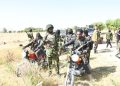
The rescue brings to an end months of anguish for families of the Woro abductees, who were seized during one of the deadliest terrorist attacks in Kwara State’s history. On the evening of February 3, 2026, more than a hundred armed militants, reportedly dressed in army fatigues and riding motorcycles, stormed the neighbouring, predominantly Muslim farming villages of Woro and Nuku in Kaiama LGA, near the border with the Benin Republic.
The assault, which lasted from before sunset until around 3 a.m. the following day, left at least 162 people confirmed dead, with the toll later rising above 200 as more bodies were recovered from surrounding bushland.
Survivors recounted that the militants had earlier written to the community’s traditional ruler, Umar Bio Salihu, requesting permission to preach an extremist interpretation of Islam — a request the community rejected.
The attackers burnt the monarch’s residence, killed two of his children, and abducted women and children, including members of the traditional ruler’s own family, as they withdrew. Amnesty International described the incident as a “stunning security failure,” noting that the villages had received warning pamphlets and threats from the extremists for about five months before the attack.
The Federal Government blamed Boko Haram — a cell linked to a commander known as Sadiku — for the massacre, although the federal lawmaker representing the area, Mohammed Omar Bio, attributed it to the IS-affiliated Lakurawa group.
Ransom Demands and Video Appeals
While in captivity, the victims’ plight became a national concern. Families and community sources maintained that as many as 176 residents — mostly women and children — were taken away.
Also Read: Gov. Abdulrazaq talks tough after Woro massacre
Relatives alleged they raised about ₦155 million in ransom payments without securing the victims’ release, while uncomfirmed sources indicated the captors were demanding over ₦2 billion and insisting they would negotiate only with the federal government or its agents.
Reports also emerged that a pregnant captive had given birth in the kidnappers’ den, and that the victims may have been moved out of Kwara State to unknown locations as security forces combed forests in Kaiama.
The 163 rescued from Woro would account for the overwhelming majority of the 176 persons families said were abducted — though the status of any outstanding captives, including victims of the concurrent attack on Nuku village, was not immediately clarified by security sources on Wednesday.
Government Response
Following the February massacre, President Bola Tinubu approved the immediate deployment of an army battalion to the area and announced “Operation Savanna Shield,” appointing a field commander to oversee operations in Kwara State. Governor AbdulRahman AbdulRazaq, who visited Woro and Nuku a day after the killings, condemned the attack as a “brutal and deliberate massacre” and described it as genocide.
Wednesday’s ONSA-coordinated operation — cutting across the Kwara–Niger border axis, where bandit groups and jihadist factions have long exploited the vast forest reserves around the Kainji Lake National Park — appears to be the most decisive outcome yet of that sustained security response.
The community of Woro, once home to about 17,000 people, had fewer than 200 residents remaining in the days after the massacre, according to locals, with mass burials — including a single grave holding 120 bodies — conducted as the town struggled to recover. The return of the 163 survivors now raises hopes of gradual resettlement in the traumatised community.
As of Wednesday evening, neither the ONSA nor the Kwara State Government had issued a formal statement detailing how the rescue was executed, whether arrests were made, or the identities of the freed victims.
Crediblenewsng.com