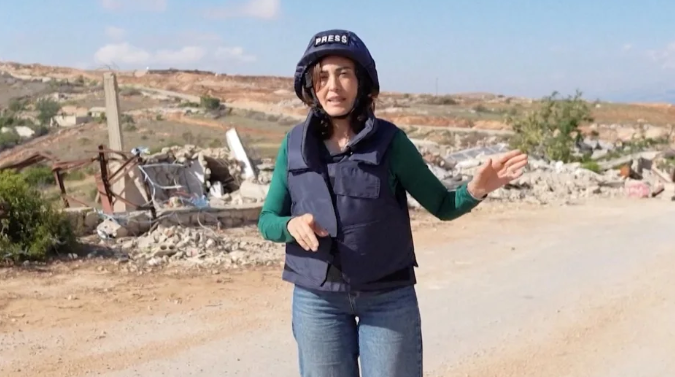
International and Lebanese human rights organizations have accused Israel of war crime following the death of veteran Lebanese journalist Amal Khalil during military operations in southern Lebanon earlier this year.
The allegations were contained in a joint investigation released on Thursday by Human Rights Watch, HRW, Amnesty International, Lebanon’s Legal Agenda, and the Union of Journalists. The organizations said evidence gathered from the scene indicated that the Israeli military either knew or should have known that the journalists were civilians and not legitimate military targets.
Khalil was killed on April 22 while covering hostilities between Israeli forces and Hezbollah in the southern Lebanese town of al-Tiri. Her camera operator, Zeinab Faraj, survived the attack but sustained serious injuries.
According to the report, investigators analyzed photographs, videos, satellite imagery, witness testimonies and other available evidence relating to three Israeli strikes carried out in the area on the day of the incident. The findings concluded that there was no indication the journalists were directly participating in hostilities at the time they were struck.
The rights groups argued that the available evidence suggests the attack deliberately targeted civilians, raising serious concerns about possible violations of international humanitarian law. They said journalists working in conflict zones are protected as civilians under the laws of war and should never be intentionally attacked while carrying out their professional duties.
Also Read: Israel, Lebanon resume talks on ceasefire
The investigation also alleged that Israeli forces hindered rescue efforts after the strike. Citing eyewitness accounts, the report claimed Israeli troops deployed a stun grenade as a Lebanese Red Cross medical team attempted to reach the wounded journalists. Human Rights Watch said available evidence indicated that Khalil was likely still alive when the rescue crew was forced to withdraw from the scene.
The report added that the delay may have reduced the chances of saving the journalist’s life, describing the alleged obstruction of emergency responders as deeply concerning.
However, the Israel Defense Forces, IDF, rejected claims that the journalists were intentionally targeted or that rescue efforts were obstructed.
In its response to Human Rights Watch, the Israeli military said a preliminary inquiry found that Khalil was killed during an operation in which two Hezbollah fighters were also killed. The military maintained that the incident remains under review and insisted the strike was part of ongoing military operations against Hezbollah.
Human Rights Watch, however, said the Israeli military did not provide further details or evidence explaining how it concluded that the individuals killed alongside Khalil were legitimate military targets, despite follow-up requests from investigators.
Commenting on the findings, Ramzi Kaiss, Lebanon researcher at Human Rights Watch, stressed that attacks on journalists must not become a normal occurrence in armed conflicts.
“Journalists should never be targeted when they’re in their line of work,” Kaiss said, warning that similar incidents have repeatedly occurred in both Lebanon and Gaza during the ongoing regional conflict.
The organizations have called for an independent, transparent and impartial investigation into the attack and urged those responsible to be held accountable if violations of international law are established.
The incident has renewed international concerns over the safety of journalists reporting from conflict zones, with press freedom advocates warning that attacks on media workers undermine the public’s right to independent reporting and could further erode protections guaranteed under international humanitarian law.
CNN