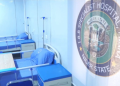
The Niger State Government has received malaria drugs and commodities valued at more than N2.5 billion and inaugurated 1,000 hospital beds to strengthen healthcare delivery and reduce malaria prevalence across the state.
The Deputy Governor, Mr Yakubu Garba, disclosed this in Minna, during the inauguration and distribution of malaria drugs, health commodities, hospital beds and wheelchairs. He said the intervention would expand access to essential healthcare services for residents across the state.
Garba said the state government had consistently met its counterpart funding obligations, enabling it to attract support from development partners for malaria control and other healthcare interventions.
He said the malaria drugs and commodities were expected to benefit about 6.9 million residents and improve access to life-saving treatment across the state.
“The intervention demonstrates the commitment of the Gov. Umaru Bago-led administration to strengthening the healthcare system and ensuring quality medical services for citizens,” he said.
He commended the State Ministry of Health, the Niger State Drugs and Hospital Consumable Management Agency, NSDHCMA, and development partners for ensuring the timely distribution of the commodities to health facilities and beneficiaries.
The deputy governor also disclosed that the state had procured 2,000 hospital beds, with 1,000 already received and some distributed to selected general hospitals, including the General Hospital, Minna.
Also Read: Nigerian Diaspora Doctors seek to advance healthcare delivery
Earlier, the Executive Director of NSDHCMA, Umar Ndagi, said the agency remained committed to ensuring the availability, accessibility and affordability of essential medicines, public health commodities and hospital consumables across the state.
Ndagi said the agency had adopted global best practices in the warehousing of health commodities to ensure proper storage, quality control and efficient distribution.
He said the agency currently supplied about 90 per cent of the drug and health commodity requirements of the state’s 23 general hospitals, more than 400 primary healthcare facilities and the Ibrahim Badamasi Babangida Specialist Hospital.
According to him, the availability of essential medicines and hospital consumables remained critical to strengthening the health system and achieving universal health coverage.
He appreciated the continued support of the state government and the Ministry of Health, describing it as instrumental to the agency’s achievements.
Also speaking, a representative of development partners, Aminu Gwadabe, commended the Niger Government for its sustained commitment to malaria control through timely counterpart funding and strong political support.
He said collaboration among the state government, the National Malaria Elimination Programme and development partners had resulted in the delivery of millions of insecticide-treated nets, malaria rapid diagnostic test kits, Artemisinin-based Combination Therapy medicines and seasonal malaria chemoprevention doses.
According to him, the interventions had protected millions of children under five during the rainy season, improved access to free malaria treatment and contributed to reducing malaria prevalence and child mortality.
Gwadabe, however, urged the state government to sustain domestic funding, strengthen primary healthcare infrastructure and deepen community engagement to preserve the gains recorded in malaria control.
NAN