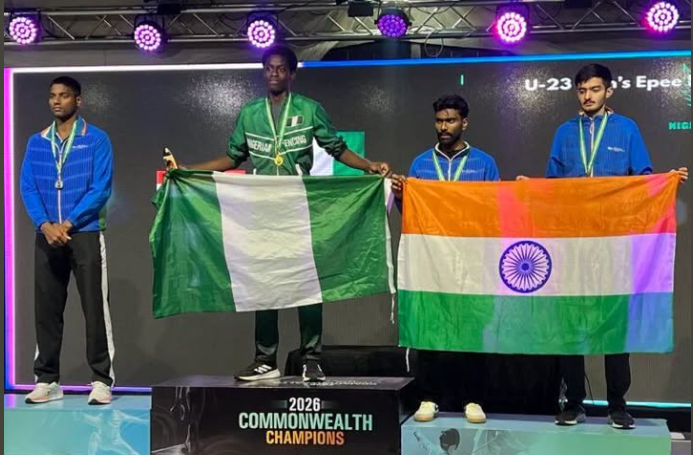
Nigeria finished fourth at the 2026 Commonwealth Fencing Championships with one gold, five silver and 18 bronze medals, recording 24 medals overall.
The week-long championships, held at Rugby School Nigeria, Eko Atlantic, Lagos, featured athletes and officials from 20 countries, with India topping the medal table with 63 medals.
The News Agency of Nigeria reports that Oghenegaren Esiovwa-Thompson won Nigeria’s only gold medal, becoming the country’s first gold medallist at the Commonwealth Fencing Championships.
India finished first with 25 gold, 20 silver and 18 bronze medals, while England placed second with three gold, two silver and nine bronze medals. Wales finished third with two gold, one silver and three bronze medals.
Despite finishing fourth, Nigeria recorded the second-highest overall medal tally at the championships with 24 medals across the various categories.
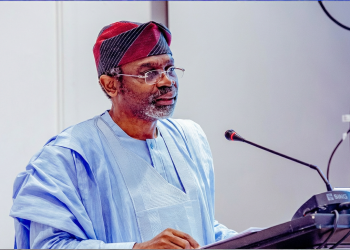
President of the Commonwealth Fencing Federation, Adeyinka Samuel, expressed satisfaction with the successful conclusion of the championships.
“It’s been a great event. I’m really happy. We started, we ended. We were planning for this for over a year. To have gotten to this stage and to pull it off, we’re very, very excited. It’s a very complex competition to host,” he said.
Samuel said the organizers encountered several challenges but addressed them individually to ensure the smooth delivery of the championships.
He also said a wheelchair fencing academy organized ahead of the championships had helped promote the sport in Nigeria and across Africa.
The academy was conducted in collaboration with World Abilitysport, with certified referees and coaches from Nigeria and other African countries participating. Samuel noted that Nigeria’s first-ever gold medal added excitement and significance to the championships.
Also Read: Lagos to host Commonwealth fencing championships
Samuel, who also competed at the event, described his silver medal as particularly memorable, having last competed in Italy in 2012.
“I’ve always loved fencing. I won over 30 medals for Nigeria, 21 gold medals and the rest silver and bronze. “At the time, I was the highest-ranked fencer in Britain and the highest world-ranked fencer there,” he said.
Samuel said fencing remained a lifelong passion and a source of relaxation despite his administrative responsibilities. “So, I love fencing and it sort of distresses me as well. Once I put the mask on, I forget everything,” he said.
He said his relocation to Nigeria prompted him to focus on developing the sport, as there were relatively few active fencers in the country.
When I moved to Nigeria, I had to develop the sport because there were not that many fencers, describing his return to competitive fencing as memorable and expressing delight at winning a silver medal.
“I’m very happy, very grateful. I won a silver medal, so that’s also very good. I’m happy, although I woke up with a lot of pains, but I’m happy and excited,” he said.
Samuel thanked the participating countries, local organizing committee, sponsors, Rugby School Nigeria, volunteers, officials and other stakeholders for their contributions to the successful hosting of the championships.
He also commended the Lagos State Government and National Sports Commission for their support, while appreciating the African teams, particularly South Africa, as well as the Indian and Australian delegations, for their participation.
He encouraged first-time participants to remain part of the fencing community, describing it as a close-knit global family.
“We’re a great family and a great bunch of people. Even though it’s global, it’s still a small community,” he said. Samuel thanked everyone who contributed to the championships and formally declared the 2026 Commonwealth Fencing Championships closed.
NAN