The Economic and Financial Crimes Commission, EFCC, has recovered $60 million from indigenous oil and gas company Nestoil Limited and paid the funds to a consortium of lenders.
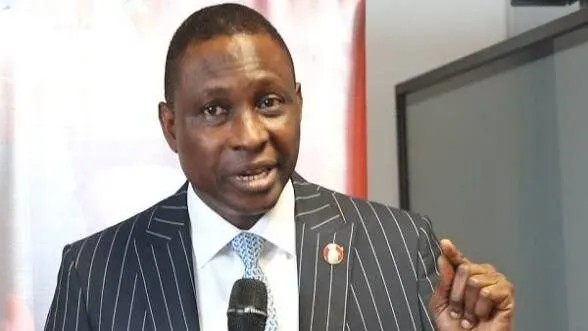
The recovery followed meetings facilitated by EFCC Chairman Olanipekun Olukoyode, during which Nestoil and the lenders agreed to a structured repayment plan aimed at resolving the company’s long-running debt obligations.
The payment represents an initial step in the recovery process, with a substantial portion of the debt still outstanding.
Those familiar with the matter said the engagement between Nestoil and the lenders had begun to yield results, with $60 million recovered so far during the EFCC’s investigation and subsequent meetings involving the parties.
Oguzi Moses, head of investigation at the EFCC’s Lagos Zonal Directorate 2, facilitated the payments made to the lenders, according to sources familiar with the matter.
The consortium of lenders welcomed the payment as a positive development but noted that it was only the first stage of the repayment process, given the scale of Nestoil’s outstanding obligations.
A senior EFCC official, who requested anonymity because he was not authorized to discuss the case, confirmed the recovery. The official said the commission intervened because of the broader economic implications of the dispute.
The partial recovery marks a development in the long-running dispute between Nestoil and a consortium of financial institutions over alleged debt defaults.
The dispute has resulted in a complex legal battle and raised concerns about the impact of Nestoil’s non-performing loans on the balance sheets of some of Nigeria’s major banks.
The case reached the Supreme Court in June, when the apex court annulled an order of the Court of Appeal that had frozen the assets of Nestoil and its affiliate, Neconde Energy.
FBNQuest Merchant Bank and First Trustees Limited are seeking to recover more than $1 billion and N430 billion allegedly owed by Neconde and Nestoil, as well as by their promoters, Azudialu-Obiejesi and Nnenna Azudialu-Obiejesi.
In October 2025, police officers acting on an order issued by Dehinde Dipeolu, a judge of the Federal High Court in Lagos, sealed Nestoil’s headquarters. The order granted FBNQuest Merchant Bank and First Trustees permission to take over the company’s assets.
Justice Dipeolu subsequently issued several orders freezing the defendants’ bank accounts and shares held with more than 20 financial and other institutions in Nigeria.
The court also authorized Abubakar Sulu-Gambari, SAN, the receiver/manager appointed by the plaintiffs, to take control of Nestoil’s headquarters and other identified assets. Justice Dipeolu further directed several security agencies to assist in enforcing the receivership order.
Following complaints by Nestoil about the proceedings, John Tsoho, the Chief Judge of the Federal High Court, reassigned the case to another judge.
Also Read: EFCC freezes Osun State account
On 20 November 2025, Justice J. Osiagor, who took over the case, revoked the earlier receivership enforcement order. FBNQuest Merchant Bank and First Trustees appealed the decision on 22 November 2025.
In November 2025, the Court of Appeal issued a restorative injunction following an ex parte application by the financial institutions.
The order reversed Justice Osiagor’s decision and restrained Nestoil, Neconde and their agents from obstructing the receiver/manager pending the hearing of the appeal.
In January, the Supreme Court directed the parties to return to the Court of Appeal to resolve a procedural issue concerning legal representation.
Following that directive, the Court of Appeal disqualified Wole Olanipekun, Muiz Banire and other lawyers appearing with them from representing Neconde and Nestoil.
However, in June, the Supreme Court ruled that the Court of Appeal had exceeded its jurisdiction by granting the ex parte injunction against the oil companies.
The apex court held that the Court of Appeal had assumed jurisdiction and issued the injunction when the dispute was not presented properly before it.
The Supreme Court also criticized the lower court for granting a stay of proceedings at the Federal High Court in Lagos, describing the action as a misuse of judicial process. It consequently annulled the freezing order on Nestoil’s and Neconde’s assets.
Following the Supreme Court’s ruling, the consortium of lenders said Nestoil had obtained several bilateral loan facilities from eight lenders dating back to 2010 and had repeatedly defaulted on its repayment obligations.
“Prior to the court action, Nestoil obtained several bilateral loan facilities from eight lenders dating back to 2010 and serially defaulted on all the various repayment obligations,” the lenders said in a statement.
The lenders said Nestoil later proposed restructuring the facilities into a global club to ease the administration of its indebtedness.
According to the consortium, the lenders agreed to the restructuring in good faith, but Nestoil again defaulted repeatedly after the restructuring took effect in 2023.
In a May press release, the lenders described Nestoil’s alleged $2 billion distressed loan as having triggered what they called a “historic balance sheet reset” and a suspension of dividend payments at some major Nigerian banks.
The statement identified First Bank, United Bank for Africa and Access Bank among institutions significantly affected by the alleged bad loans.
The recovery of $60 million is therefore expected to provide some relief to the lenders, although the substantial balance of the debt remains unresolved.
Premium Times