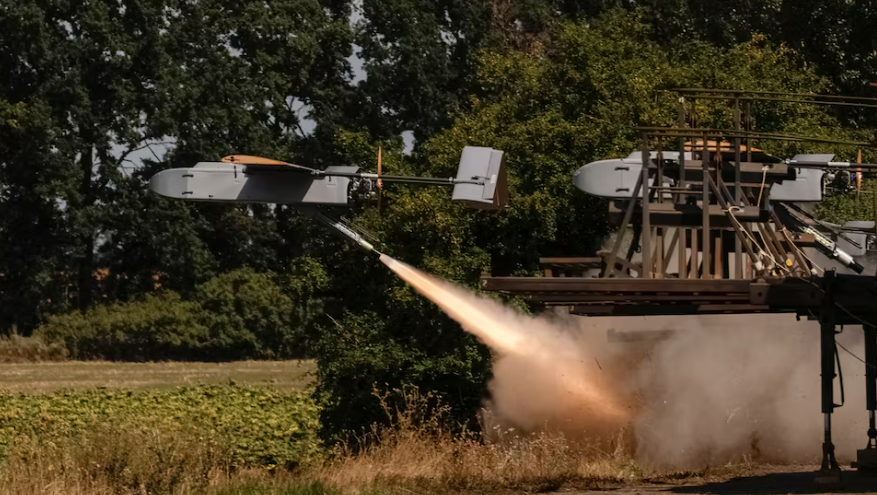
Russia has warned Britain it will face consequences for supplying drones to Ukraine after reports that British-made unmanned aircraft have been used in long-range strikes against targets inside Russian territory.
The warning, issued by Russia’s embassy in London on Tuesday, follows a report by The Times that British-made drones were used for deep strikes in mainland Russia for the first time.
The development underscores the growing role of long-range unmanned systems in Ukraine’s campaign against Russian military, energy and logistics infrastructure.
In a statement posted on its Telegram channel, the Russian embassy said London’s actions would “inevitably carry consequences” and accused Britain of increasing its involvement in the war by supporting what it described as Ukraine’s “terrorist machinery.”
The embassy added that the greater Britain’s support for Kyiv and its involvement in the conflict, the higher the “price” it would pay.
The comments came after The Times reported that British-made drones had been used in strikes on targets deep inside Russia, including oil infrastructure.
The newspaper reported that the attacks represented a new stage in military cooperation between Britain and Ukraine, although details about the specific systems involved have not been independently confirmed by the British government.
Britain’s Ministry of Defence did not confirm whether British drones had been used in the reported attacks. However, a ministry spokesperson rejected Moscow’s criticism, saying Britain “stands shoulder to shoulder with Ukraine” and remains committed to providing Kyiv with the equipment it needs to defend itself against Russia’s invasion.
The reported strikes come as Ukraine increasingly relies on long-range drones to reach targets far beyond the front line. Kyiv has used such systems to target Russian oil refineries, logistics facilities and other infrastructure that supports Moscow’s military operations.
Also Read: Panic in Kyiv as North Korea ships missiles to Russia
Ukraine’s expanding drone campaign has become a major feature of the war, with Kyiv developing and deploying increasingly sophisticated unmanned systems as it seeks to offset Russia’s advantages in conventional military capabilities.
In recent days, Ukrainian forces have carried out some of their largest drone attacks against Russian territory since the full-scale invasion began in February 2022.
The latest escalation also comes as Britain significantly expands its military assistance to Ukraine. In June, the British government announced a £752 million package that includes funding for 150,000 Ukrainian-produced drones and more than 350 air-defence missiles and radar systems by the end of 2026.
The package is financed through Britain’s £2.26 billion Extraordinary Revenue Acceleration loan to Ukraine, backed by proceeds from immobilized Russian sovereign assets.
The UK had already announced in April that it would provide at least 120,000 drones to Ukraine during 2026, including long-range strike, intelligence, reconnaissance, logistics and maritime systems. The expanded June commitment increased the planned number to 150,000.
Britain has also been increasing investment in drone technology domestically, reflecting lessons from the war in Ukraine.
The UK government said in June that more than £5 billion would be invested in transforming its armed forces through drone technology over the following four years.
For Moscow, the reported use of British-made drones against targets on Russian soil raises concerns about the increasingly direct role of Western military assistance in Ukraine’s long-range operations.
Russia has repeatedly warned Britain and other Western countries that supplying weapons and military equipment to Kyiv could lead to retaliation and increase the risk of a wider confrontation.
Britain, however, has consistently maintained that its military support is intended to help Ukraine defend itself against Russia’s invasion. London’s latest response suggests it has no intention of scaling back that support despite Moscow’s warning.
The dispute highlights the increasingly blurred boundary between Western military assistance and Ukraine’s own offensive capabilities, as drones allow Kyiv to strike targets deep inside Russia while remaining relatively inexpensive compared with conventional long-range missiles.
It also adds another layer of tension between Moscow and London as the war enters its fifth year, with both sides continuing to expand their use of long-range weapons and unmanned systems.
REUTERS