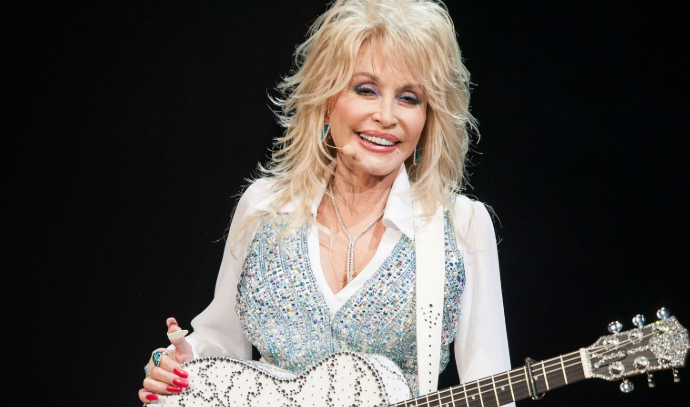
Dolly Parton, the country music superstar whose distinctive voice, hit songs and larger-than-life personality made her an American cultural icon, has died at 80.
Her nephew, Brian Seaver, announced her death Tuesday in a video posted on Parton’s Instagram account, marking the end of a career that spanned more than six decades and made her one of the best-selling recording artists of all time. No cause of death was immediately disclosed.
Seaver, who served as Parton’s head of security for more than two decades, said she had asked him years ago to make the announcement when the time came.
“My name is Brian Seaver, son of Cassie Parton, and I’m representing the Parton and Owens family today announcing the passing of my aunt, Dolly Rebecca Parton Dean,” he said.
He described Parton as “Sister, Sis and Granny to one generation and Gigi to the next,” adding that she was “in the arms of Jesus” and had surely been reunited with her late husband, Carl Dean, her parents and others who had died before her.
“Rest in peace, Aunt Dolly — Aunt, Granny, Gigi. May God bless Dolly Parton, and may God bless you all. She will always love you,” Seaver said.
Parton’s death comes after a period of health difficulties. In May, she announced that she was cancelling a Las Vegas performance while undergoing treatment for kidney stones.
She said at the time that her immune and digestive systems had been affected over the previous several years and that she was working to rebuild her strength.
Days before her death, Parton acknowledged that she had slowed down following Dean’s death in March 2025 but said she remained determined to continue working.
“Even though I’m still healin’, I’m still workin’!” she told People. “I still have so many things I want to achieve, so I’m gonna keep on working as long as I can to see everything come to life.”
Born on January 19, 1946, in a one-room cabin near Sevierville, Tennessee, Parton was the fourth of 12 children. Her father, Robert Lee Parton, supplemented the family’s modest farm income with construction work, while her mother, Avie Lee, cared for the family and introduced her children to traditional Appalachian music.
Parton began performing in church as a child and was appearing on local radio and television programmes by the age of 13.
She made her debut at the Grand Ole Opry around the same period, where she met country music star Johnny Cash.
After graduating from Sevier County High School in 1964, Parton moved to Nashville, where she initially established herself as a songwriter. She wrote songs for other performers before releasing her debut album, Hello, I’m Dolly, in 1967.
Her career took off after she joined country singer Porter Wagoner’s television show. She later struck out on her own and became one of country music’s biggest stars.
In 1974, Parton topped the country charts with “Jolene”, one of her most enduring songs. She also wrote “I Will Always Love You”, which became an international hit when Whitney Houston recorded it for the 1992 film The Bodyguard.
Other signature songs included “Coat of Many Colors” and “Here You Come Again”, the latter earning Parton her first Grammy Award.
Over a career lasting more than 60 years, Parton sold more than 100 million records and won 11 Grammy Awards. She also earned a place in the Country Music Hall of Fame and received a star on the Hollywood Walk of Fame.
Also Read: Nollywood mourns as Ogogo dies after cancer battle
Parton successfully expanded beyond country music into film, television and business. She made her film debut in 9 to 5, for which she also wrote and performed the title song.
She went on to star in films including The Best Little Whorehouse in Texas and Steel Magnolias, winning a new audience beyond country music.
Her distinctive appearance — including her blonde hair, elaborate outfits and makeup — became part of her public persona.
She often responded to jokes and questions about her appearance with humour, famously saying: “It costs a lot of money to look this cheap.”
Parton also became a successful businesswoman. In 1986, she opened Dollywood, a theme park in the Great Smoky Mountains near her hometown.
The attraction grew into one of Tennessee’s major tourism destinations while showcasing the music, crafts and traditions of the Appalachian region.
Her philanthropic work became another defining part of her legacy. Through the Dollywood Foundation, she established the Imagination Library, which provides free books to children.
The programme has distributed more than 300 million books in the United States and several other countries. The initiative was partly inspired by her father, who could not read or write.
Parton also donated $1 million in 2020 to coronavirus research at Vanderbilt University. The funding supported research that contributed to the development of Moderna’s COVID-19 vaccine.
Parton was open about her Christian faith while also becoming known for her support for LGBTQ rights. In a 2017 interview with Larry King, she questioned Christians who judged other people, saying that such judgement was God’s responsibility.
Although she generally avoided partisan politics, Parton occasionally found herself drawn into political debates. She maintained that she did not want to publicly endorse political candidates while using humour to deflect questions about her political views.
Parton married Carl Dean in 1966. Unlike his famous wife, Dean largely avoided public attention and rarely appeared in the spotlight.
The couple remained married for nearly 60 years before Dean died in March 2025 at 82. After his death, Parton spoke about her grief while continuing to work.
The couple did not have children, and Parton later said that not having children had given her the freedom to devote herself fully to her career.
Despite achieving worldwide fame, Parton maintained a strong connection to her Tennessee roots. Much of her music was shaped by her childhood in the Appalachian mountains, while Dollywood became a celebration of the culture and heritage of the region where she grew up.
From a childhood marked by poverty to international stardom, Parton built a legacy that extended far beyond music.
She became a songwriter, actress, businesswoman and philanthropist whose influence reached generations of fans around the world.
Her songs, films, businesses and charitable work have ensured that the woman who became known simply as Dolly will remain one of the most recognizable figures in American popular culture.