The Federal Government has launched a $1 billion social protection initiative aimed at helping vulnerable Nigerians transition from temporary relief to sustainable economic empowerment and self-reliance.
The Household Prosperity and Empowerment Social Protection Project, known as HOPE-SP, is one of five initiatives unveiled under the theme, “From Palliatives to Pathways,” to strengthen the country’s humanitarian response, improve social protection and reduce poverty.
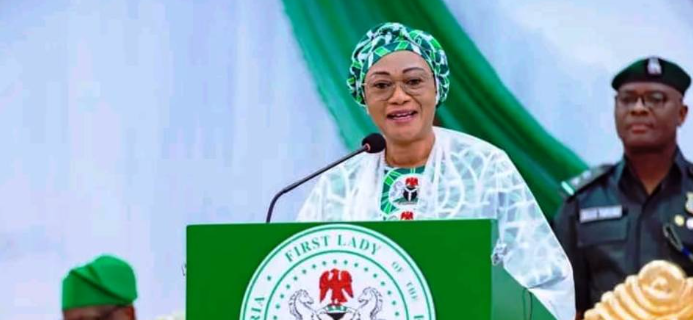
The First Lady, Senator Oluremi Tinubu, announced the initiatives at the launch, according to a statement issued by her Senior Special Assistant on Media, Busola Kukoyi, titled, “FG Launches $1bn HOPE Social Protection Programme.”
Tinubu said the five initiatives, although designed for different purposes, share the objective of improving the wellbeing of vulnerable individuals, families and communities across the country.
“Under the leadership of His Excellency, President Bola Tinubu, GCFR, our nation is implementing far-reaching reforms to strengthen the economy, lay a solid foundation for sustainable growth, and shared prosperity.
“As these reforms continue to take effect, we must recognize that, given the size of our population and available resources, many families still face challenges and require our collective support,” she said.
She said HOPE-SP would strengthen the identification of vulnerable households, assess their specific needs and provide appropriate assistance.
According to her, the programme would combine immediate stabilization support with pathways to economic recovery, empowerment and self-reliance.
The first initiative, the Household Prosperity and Empowerment Social Protection Project, is an important step toward strengthening how to identify and respond to vulnerable households facing various challenges by listening to their specific needs before taking action.
It is designed to provide immediate stabilization assistance while placing the households on a pathway to recovery, empowerment and self-reliance,” she said.
On the One-Humanitarian-One Poverty Response System, Tinubu said the platform would provide a coordinated national mechanism for responding to humanitarian emergencies, delivering social protection and addressing poverty.
She said the system would also eliminate duplication among government interventions and maintain unified national registries for identifying poor and vulnerable households.
Tinubu added that the Emergency Cash Transfer Programme would provide rapid financial assistance to households facing economic shocks, while the Ministerial Blueprint would translate the humanitarian and poverty reduction priorities of the Renewed Hope Agenda into measurable actions.
Also Read: FG launches ranching pilot to tackle farmer-herder clashes
She also described the Humanity First Magazine as a significant component of the initiatives, saying it would document the experiences of citizens whose lives had been transformed through government interventions.
The First Lady commended the Minister of Humanitarian Affairs and Poverty Reduction, Dr Bernard Doro, and officials of the ministry for developing the initiatives.
“I commend the Honourable Minister of Humanitarian Affairs and Poverty Reduction, Dr Bernard M. Doro, and his team for these initiatives that will transform our humanitarian endeavours from temporary assistance to lasting pathways that promote resilience, self-reliance, prosperity and a dignified life for every Nigerian,” she said.
Borno State Governor, Professor Babagana Zulum, commended the Federal Government for the initiative, describing it as an important intervention for addressing vulnerability among Nigerians. Zulum also stressed the need for continued research into issues relating to identity and national security.
Doro said the initiatives marked the establishment of a new national architecture for humanitarian intervention and social protection, with the government shifting its focus from reactive palliatives to proactive empowerment.
He said while the administration’s economic reforms, including the removal of the fuel subsidy and unification of the foreign exchange market, had improved investor confidence and strengthened government revenues, the government was also focusing on protecting Nigerians from economic shocks and providing sustainable pathways out of poverty.
The minister said the government’s objective was to move from reactive relief to anticipatory social protection and from merely managing poverty to reducing it.
He said the new approach would shift the focus from programmes to households and from counting beneficiaries to measuring actual impact.
Under the new architecture, vulnerable households would be identified, their needs assessed and appropriate interventions provided. They would then be tracked through a “poverty graduation pathway” towards economic inclusion and self-reliance.
Doro said the system would be supported by unified data, digital delivery infrastructure, new financing arrangements and real-time poverty intelligence, while strengthening collaboration among federal, state and local governments and development partners.
He disclosed that existing databases would be integrated into a unified platform anchored on the National Social Register, which currently contains about 20 million households.
The Minister of Budget and Economic Planning, Senator Atiku Bagudu, said effective social protection required a whole-of-government approach involving the federal, state and local governments, as well as other stakeholders.
Bagudu noted that the administration’s ambition to build a $1 trillion economy by 2030 was being accompanied by deliberate efforts to ensure that prosperity and economic opportunities reached Nigerians at the grassroots.
PUNCH