President Bola Tinubu on Thursday ordered a comprehensive reform of Nigerian football, moving to confront what he described as deep-seated structural failures that have left the country’s national teams stranded outside major regional, continental and global tournaments.
The directive, conveyed in a statement by Presidential Spokesperson Mr Bayo Onanuga, came on a day of upheaval for the sport, as Nigeria Football Federation, NFF, President Ibrahim Gusau and other board members resigned from office amid mounting public anger over the management of the game.
“Football, Nigeria’s most popular sport and the greatest beneficiary of public support, investment and national attention, has continued to struggle basically due to structural deficits within the system,” the President said.
He said the reform must address longstanding weaknesses in governance, administration, stakeholder representation, development pathways, domestic competitions and accountability — and must match Nigeria’s exceptional football talent, passion and resources with stronger institutions and sustained performance.
“The reform must respond to a longstanding need to strengthen governance, administration, stakeholder representation, development pathways, domestic competitions and accountability across Nigerian football,” he added.
Tinubu observed that while other sports had recorded meaningful progress since the sector’s reset under the re-established National Sports Commission, football had remained mired in structural crisis.
He directed NSC Chairman Shehu Dikko to work with the NFF Secretariat and relevant stakeholders to guarantee continuity in essential football administration, and to drive a broad, consultative reform process.
Also Read: Ibrahin Gusau confirms resignation as NFF president
That process, the President said, should include appropriate engagement with FIFA and the Confederation of African Football while safeguarding Nigeria’s obligations under the international football framework — a clear signal that the government intends to reform the game without triggering the world body’s well-known sanctions against political interference.
Tinubu appealed to football stakeholders and Nigerians at large to support the transition and work together to build “a stronger, accountable and successful football system.”
The presidential intervention caps one of the bleakest periods in the history of Nigerian football, a sport that has long served as a rare unifying force in the country and a source of national pride on the global stage.
The Super Eagles, three-time African champions and once regulars at the Mundial, have now failed to qualify for consecutive FIFA World Cups — a decline that has stunned a nation accustomed to seeing its stars compete at the highest level.
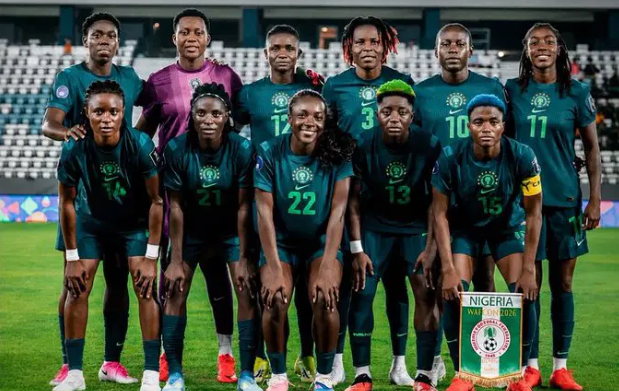
The Super Falcons, historically Africa’s most successful women’s team and ever-present at the FIFA Women’s World Cup, recently suffered the historic setback of missing the 2027 edition, an outcome unthinkable a generation ago.
The back-to-back failures intensified scrutiny of the NFF’s leadership, with critics pointing to chronic governance disputes, weak grassroots development pathways, poorly run domestic competitions and a lack of accountability as the root causes of the decline. Thursday’s mass resignation of Gusau and his board followed weeks of growing calls for a structural reset.
Attention now shifts to Dikko and the NSC, who must steer a consultative reform process that satisfies frustrated stakeholders at home while keeping Nigeria in good standing with FIFA and CAF — a delicate balance that will likely define the success or failure of Tinubu’s most consequential sporting intervention to date.
NAN