Qatar has pledged to support efforts to end Libya’s longstanding political division as the country continues to search for a path towards national elections and greater stability.
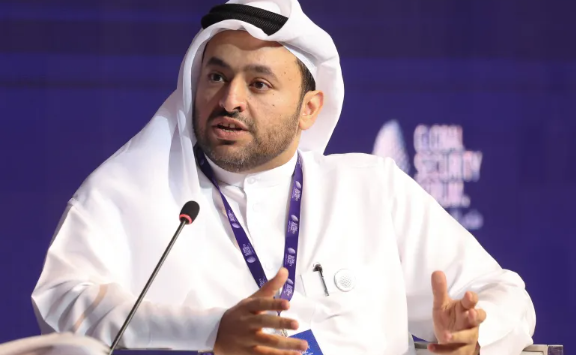
Qatar’s Minister of State, Mohammed bin Abdulaziz al-Khulaifi, made the commitment during a visit to Benghazi, where he met with Khalifa Haftar, commander of the self-styled Libyan National Army.
Libya has remained politically divided since 2014, with the Tripoli-based Government of National Unity, led by Abdul Hamid Dbeibah, on one side and the Haftar-backed eastern administration headed by Osama Hammad on the other.
During his meeting with Haftar, al-Khulaifi discussed regional developments and other issues of common interest, according to Qatar’s Ministry of Foreign Affairs.
He reaffirmed Qatar’s support for Libya’s unity and sovereignty, stressing the importance of a political process that reflects the aspirations of the Libyan people.
Al-Khulaifi also called for continued dialogue and reconciliation to help build consensus and create conditions for lasting stability.
He said Qatar would continue engaging with Libyan political parties and leaders while supporting United Nations efforts to reach a comprehensive political agreement.
Also Read: Iran hits Qatar’s gas facility, gas prices jump
Before his visit to Benghazi, al-Khulaifi told Al Jazeera that he had discussed ways to support Libya’s political process and national dialogue with leaders in Tripoli.
The Qatari minister’s visit comes as Libya’s rival political camps face the challenge of implementing a recently agreed initial election pact.
Libyan negotiators reached the pact last week through the “4+4” committee, which includes four representatives each from the eastern House of Representatives and the Tripoli-linked High Council of State.
According to a document obtained by Al Jazeera Arabic, the agreement, initiated in Tunisia, proposes changes to the laws governing presidential and legislative elections and sets a 24-month timeframe for holding the polls.
However, the agreement faces uncertainty, with figures from both sides claiming they were excluded from the negotiations or had not seen the final version of the document.
The United Nations has described the agreement as an important step towards resolving the political deadlock. The UN has said the full text will be published once it is formally signed.
International mediators, led by the United Nations, have spent years attempting to reunite Libya’s rival institutions and pave the way for elections.
However, implementing the latest pact could prove difficult because of divided state institutions, unresolved legal issues and deep political mistrust between the rival camps.
Libyan legal expert Al-Mahdi Kashbour told Al Jazeera that there appears to be a gap between the authority of the parties that signed the agreement and the institutions responsible for implementing it.
Political analyst Elias al-Barouni also questioned the pact’s ability to deliver elections, arguing that it does not provide concrete arrangements for holding the polls.
He added that even if the legal obstacles are resolved, another major challenge would be determining who governs Libya during the transition period.
Al Jazeera