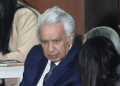
Former Ecuadorian President Lenín Moreno has been sentenced to five years in prison after a court found him guilty of accepting bribes linked to the construction of the Coca Codo Sinclair hydroelectric plant, the country’s largest power project.
The ruling, delivered in Quito, also convicted 19 other people in a corruption case involving Chinese construction company Sinohydro.
The case centres on an alleged bribery network that prosecutors say operated between 2009 and 2018 and channelled about $76 million in illicit payments connected to the award and execution of the Coca Codo Sinclair project.
Investigators said the payments represented roughly 4 per cent of the value of the project and were moved through a network of companies and accounts, including offshore transactions.
Moreno, 73, was convicted as a direct participant in the bribery scheme for actions dating to his time as vice-president under former President Rafael Correa, when he served from 2007 to 2013.
The National Court of Justice imposed the five-year sentence after a trial that lasted 31 hearing days and examined evidence concerning payments allegedly made to public officials and other beneficiaries.
The court also convicted businessman Conto Patiño, former Chinese ambassador to Ecuador Cai Runguo and other individuals as direct participants, with the prosecution identifying them as part of the network involved in the alleged payments.
Several other defendants were convicted as accomplices and received sentences of two years and six months, while two others received three-year terms.
Moreno’s wife, daughter, two brothers and a brother-in-law were among those convicted as accomplices. They were sentenced to 30 months in prison, while the court also ordered those convicted to repay illicitly obtained funds, with some defendants required to pay three times the amounts they received. Moreno was permanently barred from holding public office.
Because of Moreno’s physical disability, which prevents him from walking, he is expected to serve the sentence under house arrest rather than in a conventional prison.
The former president has denied the allegations and said he never received money from Sinohydro. He has indicated that he will appeal the ruling.
Moreno also blamed the case on the political establishment associated with Correa, his former political ally who later became his rival.
Also Read: Ecuador’s intelligence chief, wife die in helicopter crash
He accused Correa of seeking revenge after their relationship deteriorated. Moreno initially came to power with Correa’s backing but later moved away from the Correísta political movement and pursued closer relations with the United States.
Prosecutors had sought a six-year-and-six-month prison sentence for Moreno and requested financial compensation exceeding $76 million.
They argued that the evidence presented during the trial established the existence of an organized system for concealing bribe payments made to secure the Coca Codo Sinclair contract.
The hydroelectric project at the centre of the case was built by Sinohydro beginning in 2010 and entered commercial operation in 2016.
The facility has an installed capacity of 1,500 megawatts and was developed at a cost of about $2.25 billion, according to Ecuador’s electricity authorities.
It was designed to significantly increase the country’s domestic electricity generation and reduce dependence on imported electricity and fossil fuels.
Coca Codo Sinclair remains a major component of Ecuador’s electricity system, although the project has faced technical criticism since its completion, including concerns over structural and operational problems.
Its significance to the country’s power supply has made the corruption allegations particularly prominent in Ecuador’s public debate.
Moreno’s conviction adds him to a growing list of former Ecuadorian presidents who have faced corruption convictions.
Correa, who preceded him as president, was sentenced in 2020 to eight years in prison in a separate bribery case and has remained in Belgium, while former President Jamil Mahuad was sentenced in 2014 over the misuse of public funds.
The Sinohydro ruling now moves into the appeal stage, with Moreno maintaining his innocence despite the court’s findings.
The case has brought renewed scrutiny to the awarding of major infrastructure contracts in Ecuador and the role of political and business networks in projects financed and executed through international partnerships.
PUNCH