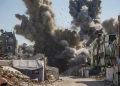
The death toll from devastating floods in Nepal has crossed 1,000, according to the country’s disaster management authorities, as rescuers intensify efforts to locate thousands of missing people.
More than 3,900 people remain missing, including over 600 workers believed to be trapped inside mud-filled tunnels at hydropower projects along the Trishuli River.
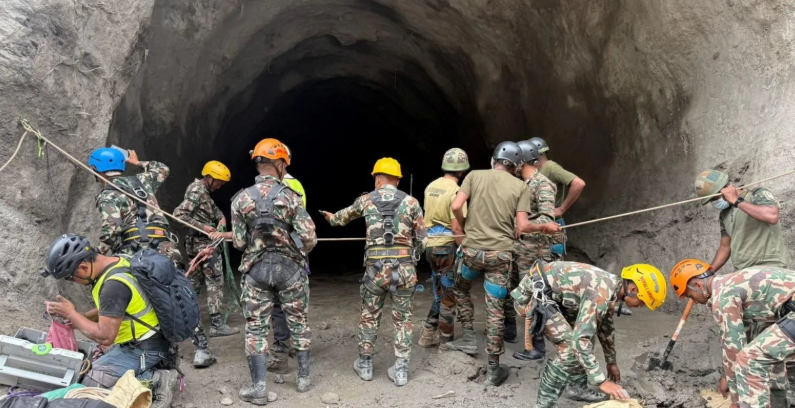
The disaster has triggered a major international rescue operation involving Chinese and Nepalese military personnel, with experts from India, South Korea and Australia also supporting the effort.
Nepalese Prime Minister Balendra Shah says 279 people have so far been rescued from the affected hydropower sites as teams work to reach workers who may still be inside the underground facilities.
Rescuers are pumping air into the tunnels in an attempt to maintain breathable conditions for anyone who may remain trapped underground.
A rescue team manages to enter one of the tunnels leading to a hydropower plant on Monday but withdraws after finding no workers inside.
Despite the setback, families of the missing workers continue to hold on to hope that some of their relatives remain alive.
Sita Pandey, whose husband works at one of the affected facilities, says she still has hope because an oxygen system operates inside the plant.
“I still have a 50% hope that he is alive because there is an oxygen system inside,” she tells Nepalese daily Kantipur.
Also Read: King Charles mourns Nepal flood victims, UK pledges £5m aid
Another family member, Jiban Khadka, whose relative remains trapped inside a hydropower plant, urges rescuers to accelerate the operation.
“The longer it takes, the more our hope dies. This operation must move much faster because every second is meaningful to us,” Khadka tells Kantipur.
He describes the rescue effort as frustratingly slow, reflecting the growing anxiety among families waiting for information about their loved ones.
Prime Minister Shah says rescue operations have been intensified, describing the floods as an extraordinary disaster and warning that the risks facing communities in the Himalayan region are increasing.
He also connects the scale of the disaster to climate change and calls for greater international attention to the growing risks facing Himalayan countries.
Nepal relies heavily on hydropower and has invested significantly in projects along its mountainous river systems. Authorities say at least 11 hydropower projects, either completed or under construction, sustain damage in the floods.
The destruction creates major challenges for rescuers because many of the affected facilities are located in difficult mountainous terrain, while tunnels are filled with mud and debris.
Australian tunnelling expert Arnold Dix, who is assisting Nepalese authorities remotely, says rescuers face enormous difficulties locating and accessing the underground structures.
“The actual signature of them has gone – everything is just missing. It looks like a lunar landscape,” Dix tells BBC Radio 4’s World at One.
According to Dix, once rescuers establish the precise locations of the power stations, they can determine the safest and most effective ways to reach the tunnels.
He says the operation may require extensive excavation and the removal of huge boulders blocking access routes.
“There are boulders bigger than houses. I’ve never seen that before in my life. It’s just an extraordinary operation,” he says.
Despite the challenging conditions, Dix maintains hope that some of the missing workers could still be alive, noting that the underground environment may have provided some protection from the force of the flooding.
Families continue to wait anxiously for updates as rescue teams search through the damaged hydropower facilities and surrounding areas.
For relatives of the missing workers, the rescue operation remains a race against time as authorities attempt to reach the tunnels and determine whether those trapped underground can still be brought to safety.
BBC