The International Atomic Energy Agency, IAEA has warned that it remains unable to verify Iran’s nuclear material, more than a year after losing access to key nuclear facilities, as France, Germany, the United Kingdom and the United States push for the issue to be referred to the United Nations Security Council.
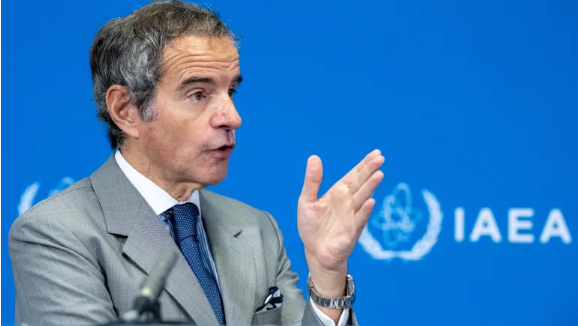
IAEA Director General Rafael Grossi told the agency’s 35-member Board of Governors on Monday that Iran had provided no information during the latest reporting period on the status of its declared nuclear material and facilities.
He said IAEA inspectors had also been unable to conduct the necessary on-site verification, leaving the agency without a clear picture of Iran’s nuclear activities.
Grossi said it had been more than a year since the agency “lost continuity of knowledge” over Iran’s previously declared stocks of uranium enriched to as much as 60 percent.
The facilities holding the material were among Iranian nuclear sites targeted in US and Israeli attacks in June 2025.
The IAEA chief described the continuing lack of access and information as a proliferation concern that “needs to be rectified with the utmost urgency”.
He called on Tehran to restore effective cooperation with the agency and provide inspectors with the access and information required to verify Iran’s nuclear material.
The warning comes as France, Germany, the UK and the US seek support for a draft resolution that would refer the Iran nuclear issue back to the UN Security Council.
Also Read: Germany fingers Russia for drone attack on Leipzig
According to Reuters, the move would mark the first time in two decades that the issue has been formally sent back to the council.
The proposed resolution would ask Grossi to transmit the board’s resolution, previous decisions and his latest report to the Security Council and the UN General Assembly. It would also call on Iran to provide the information and access required by IAEA inspectors.
The draft has not yet been formally submitted to the Board of Governors, with negotiations over its wording still continuing.
Iran has rejected the proposed referral and maintains that its nuclear programme is intended for peaceful purposes.
Foreign Ministry spokesman Esmaeil Baghaei criticised the Western governments’ approach during his weekly news conference on Monday.
“Whenever they run out of options, they turn to the agency and Grossi,” Baghaei said.
He argued that the restrictions affecting IAEA inspectors were a direct consequence of the US and Israeli attacks on Iranian nuclear facilities.
According to Baghaei, it was unreasonable for the countries involved in those attacks to blame Tehran for the resulting loss of access.
He also warned that Iran would take “necessary measures” if the Western powers proceeded with the proposed resolution.
Even if the draft resolution is approved by the IAEA Board of Governors, any subsequent concrete action at the UN Security Council could face significant opposition.
Russia and China are among the five permanent members of the Security Council and have veto powers.
Their opposition could therefore prevent the council from adopting measures against Iran, potentially intensifying diplomatic tensions over Tehran’s nuclear programme.
The dispute comes amid continued international concern over Iran’s stockpile of highly enriched uranium and the IAEA’s inability to independently verify the status of the material.
For the nuclear watchdog, restoring access to Iran’s facilities and obtaining reliable information remain critical to determining the nature and scope of the country’s nuclear activities.
Al Jazeera