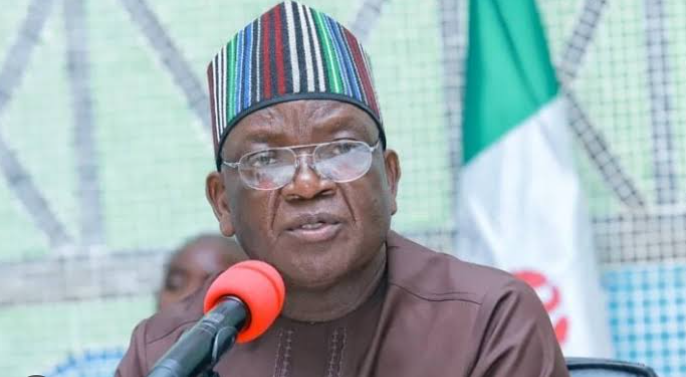
Former Benue State Governor, Samuel Ortom, has alleged that Governor Hyacinth Alia’s administration seized 23 vehicles allocated to him before he left office, saying a court later ordered their return and awarded him N5 million in damages.
Ortom made the allegation during an appearance on Arise Television’s Morning Show, where he accused the Alia administration of targeting political opponents and disregarding the rule of law.
According to the former governor, the vehicles were legitimately allocated to him by the Benue State Government before the end of his tenure. He said the vehicles were subsequently taken after Alia assumed office, without any prior communication to him.
“After I left office, vehicles that were given to me legitimately by the government, this government went and seized them in a manner that was not befitting,” Ortom said.
He said he challenged the action in court and obtained a judgement directing the state government to return the 23 vehicles and pay N5 million in damages.
Ortom further alleged that the vehicles were among the issues through which the Alia administration had pursued what he described as a “witch-hunt” against political opponents.
The dispute over government vehicles dates back to the early months of Alia’s administration. Shortly after taking office in June 2023, the state government established an asset recovery committee to trace government property allegedly taken or removed during the previous administration. The exercise included vehicles and other government assets.
Also Read: Police confirm Obi blockade but Alia denies sending thugs
In July 2023, the recovery committee seized or towed vehicles from an automobile workshop in Makurdi reportedly associated with Ortom.
The state government had alleged that government vehicles were missing after the transition, while associates of the former governor maintained that some of the vehicles belonged to private individuals or had been legitimately released under the previous administration.
Ortom also alleged that the Alia administration had failed to provide adequate space for political engagement in the state.
He claimed that no stakeholders’ meeting involving political parties had been convened since Alia assumed office, arguing that the absence of such meetings had contributed to what he described as a lack of inclusiveness in governance.
The former governor further alleged that Alia recently directed traditional rulers not to receive him when he visited his kinsmen to discuss his wife’s ambition to contest for a senatorial seat.
He also raised concerns about local government administration, claiming that council chairmen in Benue were yet to have effective control over their funds despite the Supreme Court’s 2024 judgement affirming the financial autonomy of local governments.
The Supreme Court ruled in July 2024 that state governments could not unlawfully retain or control funds allocated to democratically elected local government councils, reinforcing the constitutional position on local government financial autonomy.
Reports from Benue had previously raised similar concerns about the extent of financial control exercised by the state over local councils, including allegations that some council chairmen were not signatories to their accounts.
Such reports, however, do not by themselves establish Ortom’s broader claim about the current status of local government funds in the state.
The latest allegations come against the backdrop of a politically contentious transition between the Ortom and Alia administrations.
VANGUARD