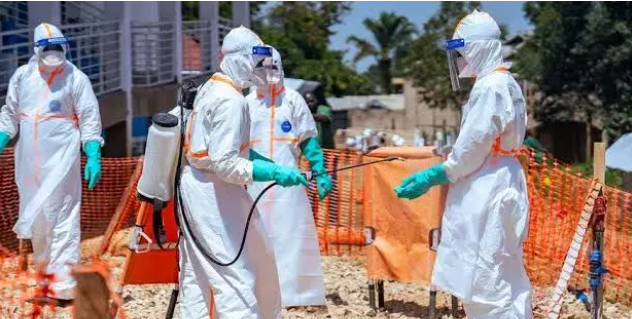
The Africa Centres for Disease Control and Prevention, Africa CDC, has welcomed additional United Kingdom funding for the Ebola response in the Democratic Republic of the Congo, DRC, bringing Britain’s total commitment to £78.7 million as authorities intensify efforts to contain the worsening outbreak.
The additional support, announced by UK International Development Minister Kirsty McNeill is intended to strengthen the DRC-led response, support frontline health workers and communities, and help prevent the virus from spreading further within the region. The funding also covers response and preparedness activities in Uganda and wider regional coordination.
Africa CDC Director-General Dr Jean Kaseya welcomed the commitment following discussions with McNeill in Addis Ababa, Ethiopia, saying sustained international partnerships were essential to bringing the outbreak under control.
Kaseya said the latest assistance would reinforce regional coordination, surveillance, preparedness and response measures as African countries, health authorities and development partners work to interrupt transmission and limit cross-border spread.
He also commended the UK for recognizing African leadership in the response and thanked McNeill and the British Government for their continued support.
“This support comes at an important time,” Kaseya said, adding that Africa CDC was working with the DRC, neighbouring countries and international partners to stop transmission, protect communities and support health workers on the frontline.
The UK Government said the latest package includes more than £50 million in additional funding, taking its overall contribution to £78.7 million.
Britain had earlier allocated £26.9 million for the immediate response in the DRC and Uganda, including support for the World Health Organization and Africa CDC to coordinate regional efforts.
The new funding comes as the DRC faces its largest and deadliest Ebola outbreak on record. According to the WHO’s latest situation report, 6,686 confirmed cases and 3,226 deaths had been recorded in the DRC as of September 6, giving the outbreak a case-fatality ratio of 48.3 per cent.
Also Read: CEPI funds $4.17m studies on Ebola vaccine response
The outbreak, caused by the Bundibugyo virus, was formally declared in Ituri Province on May 15, 2026. It has since expanded to several provinces, with Ituri remaining the main centre of transmission while North Kivu and Haut-Uélé also continue to report substantial transmission.
The scale of the outbreak has surpassed the DRC’s previous largest Ebola epidemic, which occurred between 2018 and 2020 and killed about 2,300 people.
It is now regarded as the second-deadliest Ebola outbreak ever recorded, behind the 2014–2016 West African epidemic, which affected Guinea, Liberia and Sierra Leone.
The response has been complicated by insecurity, population movement, limited access to some affected communities and difficulties with surveillance and contact tracing.
Health authorities have also reported challenges associated with unsafe burials and cases occurring outside formal treatment facilities, making early detection and isolation more difficult.
The outbreak is particularly challenging because Bundibugyo Ebola differs from the Zaire species responsible for several previous major Ebola outbreaks.
There are currently no approved vaccines or treatments specifically licensed for Bundibugyo virus disease, although vaccine and treatment candidates are being investigated and clinical trials are under way.
Uganda has also been affected, with the WHO reporting that its outbreak remains epidemiologically linked to transmission originating in the DRC.
This regional connection has made cross-border surveillance, preparedness and rapid response a central component of the containment effort.
Africa CDC said it would continue working with affected countries and partners on surveillance, laboratory capacity, infection prevention and control, case management, community engagement and cross-border preparedness.
The organization’s expanded regional role reflects growing efforts to strengthen African-led coordination of public health emergencies.
With transmission continuing and the outbreak spreading across multiple health zones, health authorities say sustained funding and coordinated action will remain critical to identifying cases early, protecting health workers and communities, and preventing further regional spread.
REUTERS