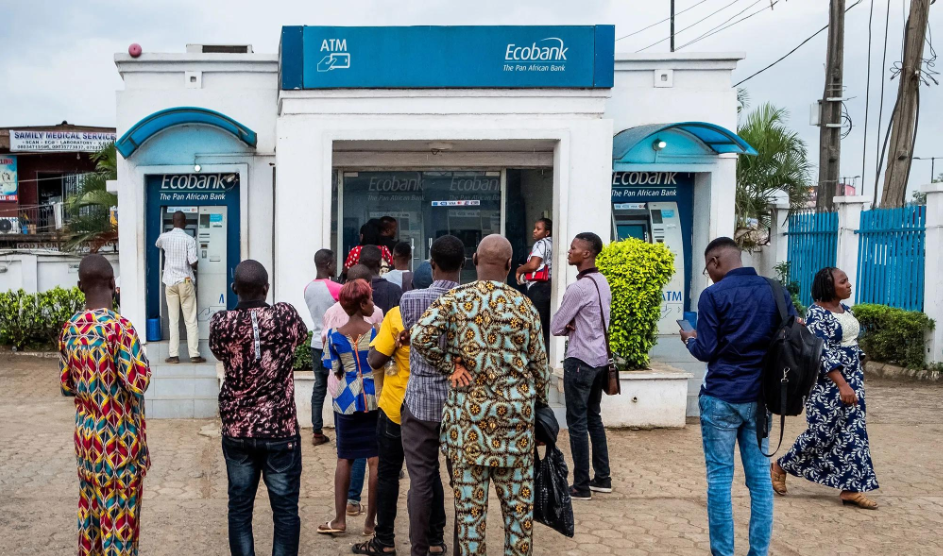
Deposit Money Banks in Nigeria closed a net 476 branches and cash centres between 2022 and 2025, cutting their physical banking footprint by 8.8 per cent, according to data from the Central Bank of Nigeria.
The decline brought the number of bank branches and cash centres nationwide down from 5,410 in 2022 to 4,934 in 2025, even as the number of banks operating in the country increased over most of the period.
Figures contained in the CBN’s 2025 Statistical Bulletin for the Financial Sector showed that the contraction was gradual at first before accelerating in 2024 and 2025.
An analysis of the data showed that the number of branches and cash centres fell by 37, from 5,410 in 2022 to 5,373 in 2023.
The decline accelerated in 2024, when 229 locations were lost, bringing the total to 5,144. A further 210 locations were closed in 2025, leaving 4,934 nationwide.
Consequently, about 92 per cent of the 476 net reduction recorded between 2022 and 2025 occurred in 2024 and 2025.
The CBN said the figures covered branches and cash centres operated by commercial, merchant and non-interest banks. The data were sourced from the apex bank and the Nigeria Deposit Insurance Corporation.
The reduction in physical banking locations occurred despite an increase in the number of banks operating in the country. The number rose from 32 in 2022 to 33 in 2023 and 35 in 2024, before declining slightly to 34 in 2025. The number of branches operated abroad remained unchanged at two throughout the period.
Lagos recorded the largest decline in absolute terms, with its number of branches and cash centres falling from 1,602 in 2022 to 1,444 in 2025.
The state recorded 1,532 locations in 2023 and 1,521 in 2024 before losing a further 77 locations in 2025. Overall, Lagos recorded a net decline of 158 locations, representing a 9.9 per cent reduction over the three-year period.
Also Read: CBN tightens watch on banks to prevent terrorism financing
The decline in Lagos accounted for about one-third of the net reduction recorded nationwide. Despite the contraction, the state remained the dominant location for physical banking operations, accounting for about 29 per cent of the 4,934 branches and cash centres nationwide in 2025.
The Federal Capital Territory also recorded a decline, with the number of banking locations remaining at 400 in 2022 and 2023 before falling to 391 in 2024 and 362 in 2025. This represented a net reduction of 38 branches and cash centres, or 9.5 per cent, over the period.
Ekiti recorded one of the steepest contractions, with its branch network falling from 107 locations in 2022 to 57 in 2025, representing a decline of 50 locations, or 46.7 per cent. Enugu followed with a reduction of 44 locations, from 162 to 118, while Oyo lost 41, falling from 237 to 196.
Other states that recorded notable declines included Ondo, where the number of locations fell from 127 to 105; Plateau, from 80 to 61; Osun, from 113 to 96; Cross River, from 83 to 67; and Rivers, from 290 to 275.
The contraction was also evident in some major commercial centres in northern Nigeria. Kano increased its physical banking locations from 164 in 2022 to 175 in 2023 and 183 in 2024. However, the figure fell sharply to 157 in 2025, leaving the state with seven fewer locations than it had in 2022.
Kaduna followed a similar pattern, with its number of locations rising from 148 in 2022 to 156 in 2023 and 164 in 2024 before declining to 146 in 2025.
Some states, however, recorded increases in their banking networks. Delta added 23 locations, with its total rising from 173 in 2022 to 196 in 2025. Edo also increased from 155 to 165, while Jigawa rose from 31 to 37 and Kogi from 63 to 68.
The data also showed wide disparities in the distribution of physical banking infrastructure across the country. While Lagos had 1,444 branches and cash centres in 2025, Yobe had 23, Taraba 26 and Zamfara 28. Bayelsa and Gombe had 31 each, while Ebonyi recorded 32.
The figures point to a continued shift in the banking industry from traditional brick-and-mortar operations towards electronic and alternative payment channels.
The development comes as the CBN has called for greater adoption of alternative payment channels to expand access to financial services and stimulate economic activity.
The Acting Director, Corporate Communications and Investor Relations Department of the CBN, Hakama Sidi-Ali, made the call at the 2026 CBN Fair in Lokoja, Kogi State.
Represented by the Branch Controller of the CBN Lokoja Branch, Zubairu Salihu, she said alternative payment channels were particularly important for farmers, traders, small businesses and informal-sector operators who might have limited access to conventional banking services.
PUNCH