Nigeria has called for global financial reforms to support development, climate action, technology and economic inclusion in developing countries.
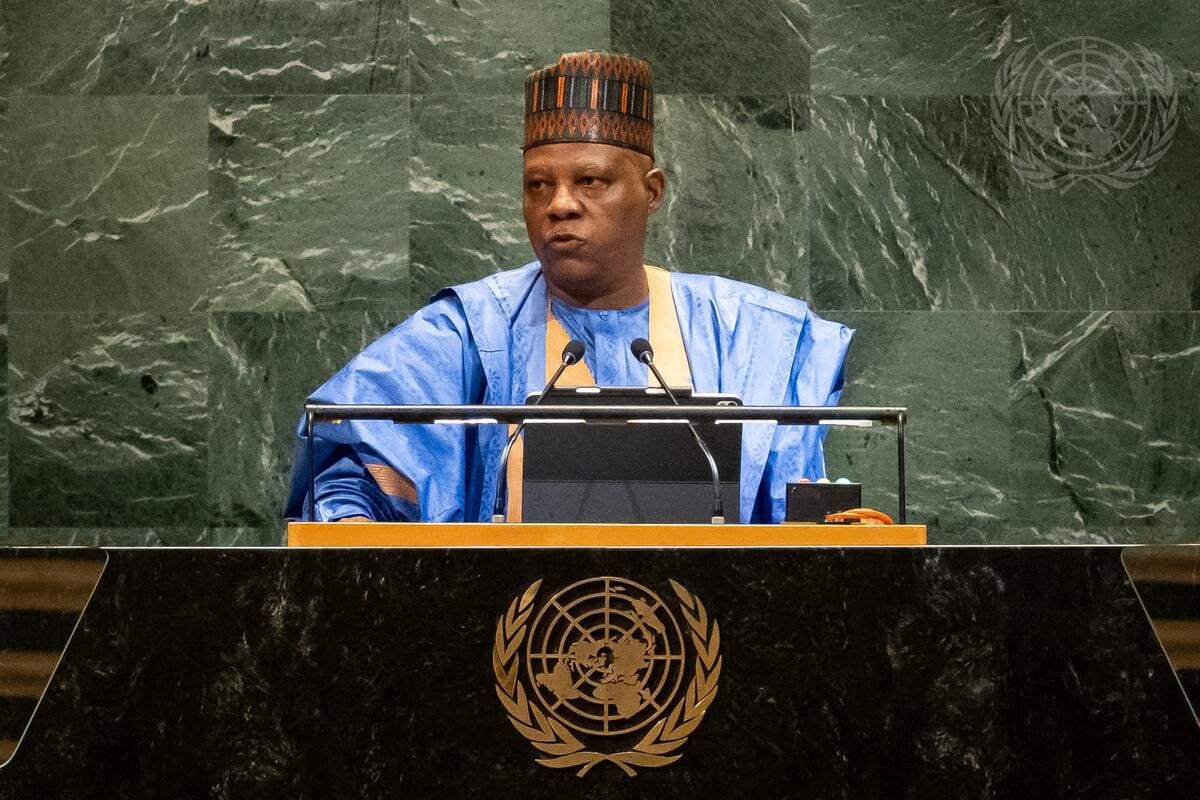
Vice-President Kashim Shettima made the call while delivering President Bola Tinubu’s national statement at the 81st United Nations General Assembly on Thursday.
Shettima identified inadequate development financing as a major obstacle facing developing economies.
Nigeria wants wider access to concessional financing and more sustainable debt arrangements that recognize the developmental needs of poorer countries.
For Nigeria, financial reform is closely tied to climate action, industrialisation, energy access and technological development.
Shettima rejected the idea that developing countries must choose between economic growth and climate action.
Developing countries, he argued, must be able to industrialize, reduce poverty and expand energy access while pursuing lower-carbon development pathways.
Such a transition, he said, requires adequate climate financing and technology transfer from countries with greater financial and technological capacity.
Africa faces a disproportionate climate burden despite contributing less than four per cent of global emissions. The continent continues to experience the effects of floods, droughts, extreme temperatures and other climate-related events.
Nigeria reaffirmed its commitment to the Paris Agreement and an energy transition that balances environmental responsibility with its economic and energy realities.
Technology also featured prominently in Nigeria’s development agenda.
Shettima said Nigeria “will not let fear dictate its technological future,” presenting artificial intelligence as a tool whose impact depends largely on human choices and policy decisions.
Also Read: Tinubu asks UN to give Africa two permanent Security Council seats with veto power
Nigeria is expanding digital public infrastructure, accelerating broadband deployment and supporting technology entrepreneurship to take advantage of emerging technologies.
The approach reflects a broader argument that developing countries should not be left behind as technological change reshapes economies and societies.
Nigeria’s call for changes to the international financial system also mirrors its domestic economic reform agenda.
Shettima highlighted disciplined macroeconomic management, stronger institutions, private-sector growth and strategic public investment as pillars of Nigeria’s development strategy.
Ultimately, he said, governments are judged by whether their policies improve citizens’ lives.
That requires international financing arrangements that give developing countries enough fiscal space to invest in people, productive infrastructure and long-term economic growth.
The argument formed part of Nigeria’s broader agenda at UNGA81, which also covers reform of the United Nations, international peace and security, climate action, development financing and emerging technologies.
Shettima linked economic prosperity with global security, warning that inequality and underdevelopment can deepen instability.
Nigeria is seeking an international system that combines technological progress with sustainable development and greater economic inclusion.
Shettima reaffirmed Nigeria’s commitment to multilateral cooperation in advancing peace, development and human rights.
The official UN General Debate portal lists Shettima as Nigeria’s speaker in the fourth slot of the September 24 afternoon session.
NAN