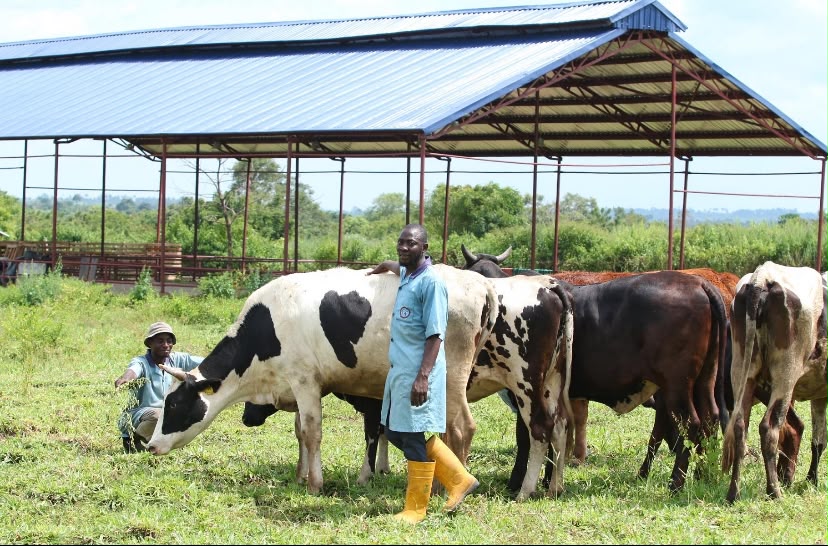
The Cross River Government is expanding its livestock development programmes to attract investors, improve animal health and give farmers better support across the value chain.
The Special Adviser to Governor Bassey Otu on Livestock Development, Mr Liyel Imoukhuede, said the government was developing a comprehensive database of livestock farmers to establish reliable baseline data for measuring the impact of its intervention programmes.
Imoukhuede said the enumeration would capture information on farmers, their locations, species kept, herd or flock sizes, production capacity and challenges.
He said the state’s 2025 budget provided for the registration of livestock farmers, alongside programmes covering micro-livestock development, livestock health, meat inspection, disease surveillance and farmer capacity development.
“Rather than announcing an arbitrary number, our position was that we are establishing a reliable baseline against which the administration’s interventions can be measured,” he said.
Imoukhuede said the database would enable the government to track registered farmers and animals, production volumes, mortality and disease rates, productivity per animal and farm income.
He said it would also track farmer access to veterinary services, finance and inputs, as well as jobs created through government interventions.
The special adviser said the data would help the government develop targeted livestock policies, assess the impact of its interventions and identify gaps in the livestock value chain.
Government woos investors
Imoukhuede said the government was creating investment opportunities across the livestock value chain to attract private capital, technology and expertise.
He said the government could not finance the transformation of the sector alone and needed private sector participation in production, processing, storage, logistics and marketing.
He identified cattle and dairy, poultry, piggery, sheep and goats, feed production, pasture development, meat processing, modern abattoirs, cold-chain infrastructure, livestock markets, animal health services, aquaculture, honey production and logistics as areas open to investment.
Imoukhuede said existing agricultural assets, including the Obudu Ranch, Songhai facility in Abiding, Calachika poultry and slaughter facilities in Calabar, could serve as anchors for the investment drive.
He said the Obudu Ranch, which had been taken over by concessionaires, had potential for cattle production, dairy development, pasture improvement, breeding, research, training and agro-tourism.
The governor’s aide said the administration was developing bankable investment opportunities, strengthening the policy and regulatory environment, providing supporting infrastructure and facilitating access to government and development finance programmes.
“We are also engaging development partners and financial institutions to help de-risk investments and create financing pathways for farmers and agribusinesses,” he said.
He said the government’s ultimate objective was to increase production, processing, storage, transportation and marketing within the state, create jobs, improve food security and expand the state’s economic base.
Also: Tinubu unveils plan to double livestock sector,$32bn contribution
State conducts livestock surveillance
Imoukhuede also said the state government, in collaboration with the Federal Ministry of Livestock Development, had conducted a sero-surveillance exercise involving 600 livestock samples to strengthen disease control.
He said the exercise would provide scientific information on diseases circulating among livestock and support evidence-based disease-control measures.
He said the initiative also supported the national objective of eradicating Peste des Petits Ruminants, PPR, by 2030.
Imoukhuede said other government interventions included disease surveillance, vaccination, veterinary capacity building, treatment services, meat inspection and farmer education on biosecurity.
He said the state’s livestock development programme also provided for campaigns against PPR, anthrax and rabies, alongside targeted livestock surveillance and treatment inputs.
The special adviser said the government was strengthening the capacity of veterinary officers and animal-health technicians to improve disease prevention and treatment.
He said the Border Animal Holding and Quarantine Facility at Mfum-Ajassor would strengthen disease surveillance and control livestock movement across the state’s international border.
“The facility will help improve animal traceability and contribute to safer cross-border livestock trade.
“Our objective is that animals entering the state, moving within the state and animal products reaching consumers are increasingly subject to proper veterinary oversight as well as health and safety standards,” he said.
NAN