The Nigeria Governors’ Forum, NGF, plans to establish a National Nutrition Intervention Fund to strengthen efforts to combat malnutrition across the country.
The initiative will support the implementation of the Nutrition 774 Initiative in all 774 local government areas.
The plan was announced by Zamfara Governor Dauda Lawal in Ethiopia while presenting the NGF-Addis Ababa Commitment on Nutrition, according to a statement issued in Abuja on Saturday by Stanley Nkwocha, Senior Special Assistant to the Vice-President on Media and Communications.
Lawal said the proposed fund would encourage state governments to invest more domestic resources in nutrition, reward effective implementation and improve nutrition outcomes.
He added that governors of the 36 states had resolved to launch a nationwide nutrition emergency to tackle hunger and malnutrition.
“This massive mobilisation will establish a powerful National Nutrition Intervention Fund to instantly advance Nigeria’s ambitious Nutrition 774 Initiative across every single local government area in Nigeria,” Lawal said.
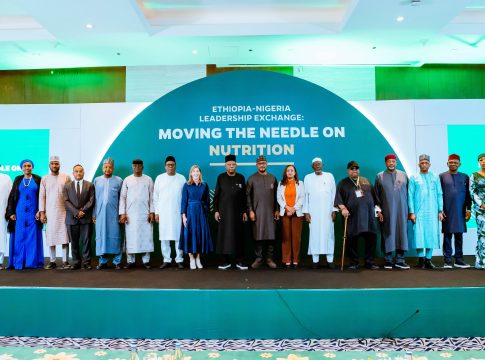
The commitment followed a three-day Nigeria-Ethiopia Nutrition Leadership Exchange, during which a Nigerian delegation led by Vice-President Kashim Shettima studied Ethiopia’s approach to nutrition delivery, particularly its Seqota Declaration.
Lawal said the governors had pledged to strengthen domestic financing, improve grassroots accountability and establish a unified framework for nutrition planning and budgeting.
He said the exchange highlighted the importance of sustained political leadership, coordination across sectors and ownership at every level of government.
The governor noted that Nigeria’s Nutrition 774 Initiative already incorporated several principles used in Ethiopia, adding that lessons from the exchange could help improve implementation and produce measurable results.
Lawal recalled that the three tiers of government signed the Nutrition Compact on Feb. 20, 2025, to establish a common commitment to tackling malnutrition.
He said the NGF chairman signed the compact on behalf of the 36 states, while the president of the Association of Local Governments of Nigeria signed on behalf of the 774 local government areas.
Meanwhile, the Chief Executive Officer of the National Primary Health Care Development Agency, Dr Muyi Aina, said the Federal Government would begin targeted nutrition interventions in two states.
Also Read: US supports UNICEF to fight malnutrition in Nigeria
Speaking on behalf of federal agencies, Aina said the Nigerian delegation had gained useful insights from Ethiopia’s agricultural transformation, early childhood development programmes and data-driven initiatives.
He identified clear leadership, coordination among the three tiers of government, evidence-based priorities, rigorous measurement and disciplined execution as essential to achieving sustainable results.
Aina said the federal team would select two states based on their stunting burden, set clear objectives and develop multisectoral interventions tailored to their needs.
He added that relevant ministers and federal agencies would work with state governors and their teams to identify priorities and define the responsibilities of each tier of government.
The plan would be costed, with participating governments working towards a joint financing arrangement and establishing measurable indicators to track progress.
“We will track very rigorously progress in the execution of the plan,” Aina said.
The Coordinating Minister of Health and Social Welfare, Prof. Muhammad Pate, said the exchange had provided valuable lessons on turning political commitments into practical action and measurable nutrition outcomes.
Pate identified focused sectoral action, a clear implementation roadmap, performance matrices and accountability as essential to accelerating Nigeria’s response to malnutrition.
He said the Federal Government would work with state governments to translate the commitments into practical interventions, with progress reported to the Vice-President through the National Council on Nutrition.
Pate added that cooperation among federal and state governments, communities and development partners would be crucial to achieving sustainable results.
He expressed confidence that Nigeria could adapt Ethiopia’s experience to its own circumstances, noting that the East African country’s progress demonstrated the value of sustained political leadership and coordinated action.
Ethiopia’s Minister of Health, Dr Mekdes Daba, commended Nigeria’s commitment to strengthening nutrition delivery.
Daba described the leadership exchange as an example of African countries learning from one another and said Nigeria’s Nutrition 774 Initiative represented a significant national commitment.
NAN