Kenya has identified 127 contacts of an imported Ebola case and quarantined 94 of them as health authorities step up efforts to prevent further transmission of the deadly virus.
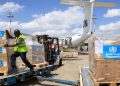
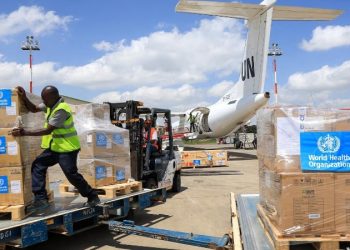
The World Health Organization, WHO, disclosed the figures on Monday while announcing the delivery of emergency medical supplies worth about $70,000 to support Kenya’s response to its first imported case of Bundibugyo virus disease.
The supplies are intended to protect frontline healthcare workers and strengthen the testing of suspected cases. They include protective clothing, isolation gowns, goggles, face shields, Ebola testing kits and specialized containers for transporting potentially infectious laboratory samples.
Other items include infrared thermometers, disinfectant sprayers and equipment for infection prevention, waste management and the safe handling of medical materials.
The WHO said Kenyan authorities had screened more than 665,000 travelers at entry points as part of intensified surveillance efforts.
It added that five laboratories had been designated for Ebola testing, including two mobile facilities at the Busia and Bungoma border crossings.
Nearly 5,000 healthcare workers had also received training in disease detection, patient management and infection prevention.
The WHO Representative to Kenya, Dr Neema Kimambo, said the assistance would strengthen the country’s capacity to manage suspected cases safely.
“Protecting health workers is essential to saving lives,” Kimambo said, stressing the need to prevent infections within healthcare facilities.
Also Read: WHO confirms 8,728 Ebola cases, 4,205 deaths in DRC
She added that the supplies would support safe patient management, reduce infection risks and help maintain essential healthcare services.
Kenya confirmed its first imported case of Bundibugyo virus disease on October 6. The patient, a Kenyan citizen, became ill while living in the Democratic Republic of the Congo.
The patient travelled through Uganda before arriving in Nairobi on October 3 and was immediately isolated after reaching a hospital.
Laboratory tests confirmed the infection, but the patient died on October 5 despite receiving supportive medical care.
The WHO had identified 28 contacts in a report published on October 6. Monday’s update raised the number to 127 as contact-tracing efforts expanded.
The agency said the ongoing outbreak in the Democratic Republic of the Congo had recorded more than 8,700 confirmed cases, highlighting the scale of the regional health emergency.
It added that Uganda ended its outbreak in August, while France and Kenya had each recorded one imported case of Bundibugyo virus disease.
The WHO maintained its advice against imposing travel or trade restrictions on Kenya, Uganda or the Democratic Republic of the Congo, urging coordinated surveillance and effective disease-control measures instead.
NAN