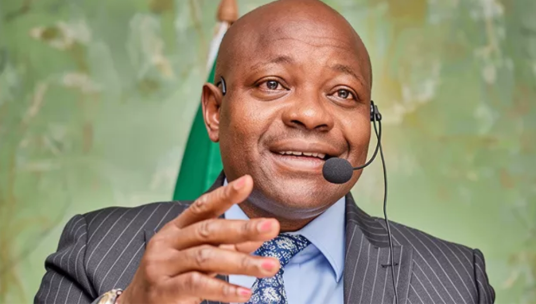
By Olufemi Lawson
The recent arrest of five suspected kidnappers linked to the abduction of 20 prospective National Youth Service Corps, NYSC, members, alongside the arrest of the fugitive Faisal Maina, represents a significant achievement by the Department of State Services, DSS, and a welcome development in Nigeria’s fight against insecurity.
Beyond the arrests themselves, these operations reinforce the importance of intelligence gathering, strategic surveillance and coordinated security operations in confronting terrorism, kidnapping and other organised crimes threatening the country.
The rescue of the abducted prospective corps members and the subsequent arrest of five suspects demonstrate the value of sustained intelligence work beyond the immediate scene of a crime. Similarly, the reported arrest of Faisal Maina, who had been on the run since 2020, underscores the importance of intelligence in tracking fugitives and ensuring that no one remains permanently beyond the reach of the law.
As I argued during a television interview yesterday, Nigeria must invest significantly more in intelligence if the country is to achieve lasting success in its war against terrorism, kidnapping, banditry and other criminal activities.
While military operations, weapons and personnel remain important, security cannot be sustained through force alone. Intelligence enables security agencies to identify criminal networks, anticipate attacks, track perpetrators and dismantle their operational structures before they inflict further damage.
Intelligence must therefore become the backbone of Nigeria’s national security strategy.
The Federal Government must prioritise modern intelligence technology, digital forensics, personnel training, secure communication systems and improved operational logistics. Investing in prevention through intelligence is ultimately more effective and less costly than continually responding to attacks after lives and property have been lost.
I particularly commend Mr. Adeola Oluwatosin, the Director-General of the DSS, for the renewed emphasis on the service’s traditional national security responsibilities, especially intelligence gathering, threat assessment and the prevention of threats to national security.
In my assessment, this renewed direction represents a welcome departure from what critics had perceived in previous periods as a diversion towards unconventional approaches that risked overshadowing the service’s core intelligence mandate.
Also Read: DSS arrests Faisal Maina, hands him over to EFCC
The DSS occupies a critical position in Nigeria’s security architecture, and its effectiveness should be measured by its capacity to uncover threats, disrupt criminal networks and provide actionable intelligence that protects lives and national interests.
The latest arrests demonstrate the practical value of a focused intelligence service. I salute the Director-General for his leadership and, more importantly, the officers and men of the DSS whose vigilance, professionalism and dedication contributed to these successes.
However, the remaining suspects linked to the NYSC abduction must be tracked down, and all those found culpable must face the law.
The successes also raise the need for greater synergy among the DSS, the military, the police, the EFCC and other relevant security and law-enforcement agencies.
Criminal networks exploit gaps in coordination and information sharing. A more integrated security system, supported by joint intelligence operations and the timely exchange of credible information, would significantly improve the country’s ability to prevent attacks and apprehend offenders.
The Federal Government must also increase funding and operational support for the DSS to strengthen its technological capacity, personnel welfare, intelligence infrastructure and field operations.
Adequate funding, accompanied by accountability and effective oversight, will enable the service to respond more effectively to evolving security threats.
The arrest of the suspected kidnappers and Faisal Maina sends a strong message that intelligence-led operations can deliver tangible results. Nevertheless, the ultimate measure of success must be the prevention of future crimes, the dismantling of criminal networks and the restoration of public confidence.
I urge the Federal Government to sustain its support for the DSS and other security agencies while ensuring that investigations and prosecutions are conducted in accordance with the law.
Nigeria cannot afford to treat intelligence as a secondary component of national security. It must be recognised as a strategic national investment.
I once again salute the Director-General and the officers and men of the DSS for their latest achievements. Their efforts deserve commendation and a sustained institutional support.
With stronger intelligence capabilities, improved inter-agency cooperation and adequate funding, Nigeria can make meaningful progress towards defeating terrorism, kidnapping and organised crime.
*Comrade Olufemi Lawson is the National Secretary of the Campaign for Democracy. He writes from Lagos.