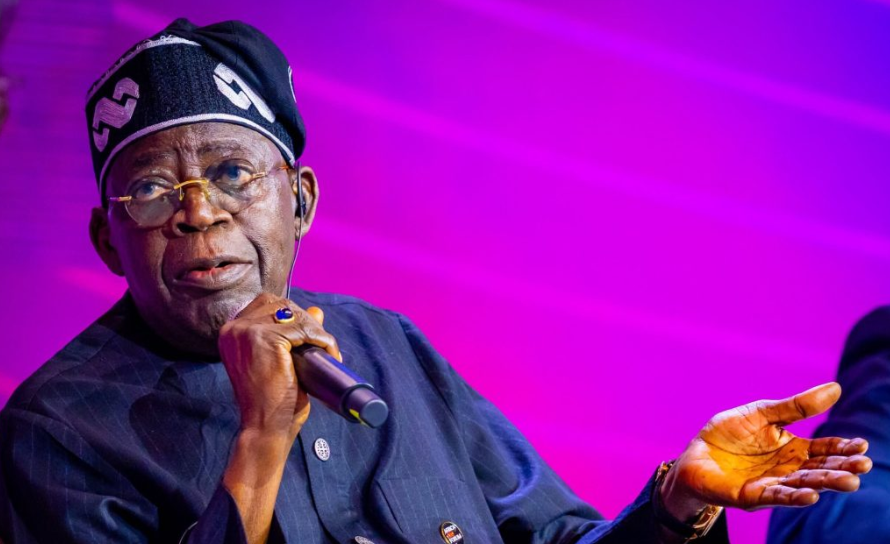
President Bola Tinubu has hit back at critics of his administration’s borrowing plans, declaring that Nigeria must invest heavily in infrastructure to achieve its ambition of building a $1 trillion economy by 2030.
The Nigerian Labour Congress, NLC, earlier challenged the justification for continued external borrowing, arguing that the government’s claims of increased revenue following the removal of petrol subsidy require an explanation of why more loans are still needed.
In response contained in a policy essay titled “From reforms to delivery: Our infrastructure investment and growth strategy”, Tinubu argued that the debate should not be about the size of loans but about the value they deliver.
“The real question is not how much we borrow, but what we build, what value we create and what future we leave behind,” he wrote.
The President listed five major infrastructures into which the proceeds from new borrowings would be chanelled.
The Lagos-Calabar Coastal Highway, Sokoto-Badagry Superhighway, Trans-Sahara Superhighway, electricity grid upgrades and the modernisation of Lagos ports are flagship projects expected to cut logistics costs, connect markets, and unlock industrial potential.
The Lagos-Calabar Coastal Highway alone is projected to reduce logistics costs by up to 20 per cent, add 2 per cent to GDP, and create 250,000 jobs.
Also Read: Tinubu seeks fresh loans for development projects
“We are not simply building highways. We are opening economic corridors, connecting markets, unlocking industries and reshaping Nigeria’s economic geography,” Tinubu said.
The President said the administration’s ambition to build a $1 trillion economy by 2030 would require sustained infrastructure investment to support higher productivity, industrialisation and trade.
“We cannot build a USD 1 trillion economy with infrastructure designed for an economy a fraction of that size,” Tinubu said.
He wrote that improving economic indicators and growing international investor confidence are creating opportunities for Nigeria to attract long-term investment and expand critical infrastructure.
He pointed to recent gains in economic indicators; GDP growth of 4.43 per cent in Q2 2026, inflation down to 14.63 per cent, and external reserves rising to $55.1 billion, as proof that reforms are stabilising the economy and boosting investor confidence.
Tinubu said borrowing is being redirected from short-term fiscal pressures to long-term investments that will generate returns and expand opportunities for future generations.
He outlined five priorities for the next phase of economic strategy, including food affordability, fiscal discipline, completion of high-impact projects, regulatory efficiency, and targeted household support.
He said success would not be measured by securing financing, but by delivery.
“Securing financing is not the achievement. Completing the project, delivering value and improving the lives of Nigerians is the achievement,” he stressed.
STATEHOUSE.GOV.NG